Skip to content
You can now search across every topic, entity and event.What's new
Russia
Nation / PlaceRU

Russia

Nuclear-armed state waging full-scale war on Ukraine; permanent UN Security Council member with global energy leverage.

The EU's 21st sanctions package, cleared 23 July, froze Russia's $44 oil price cap for 12 months, arriving as Moscow's US crude waiver gap reached 26 days and Urals traded roughly $20 below Brent.

Last refreshed: 23 July 2026 · Appears in 11 active topics

Key Question

How has Russia turned the Iran war into a fiscal windfall while the Ukraine front grinds on?

Timeline for Russia

#11 23 Jul

Mentioned in: Zimbra preview leaks mail to Russia

Cybersecurity: Threats and Defences
#25 23 Jul
View full timeline →

Background

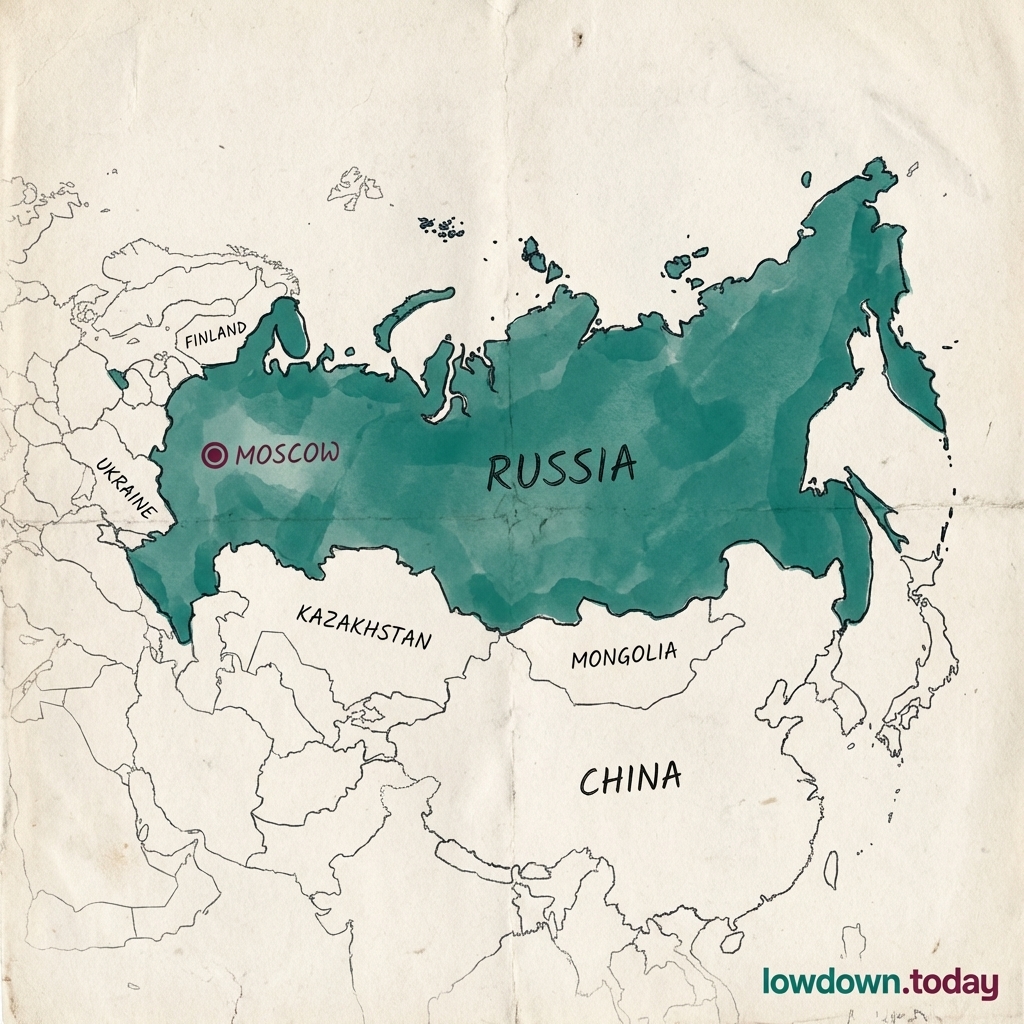
Russia is a permanent member of the UN Security Council and the world's largest country by land area, spanning eleven time zones from the Baltic to the Pacific. With a population of around 145 million, it is a nuclear-armed state, a major fossil-fuel exporter, and the most consequential security actor in the post-Soviet space. President Vladimir Putin has governed continuously since 2000, consolidating authority through constitutional amendments and the suppression of political opposition.

Since February 2022 Russia has waged a full-scale invasion of Ukraine, now in its fourth year, a conflict that has restructured its economy, its foreign alignments and its relationship with the European energy order. The front line has settled into a broadly static contest of attrition rather than manoeuvre, with neither side able to hold decisive ground.

Russia's reach extends well beyond the battlefield: it anchors European energy and oil markets through pipeline and shadow-fleet exports, plays a diplomatic and intelligence-adjacent role in the Iran conflict, and sustains state-linked cyber intrusions, with its FSB implicated in a router-hijacking campaign against Western infrastructure disclosed on 9 July.

Key Issues
Oil revenue squeeze

Sanctions squeeze deepens Russia's oil pain

Deputy Prime Minister Alexander Novak, in a meeting chaired by Vladimir Putin, banned all Russian diesel exports from 8 to 31 July, the first time the restriction has bound producers as well as traders, after June seaborne diesel exports had already fallen 39% month on month. Urals crude averaged $63.18 a barrel in June, down 26% on May, even as product revenue rose 14% on pricier global fuel.

By 23 July Moscow's oil trade sat in a tighter corner still: the US crude waiver had lapsed for 26 days with no successor, the longest gap of the war, while the EU's newly agreed sanctions package froze the $44 price cap for 12 months instead of letting a scheduled rise through. Russia is selling into a thinner, costlier, more legally exposed market rather than one closed to it.

War economy strain

Russia's war economy strains at home

Russia recorded its first monthly budget surplus of 2026 in June, 0.28tn roubles, reported 9 July, even as the half-year deficit reached 5.73tn roubles, 2.35tn worse than a year earlier, with spending running 16.1% above 2025. The Moscow Exchange index has fallen for 17 straight weeks, and National Wealth Fund liquid assets stood at only about $46.4bn on 1 July, the reserve Moscow leans on to smooth wartime shortfalls.

The strain reached the Kremlin's own language on 28 June, when Vladimir Putin admitted, in his own voice rather than through a deputy, that petrol queues are real and fuel is not always available, after Ukrainian strikes forced rationing across 15 regions. Officials are also weighing a fresh mobilisation wave for after the autumn Duma elections, with contract signings down to about 800 a day, half last year's rate.

Front line attrition

Russia bleeds men for stalled ground

Russia lost roughly 53 soldiers a day against Ukraine's three around 23 June, about 17 times Ukraine's rate, for ground the Institute for the Study of War says neither side can decisively hold. Kostyantynivka in Donetsk anchors the front's near-static line, where casualties are buying little visible territory in return.

On 18 July, general staff chief Valery Gerasimov claimed fresh captures across five Donetsk settlements; the Institute for the Study of War found no evidence Russian troops had entered any of them, and Russian war bloggers reported no entry either. It follows Russia's own defence ministry circulating AI-generated footage in mid-June that falsely showed a FAR larger capture after sending only 100 to 250 fighters into Kostyantynivka. The fabrications point to a war effort substituting propaganda for the territorial gains its casualty rate can no longer buy.

Common Questions
Why did Trump reject Russia as an Iran uranium custodian?
At a 27 May Cabinet meeting, Trump said he would not be comfortable with Russia holding Iran's 440.9 kg of 60%-enriched uranium. This removed the storage arrangement Putin had proposed to Xi on 21 May and eliminated the only third-country bridging option.Source: entity background
What is Russia offering to do with Iran's enriched uranium?
Russia's Rosatom offered three custody options for Iran's enriched uranium (dilute-and-return, equivalent natural uranium, or cash value), with Peskov confirming on 13 April the offer still stood. Trump rejected Russia (and China) as a custodian at a 27 May Cabinet meeting, ending the arrangement.Source: Kremlin
Is Russia sharing intelligence with Iran against the US?
Multiple US officials, cited by the Washington Post, alleged Russia shared satellite imagery of US warship and aircraft positions with Iran during the conflict. The Kremlin denied the claims. Russia's drone delivery window to Iran closed on 31 March without public confirmation of transferred weapons.Source: entity background
How long has the US crude oil waiver for Russia been lapsed?
General License 134C lapsed on 17 June 2026 with no successor issued. As of 13 July 2026 the gap has reached 26 days, the longest of the war.Source: Lowdown
How much has NATO pledged to Ukraine at the 2026 Ankara summit?
NATO leaders meeting in Ankara on 7-8 July 2026 pledged EUR 70bn in military equipment, assistance and training for Ukraine across 2026 with a 2027 sustainment commitment, and launched a $40bn five-year Drone Edge counter-drone initiative.Source: Lowdown
Why did Russia ban its own diesel exports in July 2026?
Deputy PM Alexander Novak announced a producer-binding Diesel Export Ban from 8 to 31 July 2026, chaired by Putin, the first time the restriction has extended to producers as well as traders, as Urals crude fell 26% month-on-month.Source: Lowdown
What is Russia's role in the Ukraine war in 2026?
Russia is in its fourth year of full-scale war on Ukraine. March 2026 saw its first net territorial losses since 2023. It launched its largest drone attack to date — 948 drones in one day — on 24 March, while confirmed military deaths reached 206,200.Source: entity background
How is Russia profiting from the Iran conflict?

The Iran war pushed Brent Crude above $110/barrel, significantly boosting Russian oil revenues. US sanctions waivers on Russian crude restored market access, and Russia's daily fossil fuel revenue rose 14% to €510 million during the conflict period.Source: entity background
How many Russian soldiers have died in Ukraine?
Mediazona has verified 206,200 Russian military deaths as of March 2026, with Ukraine estimating cumulative casualties at 1.28 million.Source: Mediazona
Source Material



