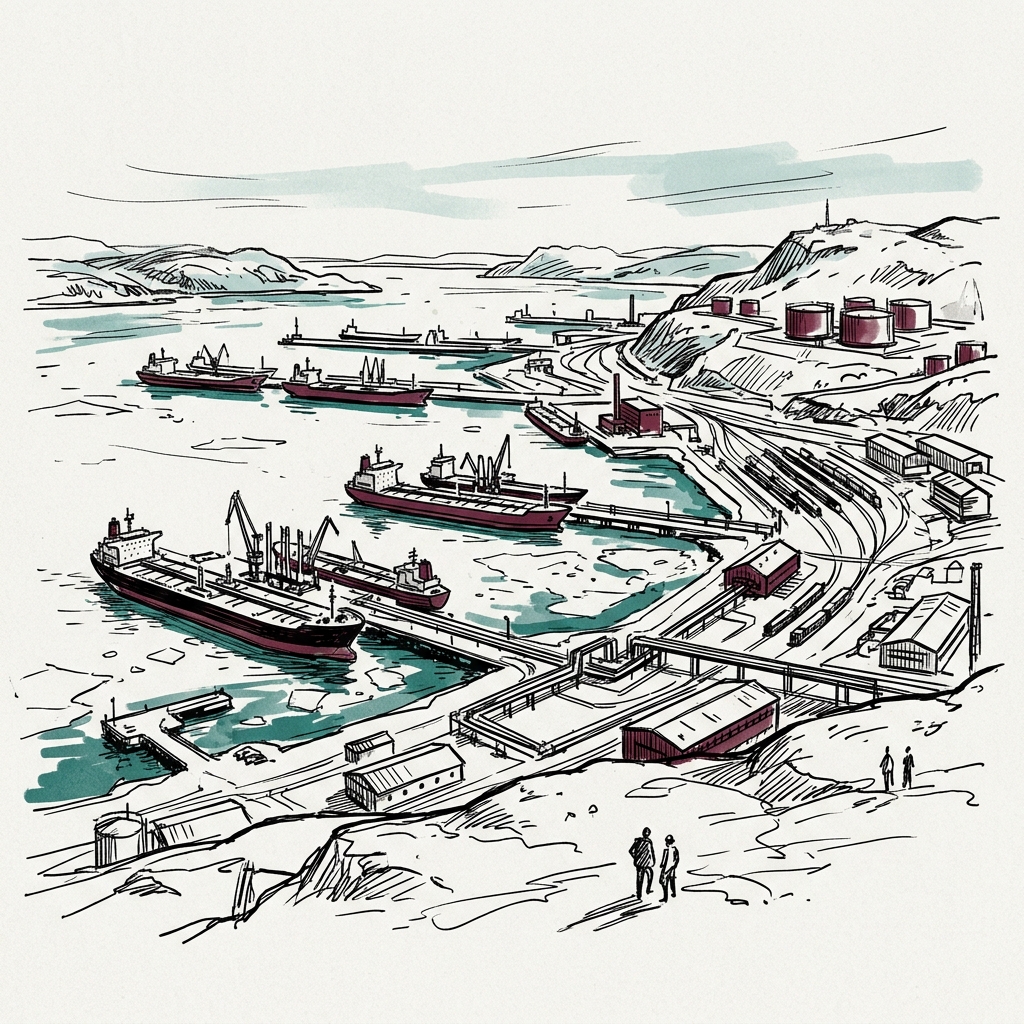
Murmansk
Russian Arctic port; became primary oil export " "hub after Baltic terminal shutdowns in March 2026.
Last refreshed: 5 April 2026
Ukraine shut down Russia's Baltic oil ports; so why are Russian oil revenues still rising?
Timeline for Murmansk
Mentioned in: Iran War Hands Russia an Unexpected Oil Windfall
Russia-Ukraine War 2026Mentioned in: Baltic Terminals Stay Offline; Russia Reroutes Through Arctic
Russia-Ukraine War 2026Mentioned in: Sweden seizes grain-theft ship Caffa
Russia-Ukraine War 2026Mentioned in: Sanctioned LNG tanker sunk off Libya
Russia-Ukraine War 2026Background
Murmansk emerged as Russia's dominant oil export gateway in early April 2026 after Ukrainian drone strikes forced the Ust-Luga and Primorsk Baltic terminals offline for a second consecutive week. Planet Labs satellite imagery from 1 April showed Ust-Luga empty of tankers while Murmansk's Arctic fleet was operating at record capacity. Despite the 43% collapse in Baltic export volume, Russia's total oil revenues stayed elevated because Urals crude had reached .45 per barrel on 3 April, driven by the Iran war.
Murmansk is the world's largest city north of the Arctic Circle, with a population of approximately 280,000. It is the homeport of Russia's Northern Fleet and handles a significant share of Arctic LNG export capacity. The port is ICE-free year-round thanks to the Gulf Stream warming influence, making it operationally reliable in conditions that close other northern Russian ports. Sweden also seized the Caffa, a cargo ship linked to Sevastopol grain theft, near Trelleborg in March 2026 as part of the broader Baltic shadow-fleet crackdown.
The Iran war windfall has created a paradox for Western sanctions: Baltic disruption reduced Russian export volumes but soaring Urals prices more than compensated, with Russia's oil revenues running at more than double its per barrel budget assumption.
Why is Russia shipping oil through Murmansk now?
Can Murmansk replace Russia's Baltic oil terminals?
How many Russian shadow fleet tankers pass Norway?
Where is Murmansk and why does it matter for oil?

