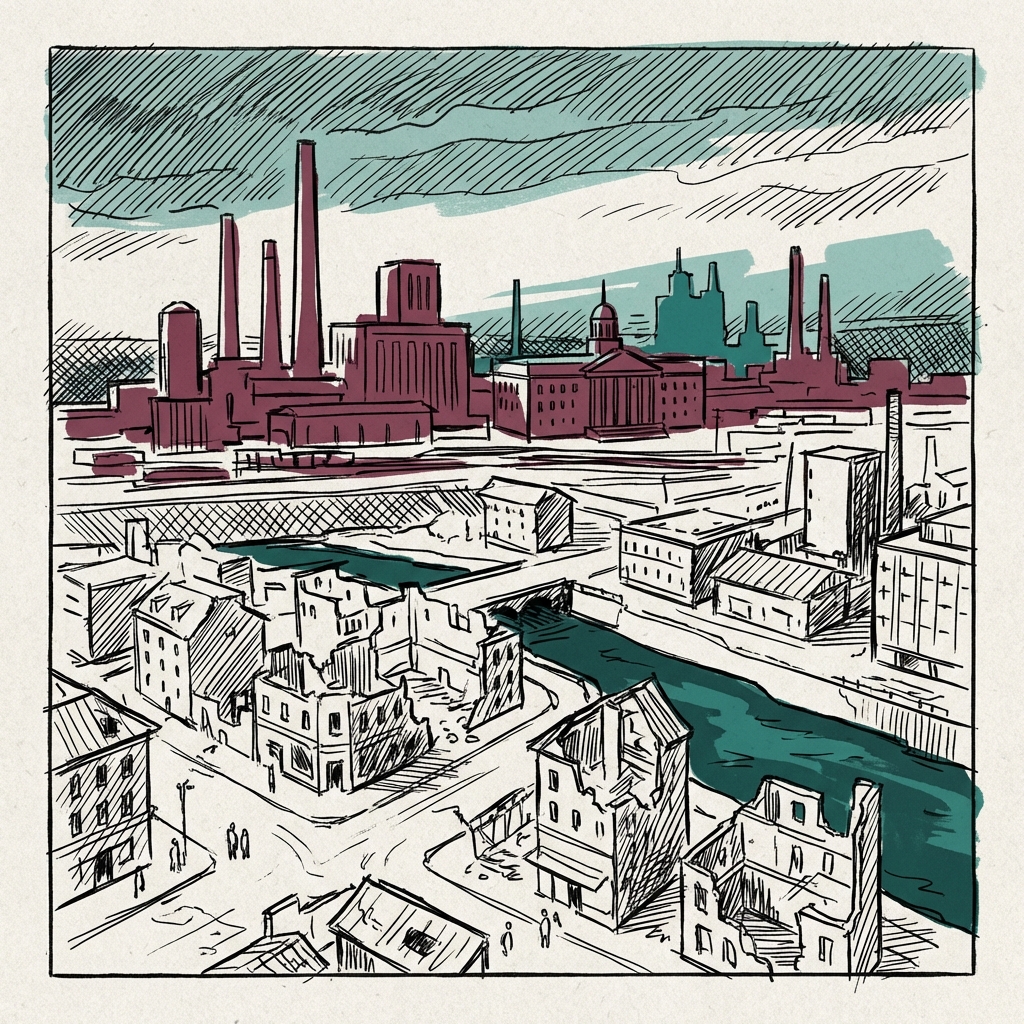
Donetsk
Major eastern Ukrainian city; under Russian control since 2014, centre of the Donbas war.
The 12 September Institute for the Study of War assessment put a Russian position near Donetsk's Fortress Belt under Ukrainian control, although Independent confirmation was absent.
Last refreshed: 22 September 2026 · Appears in 1 active topic
With 65 drone cadets killed in Snizhne, how badly has Ukraine hit Russia's drone programme?
Timeline for Donetsk
Mentioned in: DeepState triples count of Russian gains
Russia-Ukraine War 2026Mentioned in: ISW assesses Ukraine eliminated the Lyman salient
Russia-Ukraine War 2026Mentioned in: Pskov court jails Shlosberg for eleven years
Russia-Ukraine War 2026Mentioned in: Russia fired most, gained least in July
Russia-Ukraine War 2026Mentioned in: ISW relays an unconfirmed Moscow blast
Russia-Ukraine War 2026Background
Donetsk is a major eastern Ukrainian city and the administrative centre of the Russian-held part of Donetsk Oblast. Russian-backed separatists took control in 2014, and Russia later claimed the oblast as part of its territory. Ukraine and most other states continue to regard the city as occupied Ukrainian territory.
The city developed as a coal, steel and heavy-industry centre. Its pre-war population exceeded 900,000. War has disrupted that industrial base and turned the surrounding oblast into a front-line and logistics zone.
Donetsk’s status gives it lasting political weight beyond the battlefield. Russia’s demand that Ukraine cede the remaining Ukrainian-held parts of the oblast has repeatedly blocked negotiations. The defensive cities west and north of Donetsk remain central to Ukraine’s ability to resist further Russian advances.
Donetsk's northern flank shifts
The Institute for the Study of War's 12 September assessment said a Russian position north of Lyman had fallen to Ukrainian forces. The salient had threatened the defensive belt protecting Ukrainian-held cities in Donetsk Oblast. Russian military bloggers reportedly conceded the ground, but no Independent primary source had confirmed the assessment.
For Donetsk, the significance lies in the approaches to the remaining Ukrainian-held Fortress Belt rather than a change in control of the city itself. ISW said Russia had made near-zero net gains since March 2026, after Ukraine contested the operational initiative for the first time since the August 2024 Kursk offensive.
Donetsk's fortress belt faces pressure
On 16 March, Russian forces seized Hryshyne northwest of Pokrovsk, extending towards terrain assessed as among the last defensible ground before open steppe. Ukraine’s Operation Task Force East said Russia was massing reserves for a renewed push towards Kramatorsk and Sloviansk, the cities anchoring Ukraine’s remaining eastern defence.
That pressure matters to Donetsk because the city sits at the centre of the occupied oblast from which Russia seeks to extend control westwards. On 8 March, a Russian airstrike hit Kramatorsk, killing one person and damaging nearly 40 houses, while targeting the rail junction that supplies northern Donetsk Oblast.
Donetsk remains central to talks
On 28 February, Russia was reported to be considering suspension of peace talks unless Ukraine committed in advance to ceding Donetsk, Luhansk, Zaporizhzhia and Kherson. Russia’s 2022 constitutional annexation of Donetsk Oblast makes any retreat politically difficult for Moscow, even where it does not control the territory it claims.
The territorial dispute remained unresolved on 30 April, when Kremlin spokesman Dmitry Peskov made permanent peace conditional on Ukraine ceding the 17 to 18% of Donetsk Oblast still outside Russian control. Donetsk therefore remains both an occupied city and a central obstacle to any settlement.
Reference
What is the Fortress Belt near Donetsk?
Recently resolved
How many battles happen in Donetsk per day?
Did Ukraine disrupt the Russian Donetsk offensive in 2026?
How much Ukrainian territory did Russia capture near Donetsk in July 2026?
Has Gerasimov made false claims about Donetsk before?
Is Russia making progress in Donetsk Oblast in 2026?
Where is Snizhne in Ukraine and who controls it?
What happened at the drone school in Snizhne, Donetsk Oblast?

