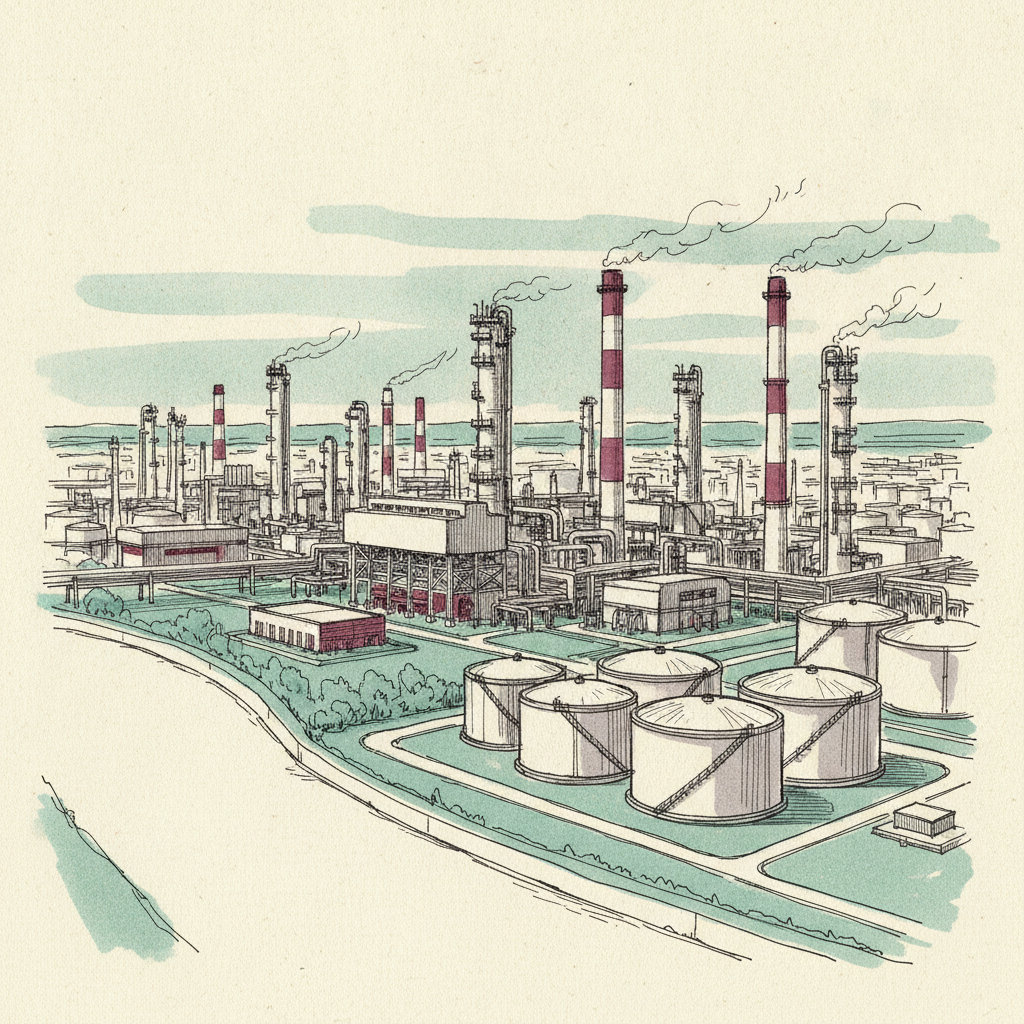
Kapotnya refinery
The Kapotnya refinery is a major oil refinery in south-east Moscow that supplies approximately 40% of the Moscow region's refined fuel; it was struck by Ukrainian drones on 18 June 2026 and temporarily shut down.
Last refreshed: 13 September 2026 · Appears in 1 active topic
How did hitting a refinery inside Moscow's ring road change the war's psychological stakes?
Timeline for Kapotnya refinery
Mentioned in: Brovdi claims 285 tankers struck, breakdown sums to 79
Russia-Ukraine War 2026Mentioned in: Ukraine's strikes move to the Azov
Russia-Ukraine War 2026Mentioned in: Putin admits the petrol queues himself
Russia-Ukraine War 2026Mentioned in: Russia downs 660 drones in one night
Russia-Ukraine War 2026Drone strike shuts Kapotnya near Moscow
Russia-Ukraine War 2026Background
The Kapotnya refinery sits in the south-east of Moscow, roughly ten miles from the Kremlin, and is the primary source of approximately 40% of the capital region's refined petroleum products. It processes crude delivered by pipeline and supplies the Moscow metropolitan area with petrol, diesel and aviation fuel. Its location inside a major European capital distinguishes it from the network of Russian refineries elsewhere that have been struck during the war.
On 18 June 2026 Ukrainian drones struck the Kapotnya complex. Russian air defences scrambled a reported 555 drones in response, indicating the scale of the attack. The strike halted refinery operations and contributed to a fuel supply shock: petrol queues that had previously been confined to occupied Crimea extended into mainland Russia within days. By 23 June at least 15 Russian regions had imposed petrol sales restrictions, and Deputy Prime Minister Alexander Novak told Vladimir Putin the fuel situation was 'challenging but under control'.
The Kapotnya strike was part of a broader 18-20 June Ukrainian strike wave targeting Russian energy and logistics infrastructure. Unlike refineries in the Urals or Siberia, Kapotnya's proximity to Moscow carried direct political weight: disrupting the capital's fuel supply within sight of the Kremlin represents a qualitatively different signal than hitting remote processing plants.
What is the Kapotnya refinery and why was it targeted?
What happened after Ukraine hit the Kapotnya refinery?
How close to the Kremlin is the Kapotnya refinery?
How many drones did Russia scramble to defend the Kapotnya refinery?

