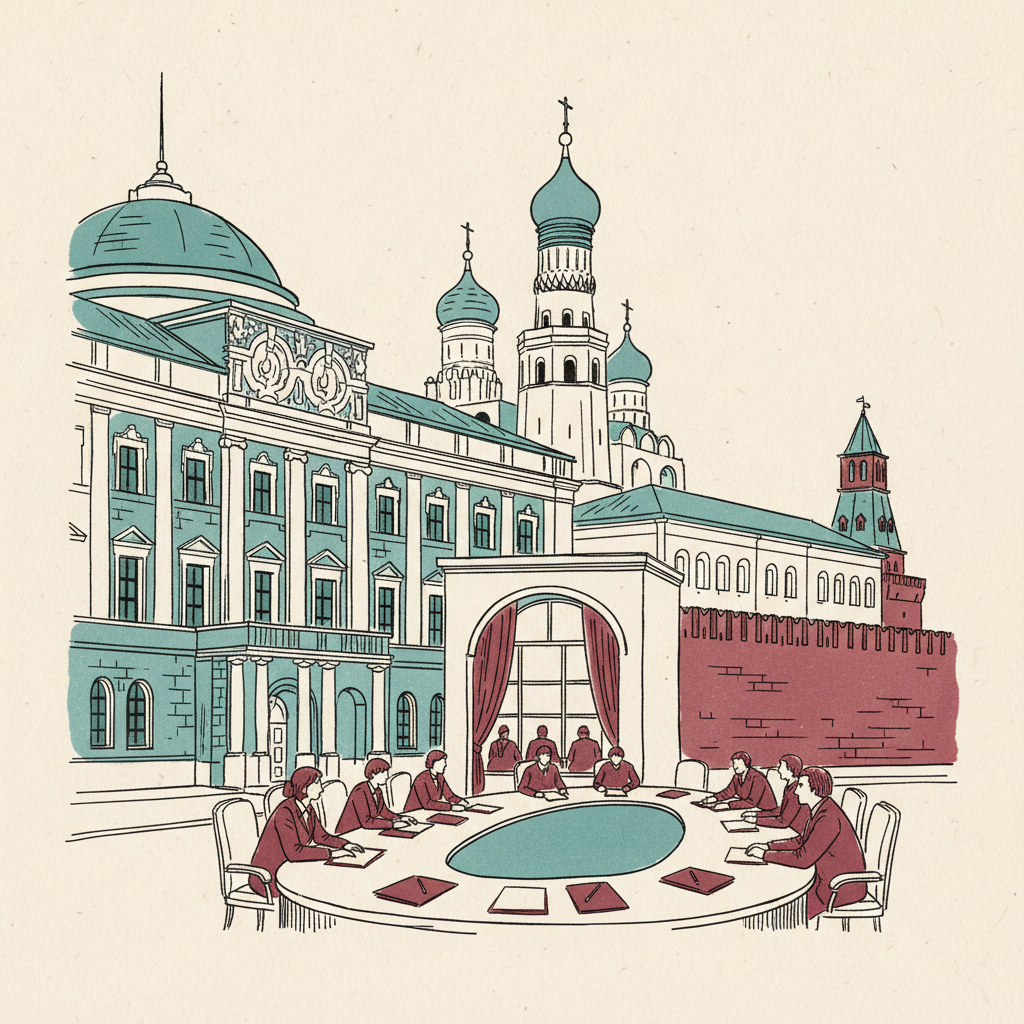
Kremlin
Seat of Russian presidential power; directing the Ukraine war while serving as Iran's last great-power interlocutor.
On 28 June, Vladimir Putin acknowledged petrol queues, making fuel shortages a Kremlin problem after Ukrainian refinery strikes. The admission exposed a domestic cost of directing Russia’s war against Ukraine.
Last refreshed: 22 September 2026 · Appears in 2 active topics
Fuel queues, a mobilisation whisper campaign: can the Kremlin still demand all of Donetsk?
Timeline for Kremlin
Mentioned in: Zelenskyy ties elections to a ceasefire
Russia-Ukraine War 2026Mentioned in: OFAC opens US market to Russian diesel
Russia-Ukraine War 2026Mentioned in: Ukraine strikes Yandex AI data centres
Russia-Ukraine War 2026Mentioned in: Putin clears sale of AO UniCredit Bank
Russia-Ukraine War 2026Mentioned in: Putin decree curbs Russian refinery data
Russia-Ukraine War 2026Background
The Kremlin is the seat of Russian presidential power and the institutional shorthand for the executive system directed from Moscow. It brings presidential authority, national security decisions, diplomacy and economic policy into one centre. Dmitry Peskov is a principal public spokesman for that system.
Kremlin decisions direct Russia’s state machinery. On 9 April 2026, the Kremlin issued a 32-hour Orthodox Easter ceasefire decree and ordered Russia’s defence leadership to halt combat, illustrating its command role in the Ukraine war.
The Kremlin also sets Russia’s public position towards Iran. On 13 April, Peskov said Russia’s offer to take Iranian enriched uranium remained open, placing the institution at the centre of Moscow’s diplomatic engagement with Tehran. Its importance lies in decision-making rather than its buildings: it is where the Russian presidency directs policy on war, negotiation and foreign affairs.
Fuel strain reaches the Kremlin
On 18 June, a Ukrainian drone strike shut Kapotnya, a refinery near Moscow that supplies 40% of the Moscow region’s fuel. The disruption pushed queues beyond Crimea and made everyday fuel supply a problem for the Kremlin, rather than only a loss of export revenue.
By 28 June, Putin had acknowledged queues and unreliable fuel availability himself. The gasoline export ban then ran to 31 July. His admission made the shortage a presidential problem as well as a refinery problem, placing a domestic constraint beside the Kremlin’s war aims.
Belarus pressure widens Kremlin options
On 20 June, Kyiv gave Belarus until 27 June to dismantle four Russian drone-relay stations. Russia said a Ukrainian strike could trigger its mutual defence treaty with Belarus, presenting the dispute as a possible route for a formal ally to enter the war more directly.
On 26 June, Putin met Alexander Lukashenko as Meduza reported that Moscow was using financial leverage to press Belarus into deeper involvement. For the Kremlin, that pressure preserved an option to widen Russia’s operational position without openly committing Belarusian forces beforehand.
Is Russia planning a new mobilisation wave in 2026?
Why did Putin admit to fuel shortages in Russia?
Is Russia pressuring Belarus to join the war more directly?
Is the Russian economy under strain in 2026?
What are the Kremlin's conditions for a Ukraine peace deal?
What is Russia's role in the Iran conflict in 2026?
Is Russia running out of money to fund the Ukraine war?
Did Putin and Trump speak before the Russia Ukraine ceasefire?
What did the Kremlin announce about the Easter ceasefire in Ukraine?
Who speaks for the Kremlin?
What did Putin say about the Iran war?
