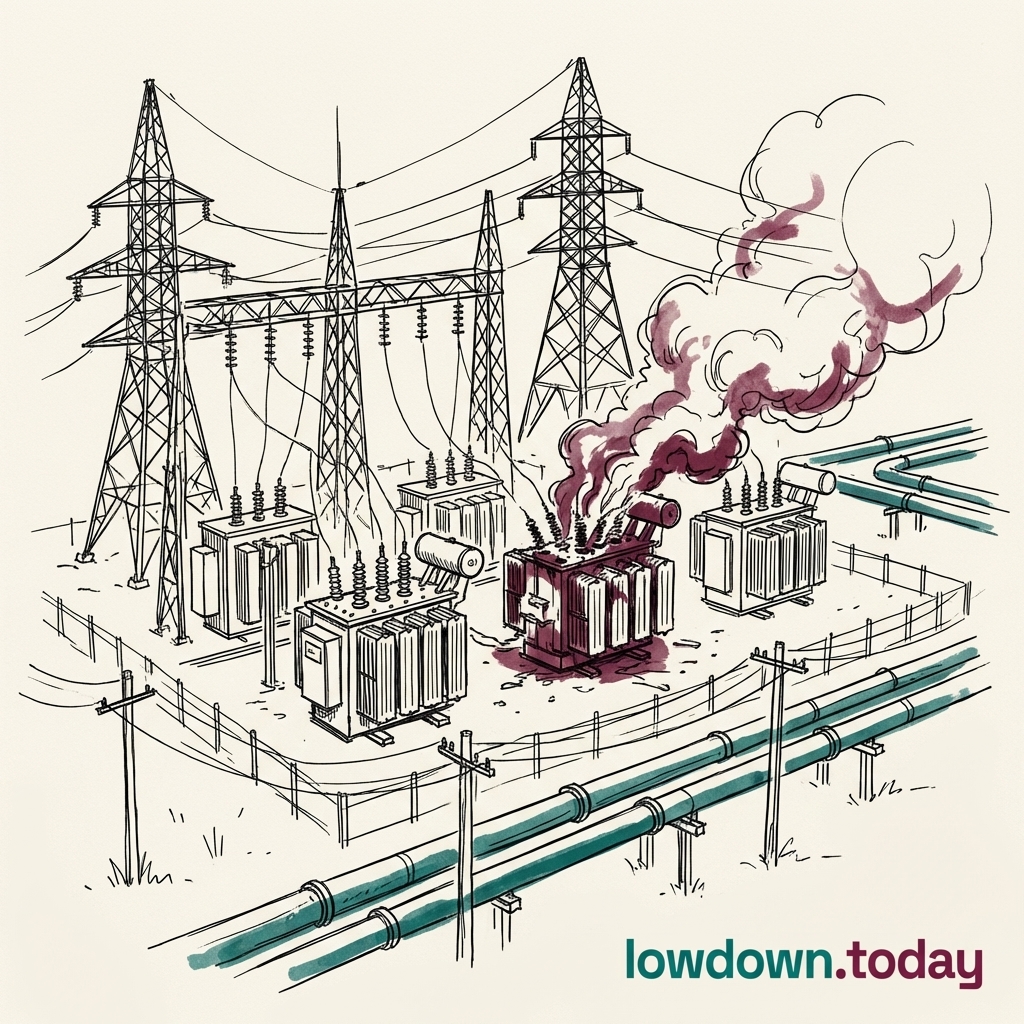
Energy infrastructure
The common target across two wars: Russia strikes Ukraine's grid, Iran and Israel trade refinery blows across The Gulf.
On 20 March, Energy infrastructure became the focus of a record 8 million-barrel-a-day global supply loss as war damage and disrupted Gulf exports strained fuel systems.
Last refreshed: 22 September 2026
Two wars are destroying the world's energy supply simultaneously; what breaks first?
Timeline for Energy infrastructure
Mentioned in: Trump delays grid strikes, claims deal
Iran Conflict 2026Mentioned in: IEA: 8m barrels/day — record disruption
Iran Conflict 2026Mentioned in: Iran threatens Gulf desalination grids
Iran Conflict 2026Mentioned in: Fico holds Ukraine EU bid over Druzhba
Russia-Ukraine War 2026Mentioned in: Iran threatens crushing strikes on UAE
Iran Conflict 2026Background
Energy infrastructure is the network of assets that produces, processes, stores, moves and distributes energy. It includes power grids, pipelines, refineries, gas plants, fuel depots and export terminals. These systems support homes, industry, transport and military activity.
Its relevance extends beyond fuel supply. On 18 March, disruption at UAE gas facilities also threatened inputs to desalination, showing how energy systems can support essential water services. On 19 March, the Druzhba repair plan illustrated how a cross-border pipeline can affect both national supply and political relations.
Power grids, pipelines and refineries connect services and take time to replace. A damaged facility can reduce production, interrupt transport or remove a service on which other systems depend. That makes resilience, repair capacity, route diversity and physical protection enduring strategic concerns.
Supply disruption reaches record scale
On 20 March, the IEA reported an 8 million-barrel-a-day fall in global supply, the largest disruption on record. For Energy infrastructure, the figure shows how damage to facilities and blocked export routes can become a system-wide supply problem rather than a local repair task.
On 20 March, IEA members released 400 million barrels from strategic reserves. The release buys time, but it cannot restore damaged plants, reopen a closed SEA route or replace lost processing capacity. Damaged infrastructure can still prevent stored oil from reaching users as fuel.
LNG capacity absorbs repeated strikes
On 16 March, Iranian missiles struck Ras Laffan Industrial City after Israel attacked Iran's South Pars gas field. The Qatari complex handles 77 million tonnes of LNG a year, so its damage made a single industrial hub relevant far beyond Qatar's border.
On 19 March, a second Iranian attack caused further damage at Ras Laffan. Repeated strikes matter to Energy infrastructure because repair planning, workforce safety and export reliability depend on whether a site can remain in operation between attacks.
Attacks strain power infrastructure
In its 7 March attack, Russia launched missiles and 480 drones at power-generation networks in Kyiv and seven other locations. The attack showed that Energy infrastructure can be targeted across several places at once, forcing grid operators and air defences to manage disruption beyond a single damaged site.
In a separate 13 and 14 March barrage, Russia launched 430 drones and another missile barrage in another large barrage. For the category, repeated mass attacks turn repair capacity, spare equipment and interceptor availability into parts of energy security.
Is Russia targeting Ukraine's power grid?
What happened to the Druzhba pipeline?
Did Iran strike Gulf oil refineries?
How much oil supply has been lost?
Did Iran threaten desalination plants?
What are strategic petroleum reserves?


