Skip to content
You can now search across every topic, entity and event.What's new
Scott Bessent
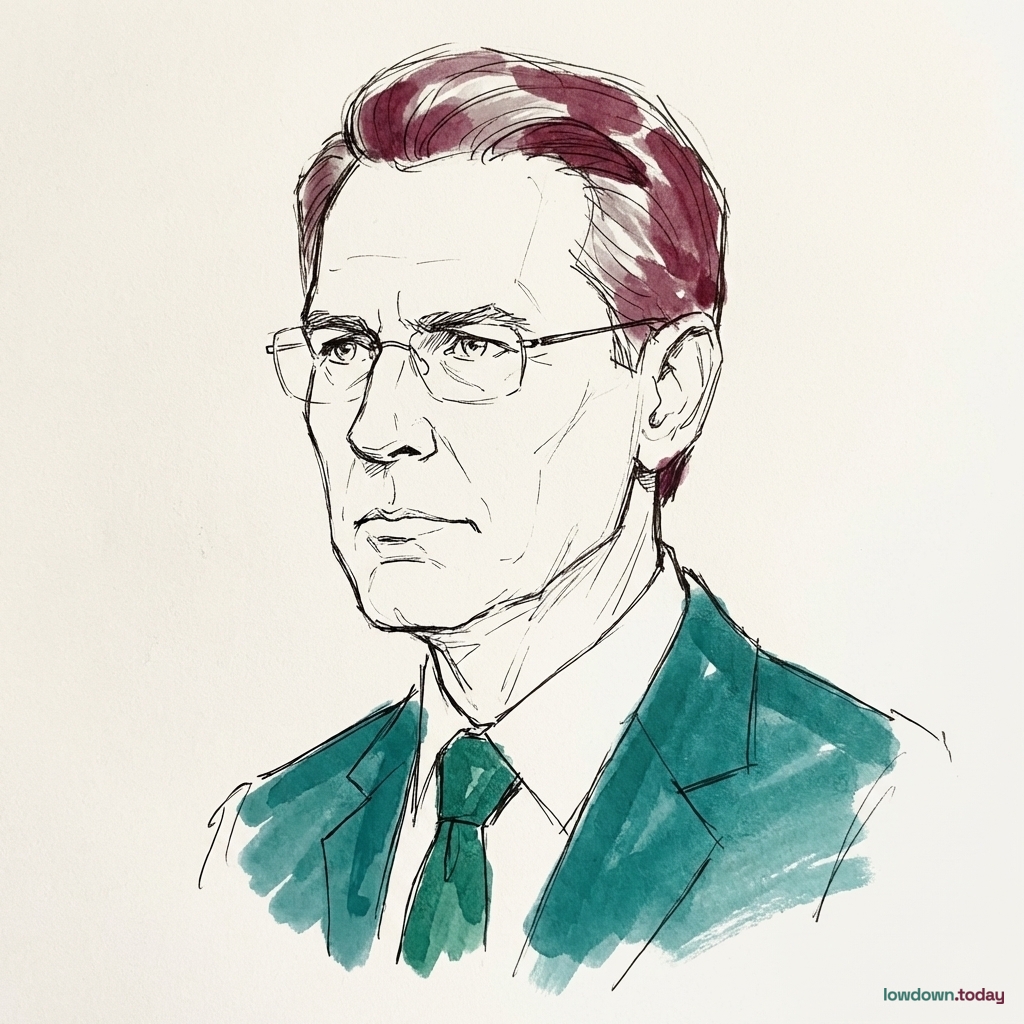
AI-generated editorial illustration
PersonUS

Scott Bessent

US Treasury Secretary in the second Trump administration; architect of Iran sanctions enforcement in 2026.

Last refreshed: 26 June 2026 · Appears in 4 active topics

Key Question

Is Scott Bessent building a financial siege of Iran, or just escalating pressure to a negotiating table?

Timeline for Scott Bessent

#162 Jul

Received Altman's equity-stake pitch

AI: Jobs, Power & Money: OpenAI offers US a 5% stake, $42.6bn
#13622 Jun

Issued General License X on 22 June 2026

Iran Conflict 2026: The oil licence Trump finally signed
View full timeline →
Common Questions
Who is Scott Bessent?
Scott Bessent is the 60th US Secretary of the Treasury, confirmed in January 2025. He previously founded Key Square Group and was Chief Investment Officer at Soros Fund Management. As Treasury Secretary he has been the primary architect of US sanctions escalation against Iran in 2026.
Did Bessent change his position on Iranian oil sanctions?
Yes. In early 2026 Bessent told CNBC the administration was deliberately allowing Iranian tankers through Hormuz to stabilise oil prices. On 15 April he reversed course, confirming GL-U would not be renewed and framing secondary sanctions as the financial equivalent of US bombing.Source: CNBC / US Treasury
Did Bessent threaten to sanction Oman over the Iran toll dispute?
Yes. On 28 May 2026 Bessent warned Oman that Washington would 'aggressively target any actors involved, directly or indirectly, in facilitating tolls for the Strait of Hormuz', after reports that Tehran and Muscat were negotiating a joint toll-collection mechanism. Oman denied any toll plan and backed down.Source: US Treasury / Reuters

Background

Scott Bessent is the 60th US Secretary of the Treasury, confirmed by the Senate in January 2025. A veteran macro investor, he spent nearly two decades at George Soros's hedge fund before founding Key Square Group in 2015. His appointment signalled that Trump's second term would treat fiscal and sanctions policy as active geopolitical instruments rather than passive regulatory tools.

Bessent has driven a sustained sequence of Iran sanctions actions since hostilities began on 28 February 2026. He told CNBC the administration was deliberately letting Iranian tankers through the Strait of Hormuz to supply global markets, predicting oil would fall 'much lower' than $80. That accommodation posture reversed on 15 April 2026, when he confirmed OFAC General Licence U would not be renewed and described secondary sanctions on Iranian oil buyers as 'the financial equivalent of the US military's bombing campaign'; markets did not reprice, and Brent fell on the announcement.

On 24 April 2026, Bessent attached explicit nuclear-programme language to the Hengli Petrochemical sanctions action, the first recorded instance of that framing in any 2026 shadow-fleet designation. On 1 May 2026, Bessent's OFAC issued General Licence W, designated three Iranian foreign exchange houses and the Panama-flagged tanker NEW FUSION, and published a sanctions alert naming IRCS, Bonyad Mostazafan, and Iranian embassy accounts as prohibited Hormuz toll payment channels. He stated OFAC would 'relentlessly target the regime's ability to generate, move, and repatriate funds'.

On 28 May 2026, Bessent warned Oman that Washington would 'aggressively target any actors involved, directly or indirectly, in facilitating tolls for the Strait', after Iranian state media reported Tehran and Muscat were negotiating a joint toll-collection mechanism. Oman, Washington's Iran backchannel since 1981, denied any toll plan and backed down. Separately, OFAC designated Iran's Persian Gulf Strait Authority under EO 13224 at the same moment US and Iranian negotiators reached a tentative MOU to reopen the strait, with the sanction carrying legal force and the MOU none.

On 18 June 2026, OFAC issued the sb0535 Hezbollah-network designation, targeting Lebanese political figures Sleiman Frangieh and Mahmoud Qamati alongside the Alaa Hamieh financial network spanning Lebanon, Syria, Iraq, and Oman. Bessent framed the action as part of a Lebanon peace-process track, stating: 'Hezbollah must disarm for Lebanon to achieve a secure and prosperous future.' On 22 June, OFAC issued General Licence X, the first Iran oil-sanctions relief instrument of the conflict, authorising Iranian crude, petrochemical, and petroleum-product transactions through 21 August 2026.

On 24 June 2026, Bessent stated that the disputed $12 billion in frozen Iranian funds would be held in a US-controlled escrow account in Qatar, accessible only for purchases of American food and medical exports including corn, wheat, and soybeans. Iranian officials rejected the terms, saying purchase decisions would depend on price and quality rather than US direction. The Foundation for Defense of Democracies had noted GL X carries no escrow, cap, or reporting requirement on live oil revenue; the Qatar escrow applies only to the contested frozen cash, while Iran's oil income under GL X flows unconstrained.

Bessent described 30-day sanctions waivers covering 124 million barrels of Russian crude as 'narrowly tailored' while acknowledging Russian territorial gains were 'an inevitability'. European partners including Germany's Chancellor Merz called the Russian oil waivers outright wrong. On 16 April 2026 Bessent confirmed General License 134A would not be renewed, closing a channel worth approximately $150 million per day.

Bessent authorised General License 134B on 18 April 2026, extending Russian seaborne-oil cover to Cuba through 16 May 2026 and publicly justifying it on grounds the oil was already in transit. On 7 May OFAC issued Cuba General License 1 as a savings clause under newly numbered Executive Order 14404, and added Ania Guillermina Lastres Morera to the SDN list under the [Cuba-EO] tag, the first individual designation under EO 14404 signed under Bessent's Treasury authority.

On 8 April 2026, Bessent co-convened an emergency meeting at Treasury headquarters with Federal Reserve Chair Jerome Powell, summoning the CEOs of Citigroup, Morgan Stanley, Bank of America, Wells Fargo, and Goldman Sachs to discuss a frontier AI model's systemic risk profile, the first recorded instance of the Fed and Treasury convening Wall Street leadership over an AI model's capabilities.

More questions
Did Trump use Bessent to punish Spain?
Yes. Trump ordered Bessent to cut all Treasury dealings with Spain after Madrid refused US forces base access during the Iran conflict.Source: White House
What did Bessent say about Russian sanctions waivers?
Bessent described 30-day waivers on 124 million barrels of Russian crude as 'narrowly tailored' and acknowledged Russian territorial gains were 'an inevitability', drawing sharp criticism from Germany's Chancellor Merz.Source: Treasury Department
What did Scott Bessent say about Hezbollah in June 2026?
On 18 June 2026, Bessent said 'Hezbollah must disarm for Lebanon to achieve a secure and prosperous future' after OFAC issued the sb0535 designation targeting Frangieh, Qamati, and the Alaa Hamieh financial network across Lebanon, Syria, Iraq, and Oman.Source: event
Why did the US Treasury sanction Oman's role in the Strait of Hormuz?
Treasury Secretary Bessent threatened on 28 May 2026 to target any actors facilitating Hormuz tolls after Iranian state media reported a joint Iran-Oman toll mechanism; Oman backed down the same day and denied any such plan existed.Source: event
What did Scott Bessent say about Iran's frozen assets in Qatar?
On 24 June 2026, Bessent said the disputed $12 billion in frozen Iranian funds would be held in a US-controlled escrow in Qatar, accessible only for purchases of American food and medical exports. Iran rejected the conditions.Source: Lowdown iran-conflict-2026
What is OFAC General Licence X and what does it allow Iran to do?
General Licence X, issued 22 June 2026, is the first Iran oil-sanctions relief instrument of the conflict. It authorises Iranian crude, petrochemical, and petroleum-product transactions through 21 August 2026.Source: Lowdown iran-conflict-2026
Why did Scott Bessent warn Oman over the Strait of Hormuz?
Bessent warned Oman in May 2026 because Iranian state media reported Tehran and Muscat were negotiating joint management of Hormuz shipping traffic. Washington viewed this as facilitating Iran's toll scheme; Oman backed down the same day.Source: Lowdown iran-conflict-2026
What is Scott Bessent's role in the Iran conflict?
As Treasury Secretary, Bessent directs OFAC sanctions policy. He oversaw GL U non-renewal, secondary-sanctions threats, shadow-fleet designations, the GL X oil-relief instrument, and the disputed frozen-assets escrow proposal.Source: Lowdown iran-conflict-2026