Skip to content
You can now search across every topic, entity and event.What's new
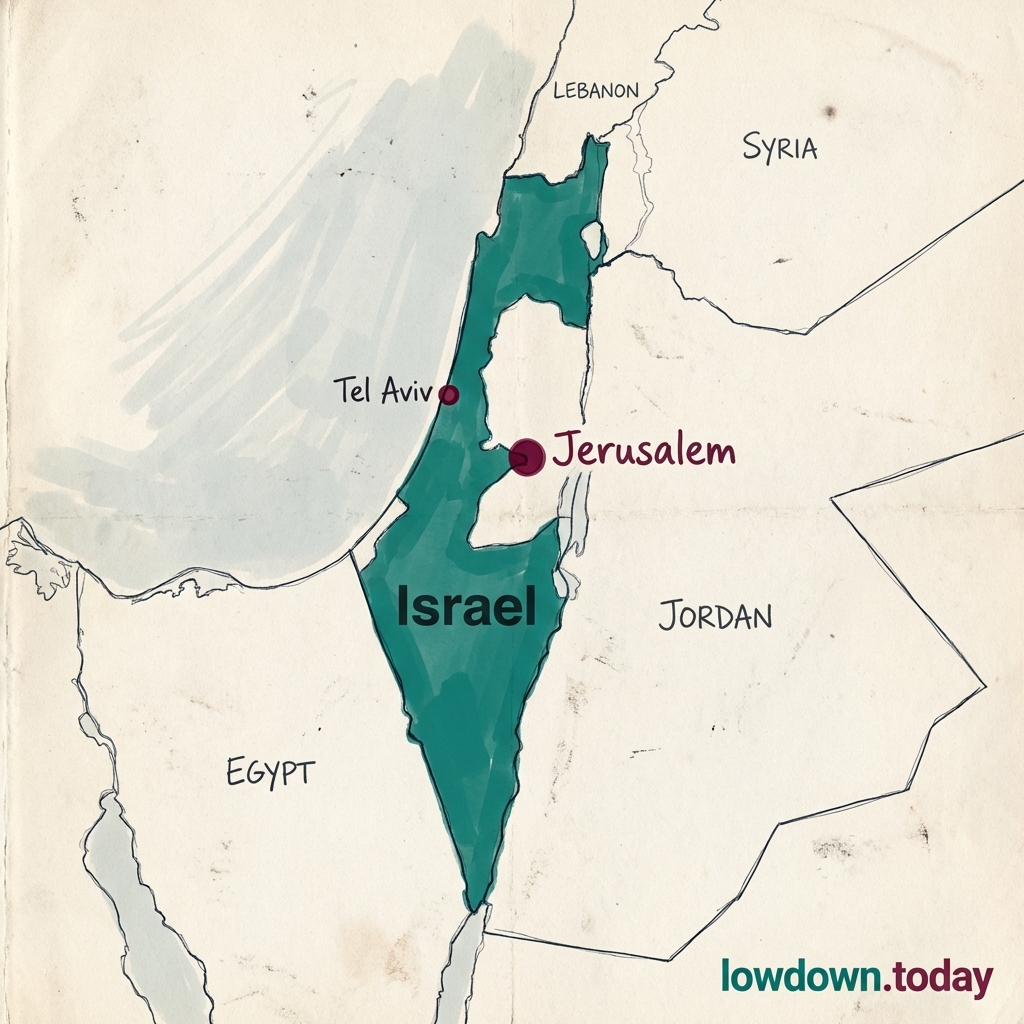
Israel
Nation / PlaceIL

Israel

State fighting Iran and Hezbollah on multiple fronts amid a contested Lebanon ceasefire.

By 2 August Israel featured as accused rather than actor: Iran's foreign minister called it a false-flag culprit in Egypt's Damietta drone strike, while Israeli outlet Ynetnews reported Gulf states split over Trump's cancelled strike on Iran.

Last refreshed: 11 August 2026 · Appears in 2 active topics

Key Question

Israel's defence minister called Iran's new leader 'a dead man'; will he act?

Timeline for Israel

#171 15 Aug

Struck south Lebanon, killing two named Hezbollah commanders

Iran Conflict 2026: Eleven dead in south Lebanon strikes
View full timeline →

Background

Israel launched Operation Epic Fury alongside the United States on 28 February 2026, killing the holder of Iran's Supreme Leader office and opening a ground offensive in Lebanon that Defence Minister Katz said would hold all territory south of the Litani River. Arrow-3 interceptor stocks reached 81 per cent depletion by early April, leaving Israel dependent on a US resupply measured in years rather than months.

Israel's war aims have diverged from Washington's throughout the conflict: on 1 June Trump halted a planned Israeli strike on Beirut in an expletive-laden call, and reporting in May revealed Israel had run two covert bases in Iraq's western desert since late 2024 without Baghdad's public knowledge. Netanyahu was excluded from the Islamabad Mediation entirely and faces an autumn election framed around the deal.

The Lebanon front remains the clearest point of friction between Israel and its own ally: Israel treats the Ceasefire's requirement to end its war in Lebanon as carrying no withdrawal obligation, and Coalition partners Ben-Gvir and Smotrich openly say the deal does not bind Israel at all. That gap between what Washington signed and what Jerusalem accepts has outlasted every round of Iran diplomacy so far. The event record includes and .

Key Issues
Damietta dispute

Iran accuses Israel of a false flag

For Israel, the war's diplomatic noise increasingly names it as an accused party rather than an acting one. Iran's foreign minister Abbas Araghchi publicly called the 29 July Damietta drone strike an Israeli false flag on 1 August, even as two Iranian officials told the New York Times anonymously that Iranian drones had been used, an account that leaves Israel denying an attack Tehran itself will not formally claim either.

Israeli reporting has meanwhile become a channel for reading the war's next phase from outside government statements: Ynetnews reported on 2 August that Gulf capitals split over Trump's cancelled strike on Iran, with some officials wanting it to proceed, and separately said Tehran was weighing a pre-emptive strike of its own should diplomacy collapse.

Lebanon front

Israel's Lebanon war reignites again

Israel's own front stayed live through late June even as the wider Ceasefire held: a Golani Brigade captain, David Hazutt, 21, was killed by a Hezbollah gunman on 28 June, a day after Israel struck Nabatieh and two more South Lebanon villages, and the same day Hezbollah's leader Naim Qassem rejected the Washington disarmament framework as null and humiliating hours after it was signed.

Two days earlier Hezbollah killed Lt Col Dor Ben Simhon and three crew at Kfar Tebnit, the most senior Israeli officer lost since the Ceasefire, keeping Iran's Lebanon precondition for nuclear talks unmet. Netanyahu's order to hold ground south of the Litani leaves Israel's own casualties as the daily price of that stalled sequencing.

Succession threat

Katz renews his threat on Iran's heir

Israel's defence minister Israel Katz called Iran's presumptive successor to the Supreme Leader's office 'a dead man' on 1 July, a threat Ynet reported drew an 'immediate and powerful response' warning from Iran's foreign minister Abbas Araghchi, though Katz had made a near-identical threat back in March when the succession first took effect.

The threat's shadow followed the successor into his father's own funeral: he skipped the Tehran state ceremony that opened on 4 July with no explanation from Iranian officials, a no-show that raises doubts about whether Israel's declared target can risk appearing in public at all.

Common Questions

Israel's Lebanon war reignites again

Is Israel still fighting in Lebanon?
Yes. The front reignited on 2 July 2026 when troops of the IDF's 679th Armoured Brigade clashed with a Hezbollah gunman at Bint Jbeil in South Lebanon, drawing tank shelling and airstrikes and wounding an Israeli soldier.Source: Lowdown Iran Conflict 2026

Katz renews his threat on Iran's heir

Does Israel want to remove Iran's government?
Yes. Netanyahu has said permanent incapacitation of Iran's military and nuclear capacity is the goal, and on 1 July 2026 Defence Minister Katz called Iran's new Supreme Leader Mojtaba Khamenei 'a dead man', prompting an Iranian warning of an 'immediate and powerful response'.Source: Lowdown Iran Conflict 2026

Reference

What is the Yellow Line dispute between Israel and the US over Lebanon?
Israel demanded IDF presence in a buffer zone up to the Litani River and refused to concede it as a condition of the Lebanon Ceasefire. Trump extended the Ceasefire by three weeks in late April following ambassador-level talks; Netanyahu reportedly learned of the announcement from the press.Source: Lowdown iran-conflict-2026
Is Israel withdrawing from Lebanon under the MOU?
No. Israel reads the MOU's 'terminate its war in Lebanon' clause as imposing no withdrawal obligation. Defence Minister Katz stated the IDF would remain in Lebanon for an unlimited period; IDF strikes continued on 18-19 June, killing 86 people over two days.Source: event
How far has Israel advanced into Lebanon?
By 1 June 2026 IDF ground forces were advancing toward the Zaharani river in southern Lebanon, described as Israel's deepest incursion since 2000. Netanyahu confirmed the advance would continue despite the partial Ceasefire that halted planned Beirut strikes.Source: Lowdown Iran Conflict 2026
Why did Trump stop Israel bombing Beirut?
On 1 June 2026 Trump phoned Netanyahu in an expletive-laden call and halted planned Israeli strikes on Beirut. A partial Lebanon Ceasefire followed, with Hezbollah pledging to stop attacking Israel. It was the first documented Israeli military reversal under US pressure in 95 days of war.Source: Lowdown Iran Conflict 2026
Did Israel have secret bases in Iraq before the Iran war?
Yes. The New York Times and WSJ reported on 18 May 2026 that Israel operated two covert military bases in Iraq's western desert since late 2024, 14 months before the February strike. Iraq publicly denied authorising them.Source: New York Times / Wall Street Journal
Is Israel still a member of FIFA during the war?
As of April 2026, the Israel Football Association remains a FIFA member. The Palestine Football Association filed an appeal at the Court of Arbitration for Sport on around 20 April 2026, challenging FIFA's decision not to suspend the IFA. At the 76th FIFA Congress in Vancouver on 30 April, Infantino staged a joint photo of Israeli and Palestinian FA representatives.Source: Lowdown FIFA 2026 World Cup
Did Israel destroy Iran's nuclear programme in 2026?
A Haaretz assessment published 18 May 2026 (citing a former senior Israeli military intelligence official) judged that the strikes did not destroy Iran's underground enrichment infrastructure or missile production lines, and warned Tehran may now conclude only nuclear weapons can deter future attacks.Source: Haaretz / Lowdown Iran Conflict 2026
What is Israel's position on ending the Iran war?
Netanyahu has emphasised the need for a defined military success and resisted premature Ceasefire terms. Israeli war aims — including holding territory south of the Litani in Lebanon and neutralising Iran's nuclear capacity — have consistently diverged from Washington's more negotiation-oriented posture.Source: Lowdown iran-conflict-2026
How depleted are Israel's Arrow-3 missile interceptors?
Arrow-3 stocks reached approximately 81% depletion by early April 2026, creating a multi-year dependency on US replenishment.Source: Lowdown iran-conflict-2026
What is Operation Epic Fury and what are Israel's war aims?
Operation Epic Fury is the joint US-Israel military campaign launched 28 February 2026, striking Iran's nuclear infrastructure and IRGC command. Israel's stated aim is permanent neutralisation of Iran's military and nuclear capacity; it has also conducted a ground offensive in Lebanon.Source: Wall Street Journal
What does the Israel-Iran war mean for Russia and Ukraine?
Israel struck the Russia-Iran arms corridor at Bandar Anzali, temporarily interdicting weapons flows to Russia. Meanwhile the war drove Urals crude to $123 per barrel, generating a revenue windfall for Moscow that partially offset Ukraine's Baltic port strike campaign.
Source Material
