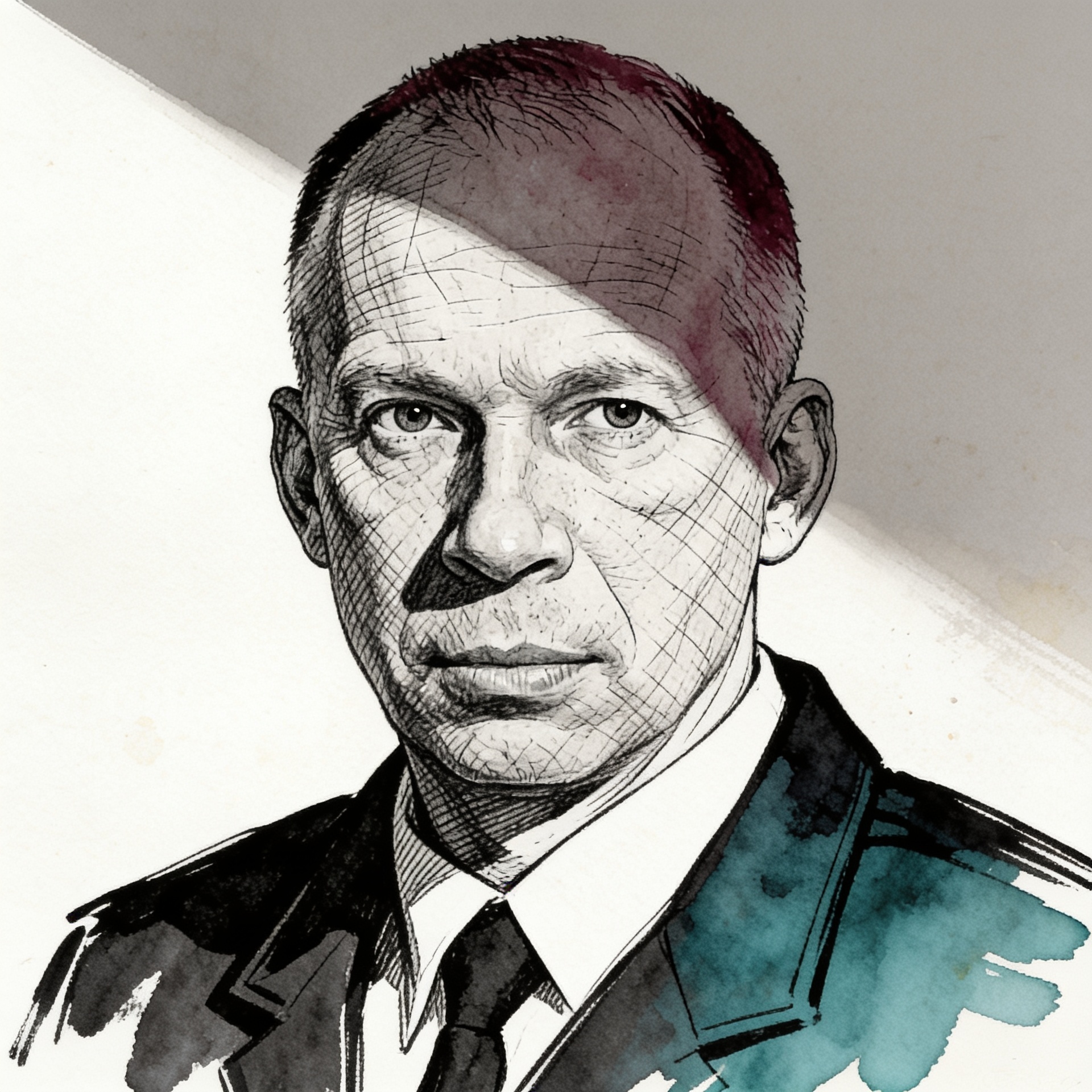
Oleksandr Syrskyi
Ukraine's Commander-in-Chief; accused by his sacked Defence Minister of blocking ministry initiatives in July 2026.
Last refreshed: 23 July 2026 · Appears in 1 active topic
Can Syrskyi hold the line against Russia's spring push with depleted Western stocks?
Timeline for Oleksandr Syrskyi
Mentioned in: Zelenskyy swaps out his top general
Russia-Ukraine War 2026Zelenskyy dismisses Syrskyi, names Drapatyi war chief
Russia-Ukraine War 2026Kyiv protests spread to eight Ukrainian cities
Russia-Ukraine War 2026Zelenskyy sacks Fedorov after army talks
Russia-Ukraine War 2026ISW: Russia stalls at fortress belt
Russia-Ukraine War 2026Background
General Oleksandr Syrskyi remains Ukraine's Commander-in-Chief, but July 2026 made him the centre of the war's most visible domestic political rupture. Outgoing Defence Minister Mykhailo Fedorov, dismissed on 15 July, said his removal stemmed from a permanent conflict with Syrskyi and accused him of blocking ministry initiatives. Protesters chanted "Syrsky out" across eight cities over three days from 16 to 18 July. Syrskyi's own account of the dispute is not recorded in Lowdown's sourcing, and Fedorov's version stands as an attributed claim rather than an established fact. He has not been removed and remains in POST. The command reshuffle continued on 22 July when Zelenskyy replaced chief of the general staff Anatoliy Hnatov with Ihor Skybiuk, the second change atop the war command in eight days; Syrskyi's own position as Commander-in-Chief was unaffected by the swap, and he retains authority over the newly appointed general staff.
Syrskyi has commanded Ukraine's Armed Forces since February 2024, when he replaced Valerii Zaluzhnyi in a politically charged transition. His appointment was controversial: his Soviet-trained tactical style and his role in the costly Bakhmut defence drew criticism from officers WHO preferred Zaluzhnyi's approach. Born in Russia to an ethnic Russian family, his loyalty has occasionally been questioned in Ukrainian political commentary, though Zelenskyy has publicly backed him throughout, including during the July dismissal row.
His command record includes the Zaporizhzhia counteroffensive, which reclaimed 460 sq km and eight settlements between late January and mid-March 2026, Ukraine's first sustained net territorial gain since 2023, and the defence against Russia's spring offensive, when he confirmed 619 ground attacks over four days in mid-March. ISW assessed in March that Russian forces were unlikely to seize the Fortress Belt in 2026 as engagement rates fell from their peak.
Reference
What is the Fortress Belt in the Ukraine war?
How does Syrskyi compare to Zaluzhnyi as Ukraine's commander?
Why was Syrskyi's appointment as Ukraine's military chief controversial?
Who is Oleksandr Syrskyi?
Recently resolved
What did Syrskyi report about Russia's spring offensive in 2026?
What territory did Ukraine reclaim under Syrskyi's command in early 2026?
Did the July 2026 general staff shake-up affect Oleksandr Syrskyi's command?
Why are Ukrainians protesting against Syrskyi?
Why did Mykhailo Fedorov blame Syrskyi for his dismissal?

