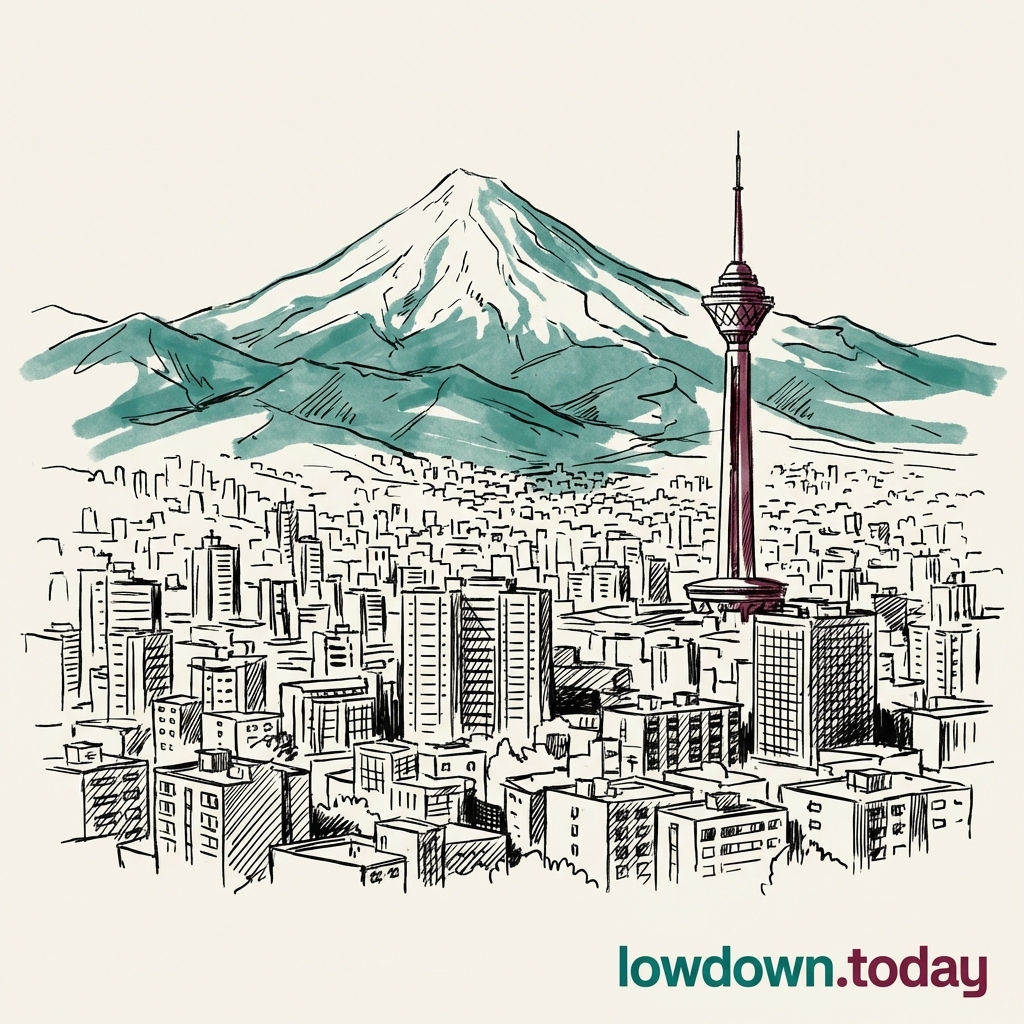
Tehran
Capital of Iran; seat of the Islamic Republic's government, IRGC, and wartime delegation.
On 13 September, Tehran prepared for Oman talks over SAFE passage through the strait of Hormuz, placing Iran’s capital at the centre of decisions over the war’s most contested shipping route.
Last refreshed: 22 September 2026 · Appears in 2 active topics
Tehran sent its delegation to Geneva; can it hold two governments in one capital?
Timeline for Tehran
Mentioned in: US flies its last troops out of Erbil
Iran Conflict 2026Mentioned in: Iran loads no crude for a whole month
Iran Conflict 2026Mentioned in: Qatar brings the US answer to Araghchi
Iran Conflict 2026Hosted the open-market dealing that set the record rate
Iran Conflict 2026: Rial passes 2.5 million to the dollarHosted the designated network hub
Iran Conflict 2026: Treasury names 10 Iran missile suppliersBackground
Tehran is Iran’s capital and the seat of its national government. It houses institutions that articulate Foreign Policy, legislate and direct national security, including the foreign ministry, Parliament, Revolutionary Guard command and the Supreme National Security Council.
The city is more than the setting for official statements. National negotiations, security decisions and senior military appointments pass through central institutions based there. The Hormuz draft reported on 5 August still required approval from the Supreme Leader and security council. Six military decrees signed on 10 August also documented central authority over senior command posts.
That concentration gives Tehran lasting relevance in Iran’s external policy and internal governance. Decisions announced in the capital can require agreement across civilian, clerical and military bodies before they become enforceable.
Tehran keeps Hormuz talks open
On 13 September, Tehran’s foreign ministry said planned Oman talks would address a shipping route through Hormuz and nothing wider. The narrow agenda kept a diplomatic channel open while excluding the nuclear file, sanctions and tanker exchanges.
On 5 August, Iranian state media said eight negotiation rounds had produced preliminary approval from Foreign Minister Abbas Araghchi. The Supreme Leader and Supreme National Security Council still had to approve the maritime-corridor draft, so Tehran retained the final institutional decisions after talks reached ministerial level.
Tehran formalises wartime command
On 9 August, President Masoud Pezeshkian named Mohsen Rezaei to lead the Supreme National Security Council after Mohammad Bagher Zolghadr resigned. The council’s approval was still needed for the Hormuz draft, making its leadership change a direct issue for Tehran’s wartime decision chain.
On 10 August, Mojtaba Khamenei signed six military decrees covering senior armed-forces, Revolutionary Guard, naval and Basij posts. Two decrees confirmed commanders already in place, but the paperwork put appointments on record from Tehran after months of uncertainty.
Tehran formalises wartime command
Why did Iran's new Supreme Leader miss his father's funeral in Tehran?
Reference
Does Tehran have air raid shelters for civilians?
Why did Iran's delegation walk out of the Geneva talks in June 2026?
What was destroyed in Tehran during the 2026 Israeli strikes?
Who controls Iran from Tehran: the president, the Supreme Leader or the IRGC?
Where is Tehran and why does it matter in the 2026 Iran war?
How long was Iran's internet shut down during the 2026 war?
What happened to Tehran's government after Ali Khamenei was killed?
How many civilians have been killed in Tehran since the war started?
What is Abbas Baqaei's position on Iran's nuclear programme?
Why are there three contradictory Iranian positions on the ceasefire?
Who is actually in charge in Tehran now?


