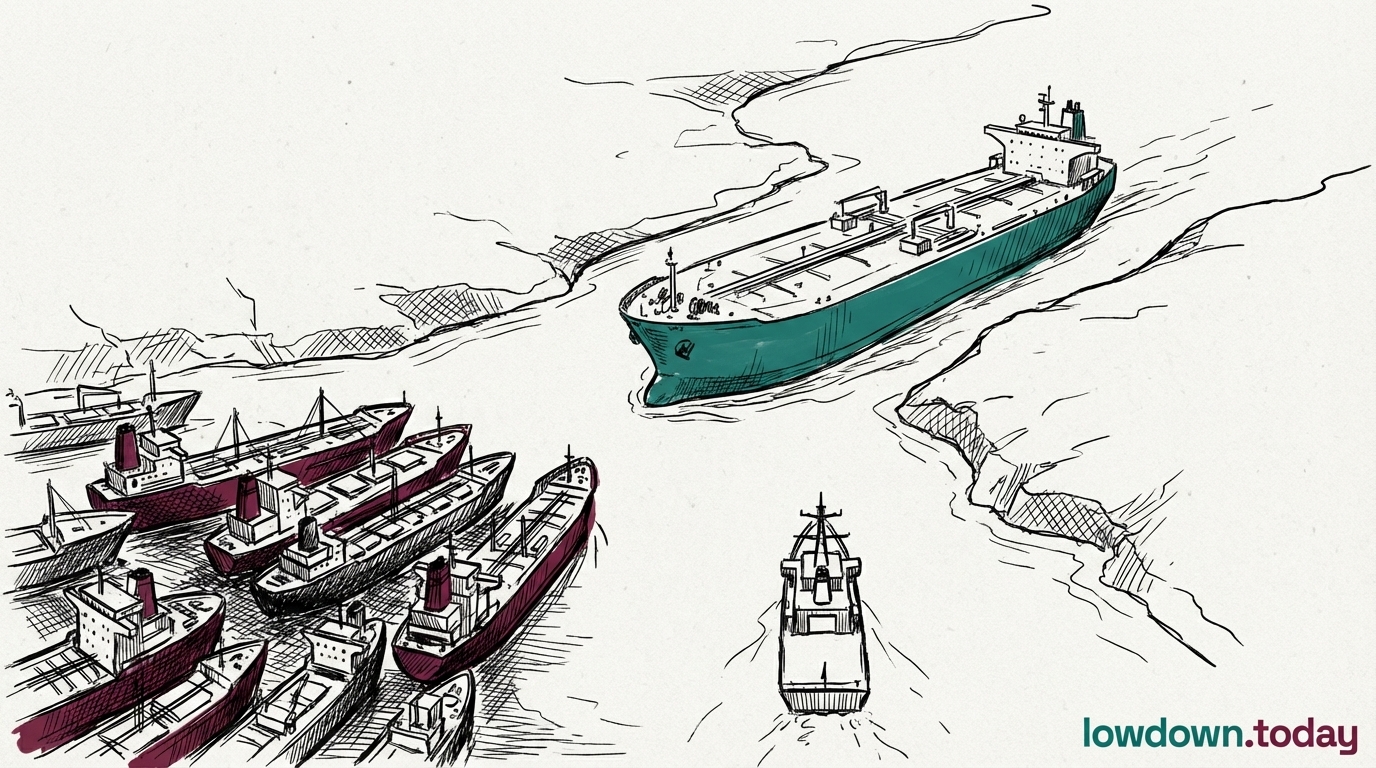
The Rich Starry, owned by China's Shanghai Xuanrun Shipping, became the first vessel to exit the Gulf through Hormuz after enforcement began at 14:00 GMT on 13 April, carrying 250,000 barrels of methanol from the UAE port of Hamriyah 1. A second sanctioned tanker from the same owner, the Murlikishan, entered the strait on 14 April bound for an Iraqi fuel-oil terminal 2. Both transits were confirmed by Kpler, LSEG and MarineTraffic. Non-sanctioned transit fell from 14 vessels on 13 April to 2 on 14 April, an 86% single-day drop.
The naval blockade is run by CENTCOM (US Central Command), the combatant command responsible for Middle East operations. Its operational order narrowed Donald Trump's full-strait closure to vessels entering or leaving Iranian ports, with an explicit carve-out for traffic to other Gulf destinations. The two tankers that passed were Chinese-owned, Chinese-crewed and bound for non-Iranian ports. Under the order CENTCOM wrote, its patrols had no operational basis to stop them. The cargoes the United States has under formal sanction kept moving; the cargoes it has no quarrel with went to anchor.
The carve-out is the mechanism, not the framing. A non-sanctioned operator cannot buy war-risk cover for a zone where the enforcing navy decides at sea which class of ship it will actually stop. Standard P&I (protection and indemnity) clubs are already suspending cover; sanctioned-tanker operators carry no P&I anyway and absorb no incremental cost. Brent had been trading around $103 on blockade day itself before easing to $101.82 at the 13 April London close; markets read Monday's transit count as partial enforcement rather than closure, and dark-fleet operators gained a structural advantage for every extra day the gap persists.
For drivers at UK and European forecourts, the next pump-price step arrives inside the fortnight; the German fuel relief package is already priced in and exhausted. The paradox on day one is not that the blockade failed; it is that it worked exactly as the operational order instructed, and the operational order is not what Trump posted.
Explore the full analysis →

