
Admiral Brad Cooper, commander of CENTCOM (US Central Command), told reporters on Wednesday that US forces had 'completely halted economic trade going into and out of Iran by sea' since the blockade began. Kpler and LSEG (London Stock Exchange Group) vessel-tracking data for the same window logged at least eight ships crossing the Strait of Hormuz on Day Two, including the US-sanctioned Chinese tankers Rich Starry and Elpis. Arabic Al Jazeera, citing US officials, put the Day One count above twenty. The pre-war baseline was one hundred and thirty-five transits per day.
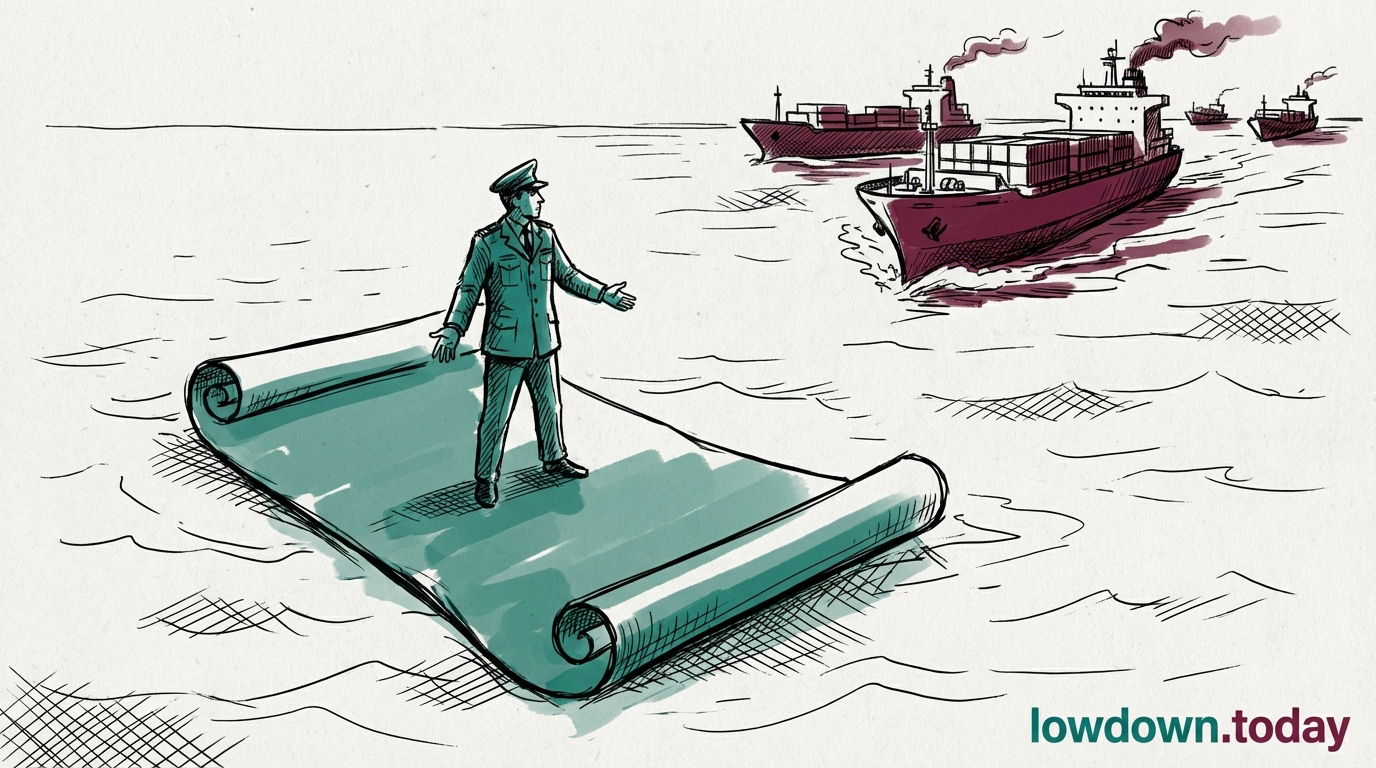
Both statements are technically compatible only if 'Iran trade' is read as 'ships going to Iranian ports'. CENTCOM's written operational order, the document defining which vessels its patrols actually intercept, excludes from interdiction any vessel 'not engaging with Iranian ports', the same carve-out it inserted when it narrowed Trump's full-strait closure before enforcement began. Rich Starry and Elpis, Chinese-owned, Chinese-crewed and bound for non-Iranian ports, fall outside its scope. The sanctioned dark-fleet traffic the blockade was presented as halting is exactly the traffic moving freely on Day Two.
The White House presidential-actions page, audited on Tuesday, still lists zero Iran-related signed instruments since the PDVSA authorisation issued before the war . Cooper's claim is the first principal-level assertion to sit in that gap. The blockade, the ceasefire, the toll list and all five Hormuz ultimatums remain Truth Social posts . On Day Three, Rich Starry was turned back after attempting to exit the Persian Gulf, the first confirmed sanctioned-vessel reversal of the operation. Whether that marks a posture shift or a show intercept timed to the declaration will be readable later this week, when Kpler publishes the next two days of transit counts.
Explore the full analysis →
