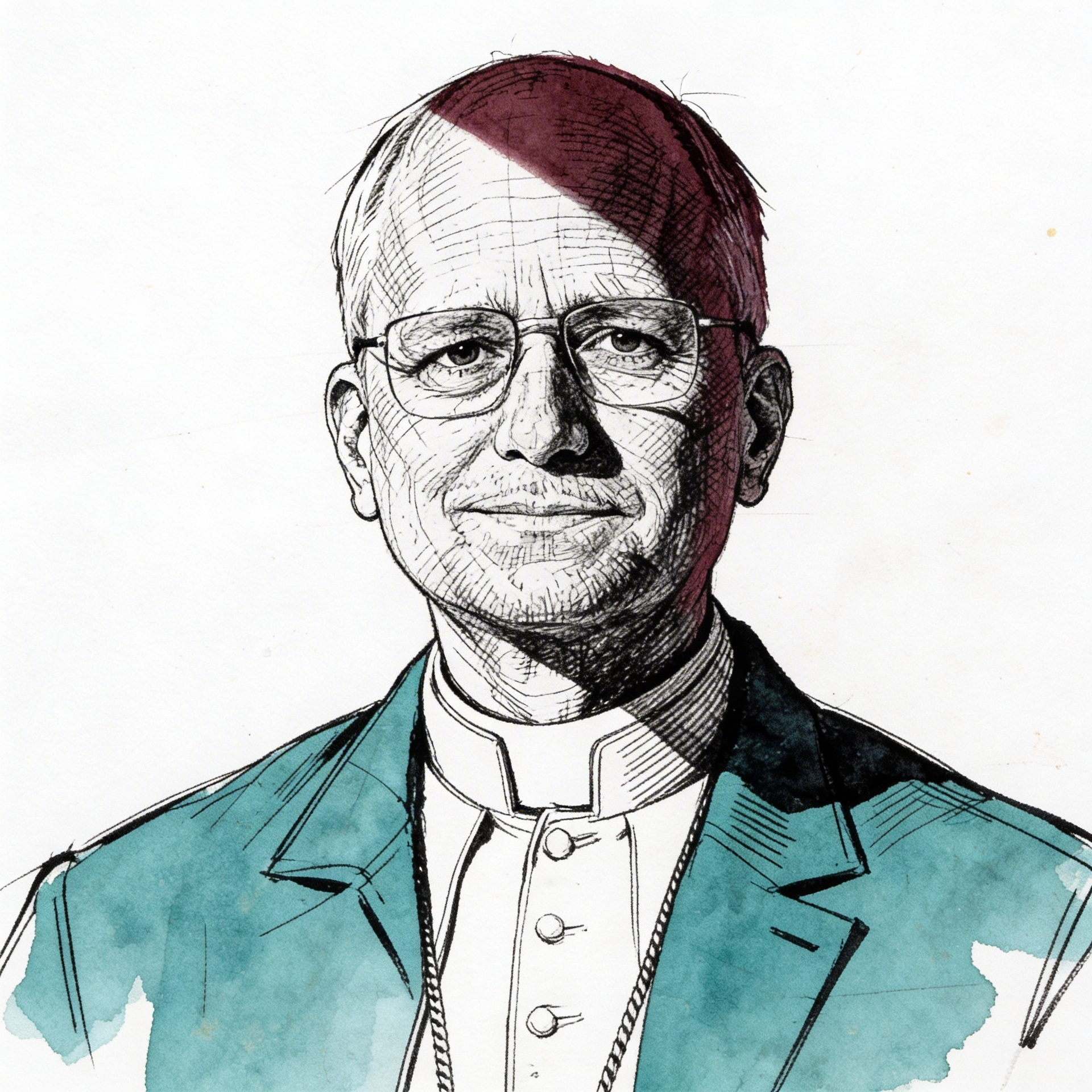
Pope Leo XIV
Pope since May 2025; born Robert Francis Prevost in Chicago, formerly Bishop of Chiclayo, Peru.
Pope Leo XIV returns to Peru, where he was Bishop of Chiclayo, from 11 to 17 November 2026; on 24 September the Pan American Health Organization named the visit a measles transmission risk as Peru's outbreak grows.
Last refreshed: 4 October 2026 · Appears in 3 active topics
Why did an American pope take aim at US foreign policy on both Iran and Cuba?
Timeline for Pope Leo XIV
Mentioned in: Peru overtakes Guatemala on new measles
Pandemics and BiosecurityMentioned in: Church aid moves as $100M offer stalls
Cuba DispatchReceived Rubio for the 45-minute audience covering Cuba and Venezuela
Cuba Dispatch: Rubio meets Pope Leo XIV; Vatican track returnscondemned Trump's war rhetoric as unacceptable and warned of delusion of omnipotence
Iran Conflict 2026: Pope condemns Trump; Trump fires backVisited the Great Mosque of Algiers and met with diplomatic corps in Algeria on 13 April
Iran Conflict 2026: Pope visits Algiers mosque day of Trump attackBackground
Pope Leo XIV, born Robert Francis Prevost in Chicago, was elected the 267th Bishop of Rome in May 2025, after the death of Pope Francis. He is the first pope Born in the United States. A member of the Augustinian order, he spent decades in Peru, first as a missionary and later as Bishop of Chiclayo in the country's north.
His pontificate carries direct weight in US politics. On 13 April 2026, during an apostolic visit to Algeria, he called Donald Trump's war rhetoric over Iran "truly unacceptable" and warned of a "delusion of omnipotence". Trump answered that the pope was "terrible for Foreign Policy" and falsely claimed he backed a nuclear-armed Iran. Four weeks later Washington turned to The Vatican as its channel on Cuba.
His Peruvian years shape his reach in Latin America. The November 2026 journey to Uruguay, Argentina and Peru is his first to the region as pope, and the Peru leg returns him to Chiclayo.
His Peru return carries a measles risk
Leo XIV is due in Peru from 11 to 17 November 2026, the last leg of a trip that opens in Uruguay on 6 November and passes through Argentina. The Holy See announced it on 5 August as his first Latin American journey as pope. The Peru leg takes in Lima, Cusco, Pucallpa and Chiclayo, the diocese he once led.
On 24 September the Pan American Health Organization flagged the visit, alongside October's Señor de los Milagros festivities, as a measles transmission risk. Peru added 190 cases in the fortnight to 12 September, more than Guatemala, and is fighting outbreaks in Puno and Arequipa. Papal crowds keep unvaccinated people close together for hours, the condition an airborne virus needs.
The pope hosts Washington's aid route
On 9 May 2026 Leo XIV gave US Secretary of State Marco Rubio a 45-minute private audience on Cuba and Venezuela. Washington used it to propose routing humanitarian aid to Cuba through the Catholic Church rather than any state channel. The same day Havana Cathedral held a state-level mass for the first anniversary of his pontificate.
The audience turned the Church into the delivery route for US relief. By 14 May Caritas Cuba had handed out 82 per cent of a first $3m batch, reaching about 8,800 households in the east, while a $100m package stayed parked over Washington's political conditions. The papacy is now the one channel where the Trump administration and Havana share a trusted interlocutor.
His Peru return carries a measles risk
Why is the Pope's Peru visit a measles risk?
The pope hosts Washington's aid route
What did Pope Leo XIV discuss with Marco Rubio about Cuba?
Reference
Is Pope Leo XIV the first American pope?
Did Pope Leo XIV visit Cuba before becoming pope?
Who is Pope Leo XIV and where is he from?
Who is Pope Leo XIV?
Why did Pope Leo XIV criticise Donald Trump over the Iran war?
Why is a Catholic Church split forming over the Iran war?
What did Pope Leo XIV say about Trump and the Iran war?
When is Pope Leo XIV visiting Peru?


