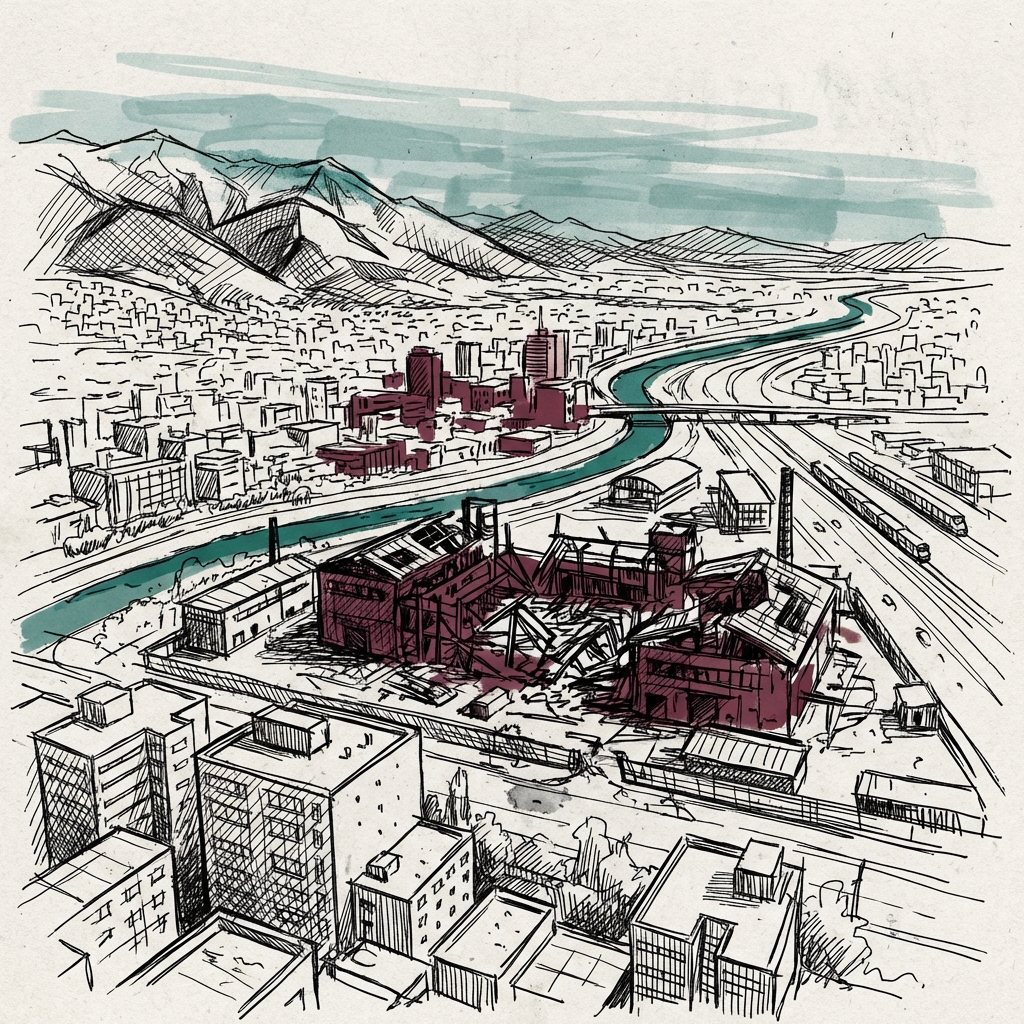
Karaj
Iran's fourth-largest city; hosts the destroyed centrifuge complex and Qezel Hesar Prison.
On 1 June, Karaj’s Qezel Hesar Prison held the executions of Ashkan Maleki and Mehrdad Mohammadinia, both arrested during January protests.
Last refreshed: 22 September 2026 · Appears in 1 active topic
Karaj hosts both Iran's destroyed centrifuge complex and its primary execution prison: what does that geography say?
Timeline for Karaj
Protester hanged in secret at Isfahan
Iran Conflict 2026Mentioned in: Iran, Russia, China block at the IAEA
Iran Conflict 2026Mentioned in: Two Kurds hanged on the talks day
Iran Conflict 2026Mentioned in: Naqadeh executes two Kurdish PDKI prisoners
Iran Conflict 2026Mentioned in: Four Kurdish arrests in northwest Iran
Iran Conflict 2026Background
Karaj is a city in Alborz Province, west of Tehran, and an industrial and residential extension of the capital. Its position on the Tehran corridor gives it importance beyond its local population, linking it to the capital’s transport, manufacturing and security geography.
The city contains the TESA/TABA centrifuge manufacturing complex, a site associated with components for Iran’s uranium-enrichment programme. Karaj was among the cities hit during large-scale Israeli strikes on 22 March 2026, alongside Tehran, Isfahan, Ahvaz and Bandar Abbas.
Karaj also contains Qezel Hesar Prison, whose name recurs in reporting on executions of protest-era detainees during the 2026 war. The prison’s role makes Karaj relevant to both the nuclear infrastructure story and the domestic repression documented during the conflict.
Karaj anchors wartime executions
On 20 April, Ali Fahim was executed at Qezel Hesar Prison in Karaj, the fourth execution linked to one protest case from the same Karaj Revolutionary Court branch. The prison therefore became a named site in reporting on the state’s handling of people detained during the January protests.
The pattern continued on 1 June, when Ashkan Maleki and Mehrdad Mohammadinia were hanged at Ghezel Hesar after arrests during those protests. According to Hengaw, authorities denied their families final visits and withheld their bodies. For Karaj, the prison gives the city a continuing place in the conflict’s domestic human-rights record, rather than merely its geographic proximity to Tehran.
Reference
Where is Qezel Hesar Prison?
What is Karaj and why does it matter in the Iran war?
How far is Karaj from Tehran?
What is Karaj?
Have more prisoners been executed at Karaj in 2026?
Has Karaj been bombed in the Iran-Israel war?
What is the difference between Karaj and Tehran in the Iran war?
Was the Karaj centrifuge facility destroyed?


