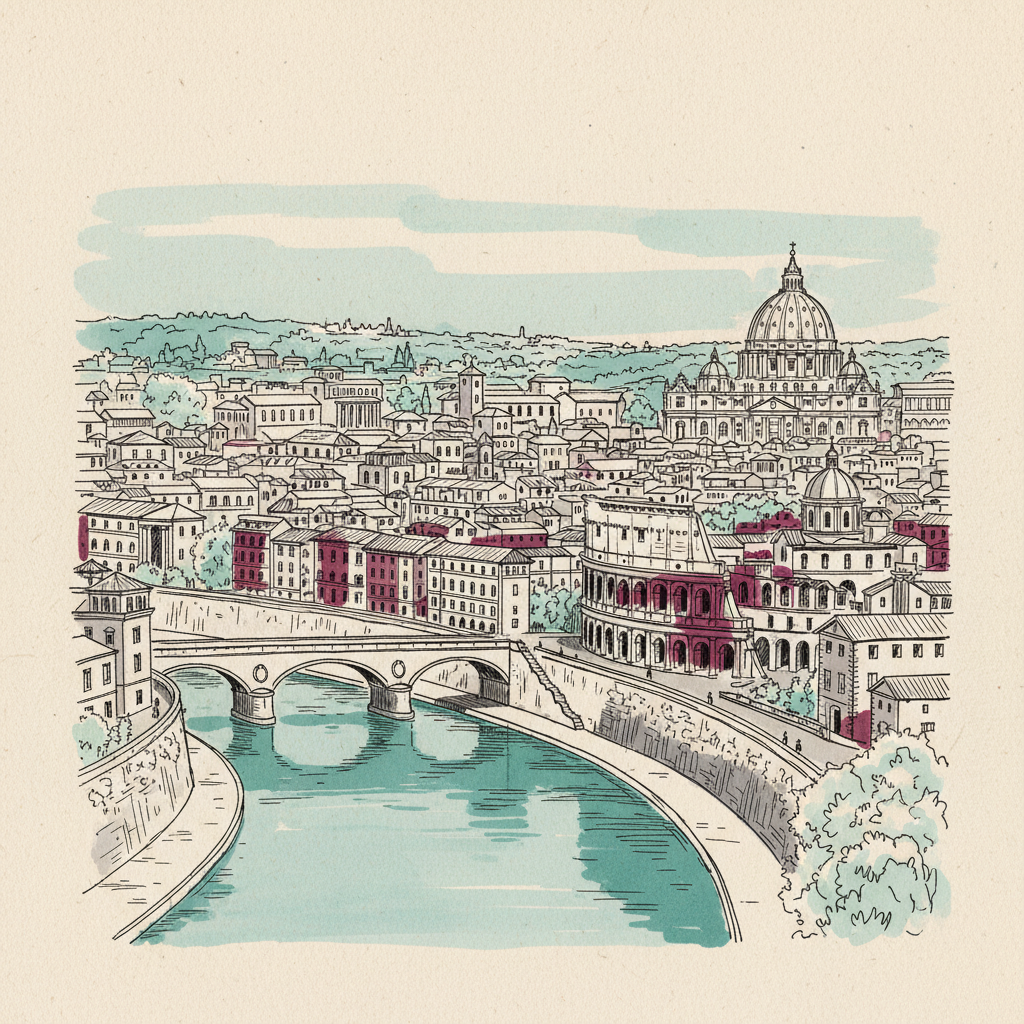
Rome
Capital of Italy and Vatican City's host; FIGC elected Giovanni Malagò president in June.
On 22 June, Rome hosted Giovanni Malagò's election as president of Italy's football federation, placing the capital at the centre of a governance reset after Italy missed the 2026 World Cup.
Last refreshed: 22 September 2026 · Appears in 2 active topics
Will Italy's FIGC crisis be resolved before the 22 June presidential election?
Timeline for Rome
Mentioned in: The rial slides, the fuel card shrinks
Iran Conflict 2026Mentioned in: Tapia and de la Fuente clash over Finalissima
2026 FIFA World CupMentioned in: Seventh licence keeps ISAB Priolo open
European Oil MarketsMentioned in: ISAB Priolo's OFAC clock runs out
European Oil MarketsMentioned in: Malago wins the vote to rebuild Italy
2026 FIFA World CupBackground
Rome is Italy's capital and the seat of its national government. Palazzo Chigi is the working residence of the prime minister and Cabinet. The city also surrounds Vatican City, the sovereign state that is the institutional centre of the Roman Catholic Church.
Its national role extends beyond government. Rome hosts the headquarters of the Food and Agriculture Organization, the World Food Programme and the International Fund for Agricultural Development. The Food and Agriculture Organization's 3 June report on antimicrobial resistance illustrates why organisations based in Rome can shape global policy debates.
Rome is also a venue for Italian sporting institutions. The 22 June FIGC presidential election showed how national governance disputes can converge in the capital.
Rome anchors football's governance reset
On 22 June, Rome hosted Giovanni Malagò's election as president of the Italian Football Federation, with 68.58% of the weighted vote. The result put the federation's response to Italy's failure to qualify for the 2026 World Cup in the capital where its national institutions operate.
Rome had already become the venue for the contest's institutional fight. On 20 April, 18 of 20 Serie A clubs gave Malagò a 20-point Reform programme before his candidacy was formalised. On 12 June, the Olympic Committee left his eligibility to the anti-corruption authority. Those steps made Rome the setting for a dispute over WHO could lead Italian football and what mandate the winner would carry.