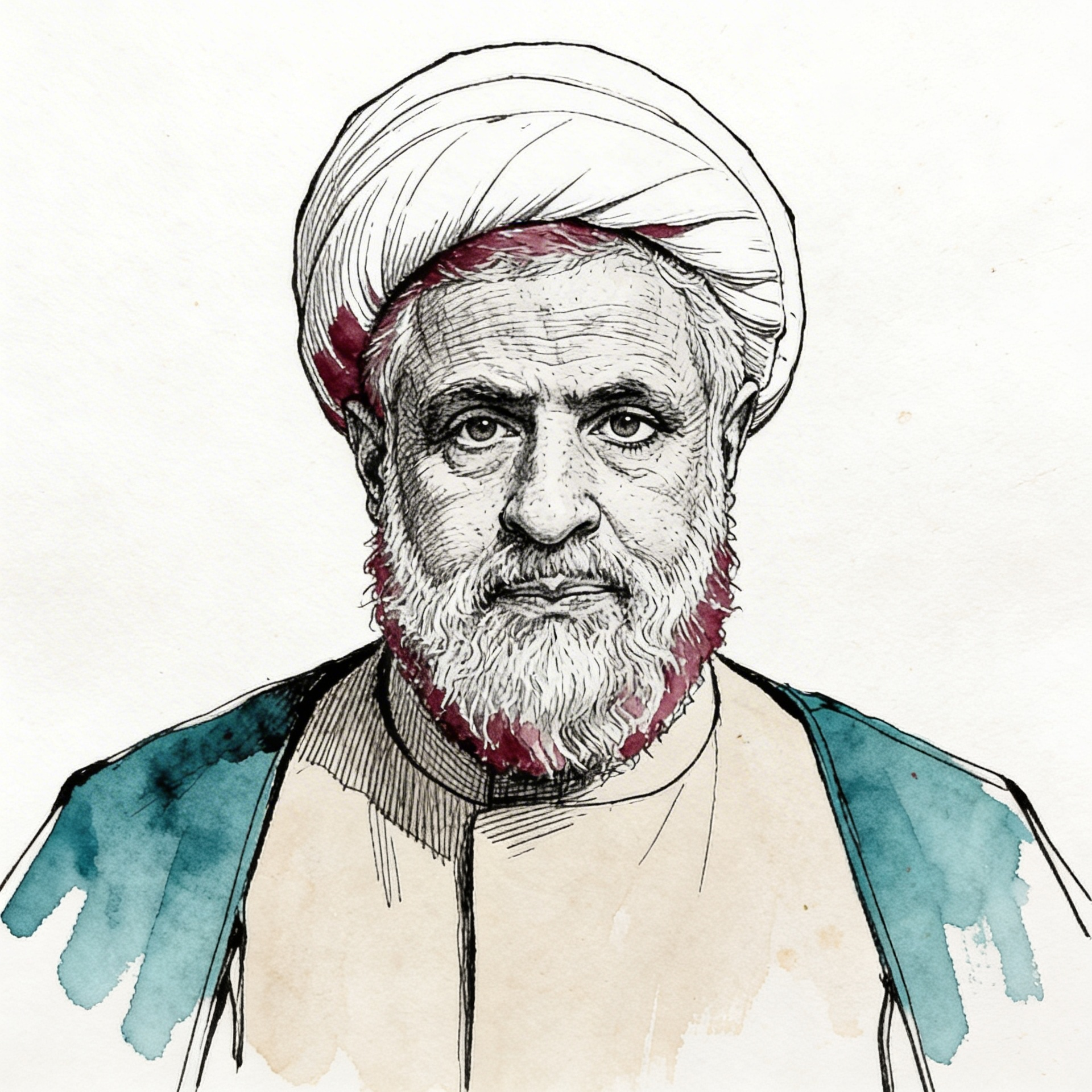
Naim Qassem
Hezbollah Secretary-General since October 2024; primary obstacle to Lebanon ceasefire.
Last refreshed: 5 June 2026 · Appears in 1 active topic
Will Qassem accept any Lebanon ceasefire deal, or fight on?
Timeline for Naim Qassem
Mentioned in: IDF kills a Lebanese army colonel
Iran Conflict 2026Rejected the Washington Lebanon framework in a televised address on 4 June
Iran Conflict 2026: Hezbollah veto stalls the Iran-US dealIDF triple-tap kills paramedics in Mayfadoun
Iran Conflict 2026Qassem kills Lebanon-Israel talks, drones fly
Iran Conflict 2026Called the trilateral talks 'futile' and demanded cancellation two days before they proceeded
Iran Conflict 2026: Rubio hosts first Israel-Lebanon talks since 1993- Who is Naim Qassem?
- Naim Qassem is Hezbollah's Secretary-General, in post since October 2024 after Israeli strikes killed Hassan Nasrallah and his designated successor. A co-founder of Hezbollah in 1982, he served as deputy leader for over thirty years before assuming command.Source: Lowdown / IDF
- Why did Israel name Naim Qassem an elimination target?
- Israel named Qassem a formal target on 2 March 2026 as part of a campaign to decapitate Hezbollah's leadership. If killed, he would be the third Hezbollah leader lost in roughly eighteen months, following Nasrallah and Safieddine.Source: IDF / Lowdown
- What did Naim Qassem say on Quds Day 2026?
- Qassem declared "surrender is not an option" and said Hezbollah has committed 30,000 fighters, including elite Radwan unit troops deployed in south Lebanon. He framed the conflict as an existential battle, not a limited campaign.Source: Hezbollah / Lowdown
- How many Hezbollah leaders has Israel killed?
- Israel killed Hassan Nasrallah in September 2024 and his designated successor Hashem Safieddine shortly after. Naim Qassem, the current leader, was named a third elimination target in March 2026.Source: Lowdown
- Is Hezbollah's own base turning against the war?
- The Washington Post reported that Shia communities forming Hezbollah's core base are increasingly furious with the group's conduct of the war under Qassem's leadership, citing the scale of displacement and civilian casualties.Source: Washington Post / Lowdown
- Who is Naim Qassem and how did he become Hezbollah leader?
- Naim Qassem co-founded Hezbollah in 1982 and served as Deputy Secretary-General for over 30 years before becoming Secretary-General in October 2024 after Israeli strikes killed Hassan Nasrallah and Hashem Safieddine in quick succession.Source: Lowdown Iran Conflict 2026
- Did Hezbollah reject the Washington Lebanon ceasefire deal?
- Yes. On 4 June 2026, Qassem rejected the Washington Lebanon framework in a televised address, calling it 'absurd, humiliating and insulting'. Trump simultaneously claimed Hezbollah 'did not reject' the offer, creating a direct public contradiction.Source: Lowdown Iran Conflict 2026
- Why is Qassem named an Israeli elimination target?
- Israel named Qassem a formal elimination target on 2 March 2026 as part of a Decapitation campaign that had already killed two previous Hezbollah leaders. His death would make him the third Secretary-General killed in under two years.Source: Lowdown Iran Conflict 2026
- How many Hezbollah fighters are fighting Israel in Lebanon?
- Qassem committed 30,000 fighters in his Quds Day address of 14 March 2026, including elite Radwan unit troops, and declared surrender was not an option.Source: Lowdown Iran Conflict 2026
- What is Hezbollah's relationship with Iran under Qassem?
- Hezbollah follows the wilayat al-faqih doctrine placing Iran's Supreme Leader as its ultimate religious authority. Iran's IRGC provides arms, funding and training. On 4 June 2026, Iran's Foreign Minister coordinated with Qassem by simultaneously refusing to decouple the Lebanon Ceasefire from the Iran-US memorandum.Source: Lowdown Iran Conflict 2026
Background
Naim Qassem co-founded Hezbollah in 1982 alongside Ali Akbar Mohtashami and served as Deputy Secretary-General for over three decades, authoring the organisation's most detailed insider account of its history and doctrine. He became Secretary-General in October 2024 following Israeli strikes that killed Hassan Nasrallah in September 2024 and then Hashem Safieddine, Nasrallah's designated successor. He is the third Hezbollah leader within roughly eighteen months. A co-founder rather than a charismatic wartime commander, Qassem represents Hezbollah's ideological continuity in a moment the organisation's military capacity is under severe pressure. He holds the wilayat al-faqih doctrine that places Iran's Supreme Leader as Hezbollah's ultimate religious authority, making him institutionally dependent on Tehran even as Lebanon's Shia base grows more openly critical of the war.
On 2 March 2026, Israel named Qassem a formal target for elimination: his death would make him the third consecutive Secretary-General killed in under two years. His Quds Day address on 14 March committed 30,000 fighters to the front, including elite Radwan unit troops, and declared surrender was not an option even as IDF ground forces pushed toward the Litani River. By mid-March, Lebanon's health toll had passed 850 killed and 831,000 displaced since 2 March.
In April, Qassem publicly demanded Lebanon cancel ambassador-level talks with Israel in Washington, calling them 'futile', two days before those talks proceeded regardless. On 4 June 2026, he rejected the Washington Lebanon framework in a televised address, calling it 'absurd, humiliating and insulting', directly contradicting Donald Trump's simultaneous claim that Hezbollah 'did not reject' the proposal. Iran's Foreign Minister simultaneously refused to decouple the Lebanon Ceasefire track from the Iran-US Memorandum of Understanding, confirming the two organisations continue to coordinate their diplomatic vetoes.
Qassem embodies Hezbollah's central dilemma: the movement's own Shia base is reportedly furious with the leadership's prosecution of the war, yet any sign of capitulation risks shattering the resistance narrative that justifies Hezbollah's existence. His survival and posture remain the single most watched variable in Lebanon's Ceasefire track.
