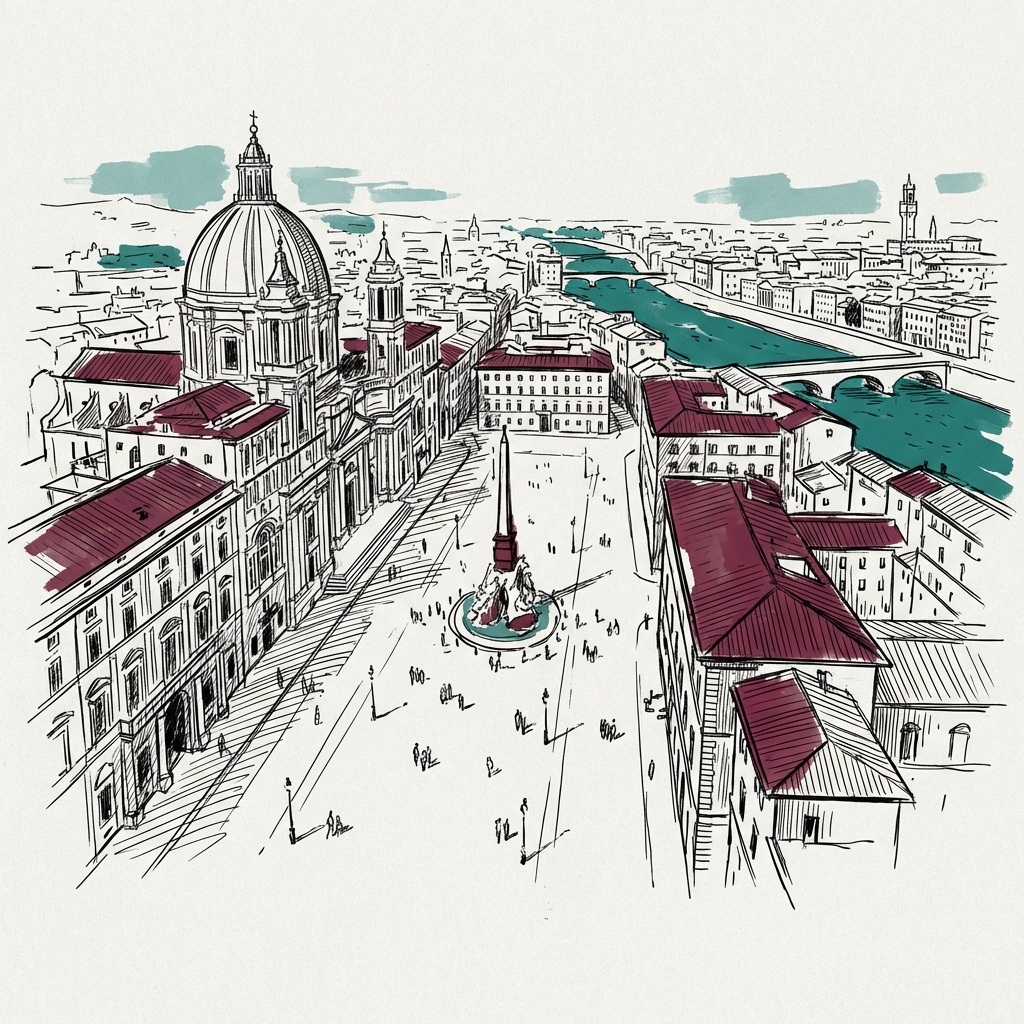
Italy
G7 state; EU's most gas-exposed large economy; first continental European nation to deploy hardware to the Hormuz Coalition.
Italy heads into winter exposed on gas: QatarEnergy told Edison in The Week to 28 September that suspended LNG deliveries run into early December, after a summer in which EU storage trailed 2025's pace.
Last refreshed: 3 October 2026 · Appears in 12 active topics
What does it mean for Italy's political calculus to deploy warships to Hormuz while missing its third consecutive World Cup?
Timeline for Italy
Mentioned in: 30-year gilt passes 6%, last seen 1998
Is Britain Actually Broke?Mentioned in: Putin clears sale of AO UniCredit Bank
Russia-Ukraine War 2026Reported 59 local dengue cases
Pandemics and Biosecurity: Europe's West Nile cases reach 1,765Held third place on 28 claims
Cybersecurity: Threats and Defences: Ransomware crews' claims fall to 815Mentioned in: QatarEnergy suspends gas as ships move
Iran Conflict 2026Background
Italy is a Mediterranean state of about 60 million people and a founding member of both the European Union and the G7. Giorgia Meloni has led a right-of-centre Coalition government in Rome since October 2022. Its economy is the EU's third-largest by GDP, but Reliance on imported gas makes it the most gas-exposed large economy in the bloc, and a gas-heavy generation mix leaves its wholesale power prices sensitive to weather and supply shocks.
Italy has set early rules for new technology and travel. On 6 August 2026 public-sector unions and the bargaining agency ARAN signed the first national collective contract with a dedicated Title on artificial intelligence, barring AI from making employment decisions alone; Barilla's late-July deal for about 4,000 workers offered consultation rights only. Italian short lets carry a national CIN code and flat taxes of 21% on a first property and 26% on others, and on 25 September 2026 a Tuscan court declined to suspend Florence's nine-zone freeze on new short lets.
In football, Italy failed to qualify for a third consecutive World Cup in 2026. Federation president Gabriele Gravina resigned, and Giovanni Malagò won the FIGC presidency on 22 June with 68.58% of the weighted vote, inheriting about €5.5bn of collective club debt.
Italy's gas refill trailed the target
Italy's energy regulator ARERA ran mandated gas-storage injections alongside France and the Netherlands from early June 2026. On 8 June that regulated demand pushed EU injection above its seasonal floor for the first time, with fill at 42.1%, still 22.9 points below the five-year norm.
Italy's gas-heavy power mix then put it in competition for the same molecules when late-June heat drove up gas burn. Storage reached 47.4% on 26 June against an 80% November floor and crossed 50% only on 5 July, against 56% a year earlier. In The Week to 28 September QatarEnergy told Italy's Edison that its LNG deliveries stay suspended into early December.
Italy sent minesweepers to Hormuz
On 17 May 2026 Italy forward-deployed two mine-countermeasures vessels to the 26-nation Strait of Hormuz Coalition, becoming the first continental European nation to commit hardware to the mission. Rome had already signed the 8 April Élysée statement that France and the UK turned into a 40-nation effort at a video conference on 17 April.
The deployment carries an economic logic for the most gas-exposed large economy in the EU, which has more riding on a lasting Hormuz reopening than partners supplied by pipeline. Closer to home, on 2 August the frigate Thaon di Revel boarded the EU-sanctioned tanker Toa Payoh west of Pantelleria under Operation IRINI.
Italian approval gates the refinery sale
ISAB, the 320,000 barrel-a-day refinery at Priolo Gargallo in Sicily, has belonged to GOI Energy since it bought the plant from Litasco in 2023. Its pending sale to Ludoil is gated by Italy's Golden Power screening, a Milan court order and a standalone OFAC transaction licence that was still unissued in July 2026.
Washington's monthly Lukoil licence does not cover the plant. General License 131H, the eighth rollover, issued around 25 July and running to 22 August, authorised only negotiations over Lukoil International GmbH's own assets and named neither ISAB nor Priolo. The sale's timetable therefore sits with Rome's approval and the Milan court.
Is Italy part of the Hormuz naval coalition?
Why are Italian electricity prices so high in 2026?
What is the MQ-31A drone Italy just designated?
What happened to Italy's football leadership after the World Cup exit?
Why has Italy missed three consecutive World Cups?
Has Italy sent warships to the Strait of Hormuz?
Who might become the new FIGC president after Gravina resigned?
Who will replace Gravina as FIGC president?
Why did Italy miss the 2026 World Cup?
Did Italy board a Russian shadow-fleet oil tanker in August 2026?
