Skip to content
Iran Conflict 2026
14APR

France and Japan file flag-state protests

2 min read
09:22UTC

France and Japan lodged formal flag-state protests after CMA CGM Kribi and Mitsui OSK Sohar LNG appeared on Trump's 12 April toll-interdiction list, a provision CENTCOM left out of its operational order.

ConflictDeveloping
Key takeaway

Two G7 allies are formally protesting a presidential post CENTCOM has already chosen not to enforce.

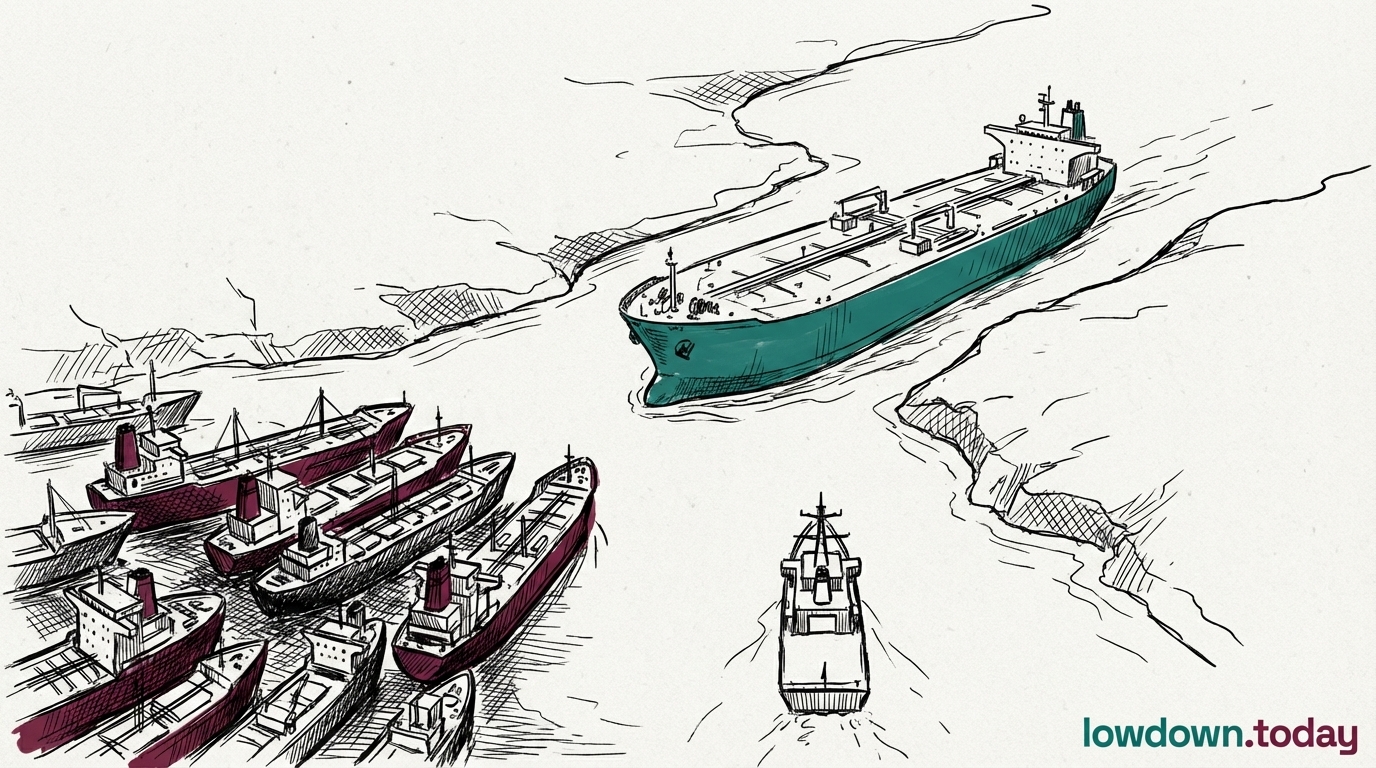
France and Japan lodged formal flag-state protests after the French-flagged CMA CGM Kribi and the Japanese-flagged Mitsui OSK Sohar LNG appeared on Donald Trump's 12 April toll-interdiction list . Both vessels had previously paid Iran's Hormuz toll in yuan, which was the trigger for their inclusion on the list. CENTCOM's operational order for the 13 April blockade omitted the toll-interdiction provision entirely, leaving both vessels off the US Navy's target list despite their appearance on the president's.

That is the gap the protests sit in. France and Japan are treating a Truth Social post naming specific G7-flagged merchant vessels as a formal US position requiring a formal reply, because UNCLOS (United Nations Convention on the Law of the Sea) obliges the flag state to defend its registered ships against threats of boarding. The protests invoke the convention implicitly: the president has named their vessels for interdiction, the named vessels' flag states have an obligation to protest, and the formal protest goes onto the bilateral record regardless of whether CENTCOM is acting on the posted order.

The practical asymmetry is that Paris and Tokyo are responding to a document, the presidential post, that has no corresponding signed instrument and no implementing order from the commanding combatant command. French and Japanese diplomats are negotiating against a text the US executive branch has not formally produced. For the flag states, that is still the text they must answer. For CENTCOM, the operational order it self-generated continues to exclude toll-paying vessels from interdiction, and the diplomatic protests have no effect on the operational mandate because the mandate already omits the action being protested.

The instrument gap that defines the whole operation surfaces here with unusual clarity. Two G7 allies are in formal protest against an executive order that both exists (on Truth Social) and does not exist (as a signed presidential instrument), enforced by a command that has chosen not to implement its most aggressive provision. Each party is reading a different authoritative text. The protests are now on the bilateral record; the interdictions they protest have not happened; the social-media post that triggered them remains the only American document any party can cite.

Deep Analysis

In plain English

France and Japan have filed formal diplomatic complaints with the United States after two of their ships appeared on a list of vessels President Trump threatened to intercept. The two ships, the CMA CGM Kribi (French-flagged) and the Mitsui OSK Sohar LNG (Japanese-flagged), had previously paid Iran's transit toll to pass through the Strait of Hormuz. Trump posted on social media that all ships that had paid Iran's toll would be stopped by the US Navy. France and Japan, as the countries whose flags the ships fly, are legally required to defend their vessels under international maritime law, so they lodged formal protests. Here is the strange part: the US Navy never actually received orders to stop those ships. CENTCOM, the US military command running the blockade, left the toll-paying provision out of its orders entirely. So France and Japan are officially protesting against a presidential social-media post that the US military has already decided not to enforce. This shows, in the most concrete possible way, how the absence of a signed presidential order is creating confusion: two close US allies are in formal diplomatic dispute with America over an order that exists only as a post, enforced by a military that has chosen to ignore that particular part of it.

First Reported In

Update #68 · Sanctioned tankers slip the blockade

Reuters / Free Malaysia Today· 14 Apr 2026
Read original
Different Perspectives
South Korean financial markets
South Korea, which imports virtually all its crude oil, is absorbing the war's economic transmission most acutely among non-belligerents. The second KOSPI circuit breaker in four sessions — with Samsung down over 10% and SK Hynix down 12.3% — reflects an industrial economy unable to reprice energy costs that have risen 72% in ten days. The market response indicates Korean industry cannot sustain oil above $100 per barrel without margin compression across manufacturing, semiconductors, and shipping.
Migrant worker communities in the Gulf
The first confirmed civilian deaths in Saudi Arabia — one Indian and one Bangladeshi killed, twelve Bangladeshis wounded — fell on communities with no voice in the military decisions that placed them in harm's way. Migrant workers live near military installations because that housing is affordable, not by choice. Bangladesh and India face the dilemma of needing to protect nationals who cannot easily leave a war zone while depending on Gulf remittances that fund a substantial share of their domestic economies.
Azerbaijan — President Ilham Aliyev
Aliyev treats the Nakhchivan strikes as a direct act of war against Azerbaijani sovereignty, placing armed forces on full combat readiness and demanding an Iranian explanation. The response is calibrated to maximise international sympathy while stopping short of military retaliation — Baku cannot fight Iran alone and needs either Turkish or NATO backing to credibly deter further strikes.
Oil-importing nations (Japan, South Korea, India)
The Hormuz closure is an existential threat. Japan, South Korea, and India receive the majority of their crude through the strait — they will bear the heaviest economic cost of a war they had no part in.
Global South governments (Indonesia, Brazil, South Africa)
Neutrality was possible when the targets were military. 148 dead schoolgirls made it impossible — no government can explain that away to its own citizens.
Turkey
Turkey
Has absorbed three Iranian ballistic missile interceptions since 4 March without invoking NATO Article 5 consultation. Each incident narrows Ankara's political room to continue absorbing without Alliance-level response.