Skip to content
Briefings are running a touch slower this week while we rebuild the foundations.See roadmap
Iran Conflict 2026
13APR

Day 45: Trump blockades Iran on a tweet

4 min read
11:20UTC

The US began blockading Iranian ports on 13 April under a Truth Social post with no executive instrument, while Trump simultaneously declared the ceasefire 'holding well.' CENTCOM narrowed Trump's full-strait order to Iranian ports only, allies refused to join, and the IRGC called the blockade piracy, setting up the most dangerous confrontation geometry since the war began.

Key takeaway

The US is enforcing a naval blockade on a social media post with no legal instrument behind it.

This briefing mapped
Loading map…
Military
Diplomatic
Economic
Domestic
Legal
Infrastructure
Humanitarian

The US president announced a naval blockade of Iranian ports via Truth Social with no executive order, proclamation, or legal instrument of any kind.

Sources profile:This story draws on mixed-leaning sources from United States (includes United States state media)
United States

Trump announced a naval blockade of Iranian ports via Truth Social on 12 April with no executive order, proclamation, or presidential memorandum published on the White House presidential-actions page.

No US naval blockade since the 1962 Cuban quarantine has been ordered without a presidential proclamation. Kennedy issued Proclamation 3504 before a single vessel was stopped. 

Briefing analysis

The last US naval blockade of a sovereign state's ports was the 1962 Cuban quarantine. President Kennedy issued Presidential Proclamation 3504 on 23 October 1962 before enforcement began, grounding the action in both domestic authority and an OAS (Organization of American States) resolution. The legal instrument was considered essential to distinguishing a 'quarantine' from an act of war.

The 2026 Iran blockade has no equivalent instrument. Trump's Truth Social post is the only public record of the order. CENTCOM's operational announcement references 'President Donald Trump's proclamation' but no proclamation appears on the White House presidential-actions page.

Under UNCLOS (United Nations Convention on the Law of the Sea), a blockade of a strait used for international navigation requires specific legal justification. The distinction between blockading Iranian ports (CENTCOM's scope) and blockading the strait (Trump's stated scope) is legally significant: the former targets a belligerent's commerce, the latter restricts international navigation rights.

The War Powers Resolution of 1973 requires presidential notification to Congress within 48 hours of introducing forces into hostilities. The 60-day clock expires approximately 29 April. Whether the blockade constitutes a new introduction of forces or a continuation of existing hostilities is a live legal question.
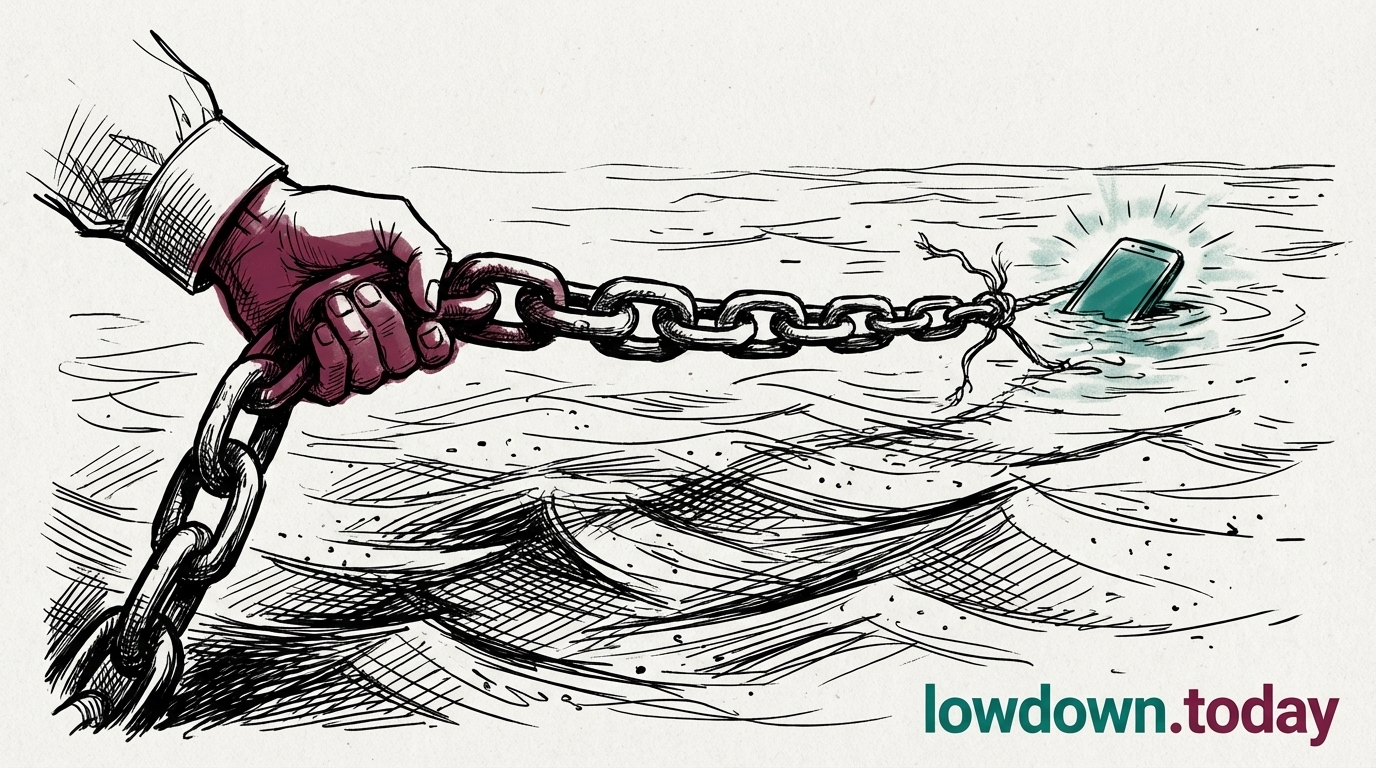

Someone between the presidential bedroom and Central Command headquarters rewrote the blockade from a full-strait closure to an Iranian-port restriction before a single vessel was turned away.

Sources profile:This story draws on neutral-leaning sources from United States (includes United States state media)
United States

CENTCOM operationalised the blockade effective 14:00 GMT on 13 April, narrowing Trump's full-strait order to vessels entering or departing Iranian ports only, with an explicit carve-out for non-Iranian-port traffic.

The gap between presidential order and military execution leaves commercial shippers unable to determine which authority governs their passage through Hormuz

Iran's foreign minister disclosed that the country can no longer enrich uranium at any facility, meaning Islamabad's two-day deadlock over enrichment rights was partly a dispute over a capability Iran does not possess.

Sources profile:This story draws on centre-left-leaning sources from Israel and Qatar
IsraelQatar

Abbas Araghchi, Iran's Foreign Minister, stated on 13 April that Iran cannot currently enrich uranium at any site because US and Israeli strikes destroyed Natanz, damaged Esfahan, and struck Fordow — making the Islamabad enrichment deadlock partly academic.

The admission shifts the nuclear deadlock from a technical question to a political one: domestic audiences, institutional credibility, and face-saving rather than live proliferation risk. 

The US blockade attracted only two Gulf host-base states, while the UK assembled 40 nations pursuing the opposite strategy: reopening Hormuz through minesweeping rather than closing it through interdiction.

Sources profile:This story draws on mixed-leaning sources from France and United States
FranceUnited States
LeftRight

UK, Germany, and Australia refused to join the US blockade; only UAE and Bahrain participated, both as host-base states with limited room to decline. A NATO official disclosed that the UK is leading a separate 40-nation coalition to reopen Hormuz through minesweeping and diplomatic pressure.

Two incompatible Western strategies now operate simultaneously over the same waterway, and France and Japan, members of the UK coalition, are potential US interdiction targets. 

Trump ordered the Navy to stop any vessel that paid Iran's Hormuz toll, a list that includes French and Japanese ships whose governments refused to join the blockade.

Sources profile:This story draws on mixed-leaning sources from United States (includes United States state media)
United States

Trump also ordered the US Navy to interdict all vessels in international waters that had paid Iran a Hormuz toll, a provision absent from CENTCOM's operational order — targeting France (CMA CGM Kribi), Japan (Mitsui OSK Sohar LNG), the Philippines, and potentially the UAE.

Interdicting allied flag vessels in international waters would rupture Western alliance relations more severely than any action since the war began. 

Brent crude jumped 8% past $103 on Monday, reversing the post-ceasefire drop and making Goldman Sachs's $120 Q3 severe scenario the operative frame.

Sources profile:This story draws on neutral-leaning sources from United States (includes United States state media)
United States

Brent Crude surged 8% above $103 on the blockade announcement on 13 April, reversing the post-Ceasefire low of $92.21 and putting Goldman Sachs's $120 Q3 severe scenario back in play.

Energy markets have repriced from structural stalemate to active escalation on the blockade announcement, compounding March inflation data that already showed the largest monthly CPI rise since 1967. 

Iran's state broadcaster aired AI-generated footage of Mojtaba Khamenei in a war room because no authentic footage exists, a production choice that confirms rather than closes the gap.

Sources profile:This story draws on centre-leaning sources from Israel
Israel
LeftRight

Iran state television broadcast an AI-generated video on 13 April showing Mojtaba Khamenei entering a war room and surveying a map of Israel's Dimona nuclear research facility, with no audio.

If Khamenei cannot govern, the Ceasefire he authorised lacks living authority, and 31 semi-autonomous IRGC commands operate without a single point of command above them. 

March US consumer prices rose at the fastest rate since Lyndon Johnson was president, with gasoline the primary driver, and these figures predate the blockade.

Sources profile:This story draws on mixed-leaning sources from United States
United States
LeftRight

March US CPI rose 0.9% month-on-month, the largest increase since 1967, with gasoline up 21.2%, while the University of Michigan Consumer Sentiment Index hit an all-time low of 47.6.

April CPI will compound these figures once blockade-driven oil prices feed through, putting the US economy in its worst inflationary position in nearly 60 years. 

Sources:CNN Business

The House narrowly rejected a War Powers Resolution on Iran 219-212 on Saturday; Senate Democrats are forcing their own vote this week as the 60-day clock approaches 29 April.

Sources profile:This story draws on centre-left-leaning sources from United States
United States

The House of Representatives rejected the War Powers Resolution 219-212 on 12 April; Senate Democrats announced they are forcing a vote this week, as the 60-day WPR clock approaches its approximate 29 April expiry.

The blockade raises a new war powers question: whether it constitutes a fresh introduction of forces into hostilities requiring separate congressional notification. 

Sources:NBC News

Saudi Arabia's restoration of the Petroline to full capacity means Riyadh no longer needs the Strait of Hormuz for its own oil exports, changing its stakes in the conflict.

Sources profile:This story draws on centre-right-leaning sources from United Arab Emirates
United Arab Emirates
Sources:The National

Hezbollah rockets wounded two Israeli soldiers in southern Lebanon on Monday as five IDF divisions held positions and Washington scheduled Lebanon talks for next week.

Sources profile:This story draws on mixed-leaning sources from United States (includes United States state media)
United States

The first American pope condemned Trump's war rhetoric as 'truly unacceptable'; Trump responded by falsely claiming the pontiff supported nuclear-armed Iran.

Sources profile:This story draws on centre-left-leaning sources from United States
United States

Pope Leo XIV, the first American pope, condemned Trump's war rhetoric as 'truly unacceptable' and warned of a 'delusion of omnipotence'; Trump called him 'terrible for foreign policy' and falsely claimed the Pope supported nuclear-armed Iran.

The false claim broadens the diplomatic isolation of the blockade from allied governments to major religious institutions. 

Sources:NPR
1 NPR

Maritime intelligence firm Windward documented tankers transiting Hormuz under the identities of scrapped vessels, with 14 State Department-sanctioned ships tracked in the region.

Sources profile:This story draws on neutral-leaning sources from Israel
Israel

Windward documented shadow fleet vessels using identities of scrapped ships to evade sanctions transiting Hormuz, with 14 State Department-sanctioned dark fleet vessels tracked in the region as of 12 April.

Sanctions evasion through identity spoofing will accelerate under blockade conditions as legitimate transit routes close. 

Hengaw's 10th report counted 125,630 damaged civilian structures across 40 days of conflict, while the Red Crescent reported 960 people rescued from the ruins of Tehran buildings.

Sources profile:This story draws on neutral-leaning sources from Iran
Iran

Iran Red Crescent reported 960 people rescued from Tehran rubble; Hengaw's 10th report documented 125,630 civilian structures damaged nationwide — 100,000 residential and 24,000 commercial — across 40 days of conflict.

The structural damage scale, one building damaged for every 650 Iranians, represents a reconstruction burden that will outlast the conflict by decades. 

Sources:Hengaw
Closing comments

Escalating. The blockade creates structural daily confrontation risk between CENTCOM enforcement patrols and IRGC armed escorts operating in the same waters. No interdiction incident has occurred as of filing. The IRGC's explicit threat of severe force against military vessels, combined with competing navigational authorities (CENTCOM blockade, IRGC mine corridors), means any encounter could trigger the ceasefire's collapse before its formal expiry. The geometry is structural, not contingent.

Different Perspectives
United States
United States
Trump announced the blockade via Truth Social while simultaneously claiming the ceasefire was 'holding well'; CENTCOM then operationalised a narrower port-only version before enforcement began. The administration has produced zero executive instruments for 45 days of war, leaving every naval action legally exposed.
Iran
Iran
Iran's armed forces command called the blockade 'an illegal act' and 'piracy,' while Foreign Minister Araghchi described the Islamabad talks as the most intensive US-Iran engagement in 47 years and claimed discussions reached the brink of an MOU before US maximalism and the blockade intervened. Tehran retains leverage through its Hormuz toll regime and IRGC mine corridors.
United Kingdom
United Kingdom
Prime Minister Starmer refused to join the US blockade and is leading a rival 40-nation coalition to reopen Hormuz through minesweeping and diplomatic pressure rather than port restriction. The UK's counter-strategy directly competes with Washington's approach over the same waterway.
Gulf States (UAE, Bahrain)
UAE and Bahrain joined the blockade as the only two coalition members, both operating under the constraint of hosting major US military installations on their soil. Saudi Arabia, by restoring the East-West pipeline to full capacity, has effectively removed its own economic dependence on Hormuz.
Pakistan
Pakistan
Pakistan confirmed it will continue mediating despite the Islamabad talks ending without agreement, but proposed no date for a next round and holds no mechanism to extend the ceasefire. The blockade adds a new Iranian precondition that Pakistan must navigate to restart any diplomatic process.
Israel
Israel
Israel is rejecting a Lebanon ceasefire as a precondition for broader talks; two Israeli soldiers were wounded by Hezbollah rockets on 13 April and five IDF divisions now operate inside Lebanon. Israel's strikes destroyed Iran's enrichment capacity, making the Islamabad enrichment deadlock partly academic.
