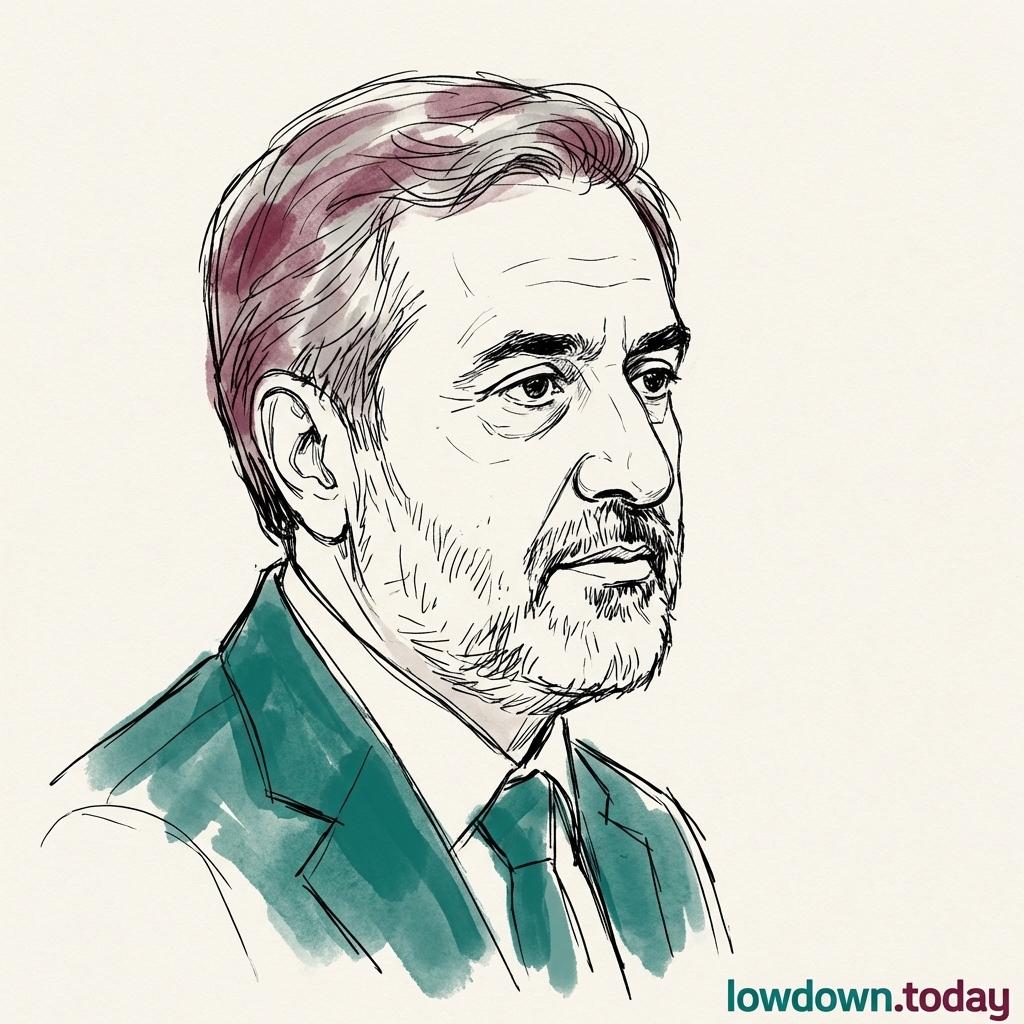
Abbas Araghchi
Iran's Foreign Minister since August 2024; JCPOA veteran whose civilian diplomacy the IRGC overrides.
On 5 August, Abbas Araghchi gave preliminary approval to Iran's Hormuz corridor draft, but The Supreme Leader and Security Council still had to endorse it.
Last refreshed: 22 September 2026 · Appears in 1 active topic
If the IRGC ignores Araghchi's track, what is his diplomacy worth?
Timeline for Abbas Araghchi
Mentioned in: Iran loads no crude for a whole month
Iran Conflict 2026Met the American envoys in New York and received Washington's written answer in Doha
Iran Conflict 2026: Qatar brings the US answer to AraghchiMentioned in: Iran takes safe passage to Oman on Monday
Iran Conflict 2026Mentioned in: Oman and Japan press for safe passage
Iran Conflict 2026Decoupled the Oman shipping-map agreement from strait reopening and denied mediator contacts constitute negotiation
Iran Conflict 2026: Tehran won't extend the Islamabad clockBackground
Abbas Araghchi has been Iran's Foreign Minister since August 2024. He is a JCPOA-era nuclear-diplomacy veteran and Iran's principal civilian interlocutor in high-level foreign negotiations. His office gives foreign counterparts a recognised channel for Iranian positions, as shown when he sent a 14-point Ceasefire proposal to Washington through Pakistan on 1 May.
His significance lies in the gap between representation and authority. Araghchi can negotiate, make public commitments and preserve contact with mediators, but Iran's Supreme Leader, security institutions, Parliament and the Revolutionary Guard Corps can determine whether those commitments take effect. The split was explicit on 22 April, when reporting described the Guard's political leadership as overriding his diplomatic track.
That makes Araghchi essential to reading Iranian diplomacy, but insufficient on his own as proof of Iranian policy. His statements show Tehran's civilian position and the channels it wants to keep open. They do not by themselves establish what Iran's wider power structure will implement.
Araghchi's Hormuz draft awaits approval
On 5 August, Araghchi gave preliminary approval to a draft maritime corridor agreement after eight negotiating rounds. The draft covered mine clearance, monitoring and service fees, but Iran's Supreme Leader and Supreme National Security Council still had to approve it. His approval made him Iran's named diplomatic sponsor for the proposal, not its final authority.
On 15 August, Araghchi separated the Oman shipping-map agreement from any decision to reopen the strait of Hormuz. He also said contacts through Qatari and Pakistani mediators did not amount to negotiations. The distinction preserved a narrow diplomatic track while leaving the wider political decision above his office.
Araghchi kept uranium talks unresolved
On 13 June, Araghchi said Iran would dilute its 440.9 kg stockpile of Highly Enriched Uranium only inside Iran. Washington wanted the material transferred abroad before sanctions relief. The position placed him at the centre of the core dispute between Iranian control of the stockpile and external verification.
On 14 June, Araghchi confirmed that nuclear issues would not be addressed during the new 60-day negotiating window. For a JCPOA-era negotiator, the deferral showed the limits of his REMIT: he could state Tehran's position, but could not close the issue that defined his earlier diplomatic career.
Araghchi's diplomacy lacks final authority
On 1 June, Araghchi suspended mediated talks after citing Israeli strikes in Lebanon as a ceasefire breach. On 2 June, he then contacted Pakistan, Qatar, Turkey, France and Belgium to reopen channels that Iran's security council had suspended.
The sequence defines his wartime role. Araghchi can keep foreign channels alive and present Iran's public position, but other Iranian institutions can suspend, qualify or reverse the policy he is sent to explain. On 22 April, an IRGC faction was reported to have taken operational control of Iran's military and diplomatic positions, leaving any deal he signed subject to another authority.
Reference
Was Abbas Araghchi involved in the 2015 Iran nuclear deal?
Who is Abbas Araghchi and what is his role in the Iran war?
Who is Abbas Araghchi and what is his role in Iran's nuclear negotiations?
Who is Abbas Araghchi?
What did Araghchi discuss in Muscat on 18 July 2026?
Why did a Qatari delegation meet Iran's foreign minister in Mashhad?
What did Iran claim about the Strait of Hormuz on 28 June 2026?
What is Abbas Araghchi's role in the Iran-US talks?
What happened at Iran's Doha talks in May 2026?
Why did Araghchi meet Putin during the Iran conflict?
What did Araghchi agree to in Muscat?
What happened at the Islamabad Iran talks?
Did Iran admit it can't enrich uranium anymore?
Is Iran's foreign minister on a US kill list?
Does Araghchi speak for the whole Iranian government?
Did Araghchi meet Iraq's prime minister over a ceasefire proposal?


