General License U
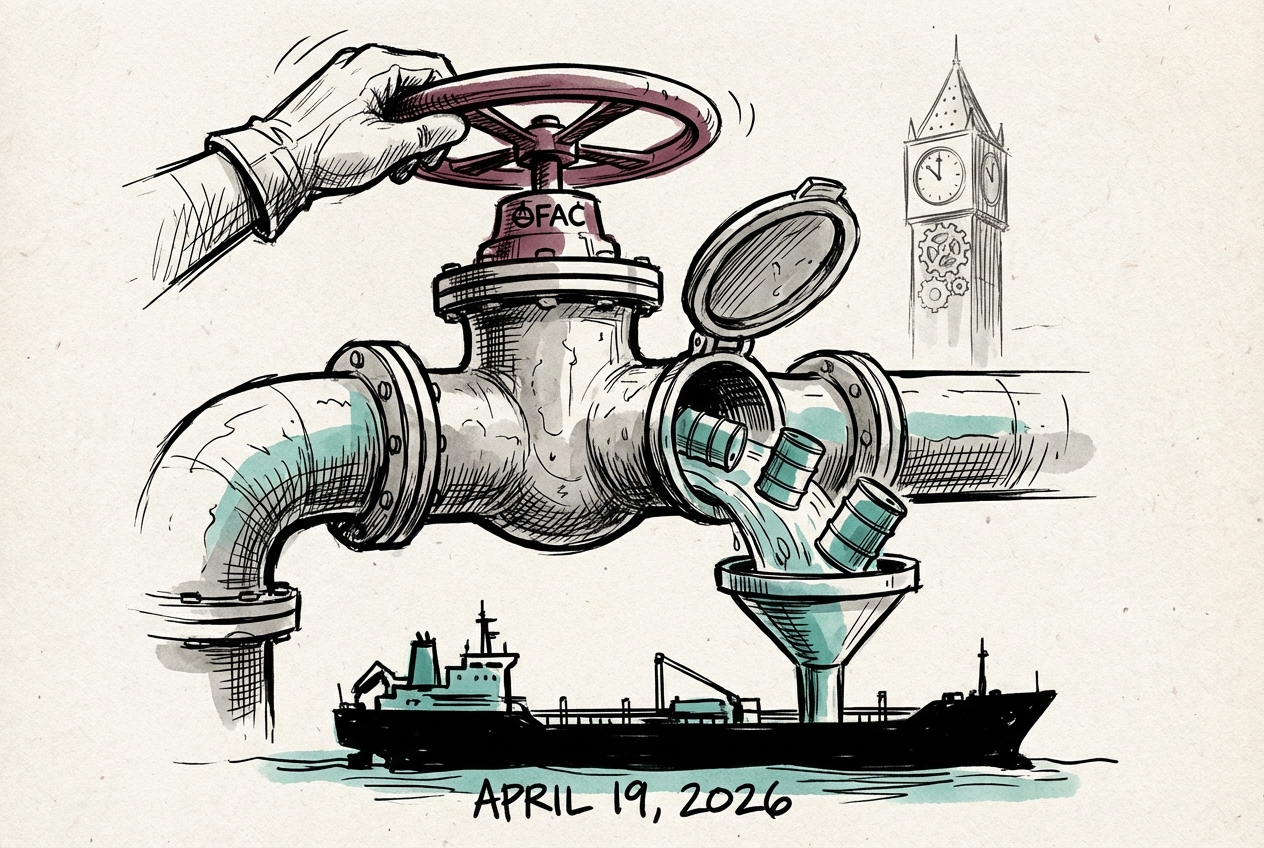
OFAC waiver authorising Iranian crude from pre-20-March vessels; expires 19 April — non-renewal confirmed by Bessent on 15 April.
On 19 April, General License U lapsed without replacement, ending US legal cover for Iranian crude shipments already in transit.
Last refreshed: 1 October 2026 · Appears in 2 active topics
Does GL-U's April expiry give Washington leverage over Tehran?
Timeline for General License U
Mentioned in: US strike kills three Indian sailors
Iran Conflict 2026Mentioned in: Araghchi tells Jaishankar Iran guides Indian ships
Iran Conflict 2026Iran's strait authority opens to silence
Iran Conflict 2026Mentioned in: India faces three Iran tracks, speaks on one
Iran Conflict 2026Mentioned in: IRGC boards three ships inside Hormuz
Iran Conflict 2026Background
General License U was an Office of Foreign Assets Control general licence issued on 20 March 2026. It authorised the purchase, transport and delivery of Iranian-origin crude oil and petroleum products loaded on vessels by that date. Its narrow scope made it a wind-down measure for cargoes already afloat, rather than a general reopening of Iranian oil trade.
The licence showed that lawful movement of oil and the ability to settle payment are separate questions. The PING SHUN delivery to Vadinar on 1 April demonstrated that its shipping mechanism could work, while the evidence also identified banking gaps that limited other buyers.
As a US sanctions instrument, GL-U matters as an example of a time-limited authorisation for historical cargoes. Its fixed expiry required counterparties to assess sanctions cover against a specific legal deadline.
General License U expires
On 19 April, General License U lapsed at 00:01 EDT without a replacement licence or Federal Register notice. The lapse ended its legal cover for Iranian crude shipments already in transit.
The deadline made General License U a compliance test for traders, insurers and buyers handling cargoes loaded before 20 March. Treasury renewed Russia's GL-134B on the same day, so the decision not to renew GL-U was a distinct Iran policy choice rather than an administrative delay. For General License U, that contrast fixed its role as a temporary channel, not a reopening of Iranian oil trade.
What is General License U?
Will General License U be renewed?
How many oil tankers are stranded because of Hormuz?
Who can buy Iranian oil under General License U?



Written with AI from Lowdown's published reporting. Not individually reviewed by an editor. Updated 1 October 2026. Editorial standards.