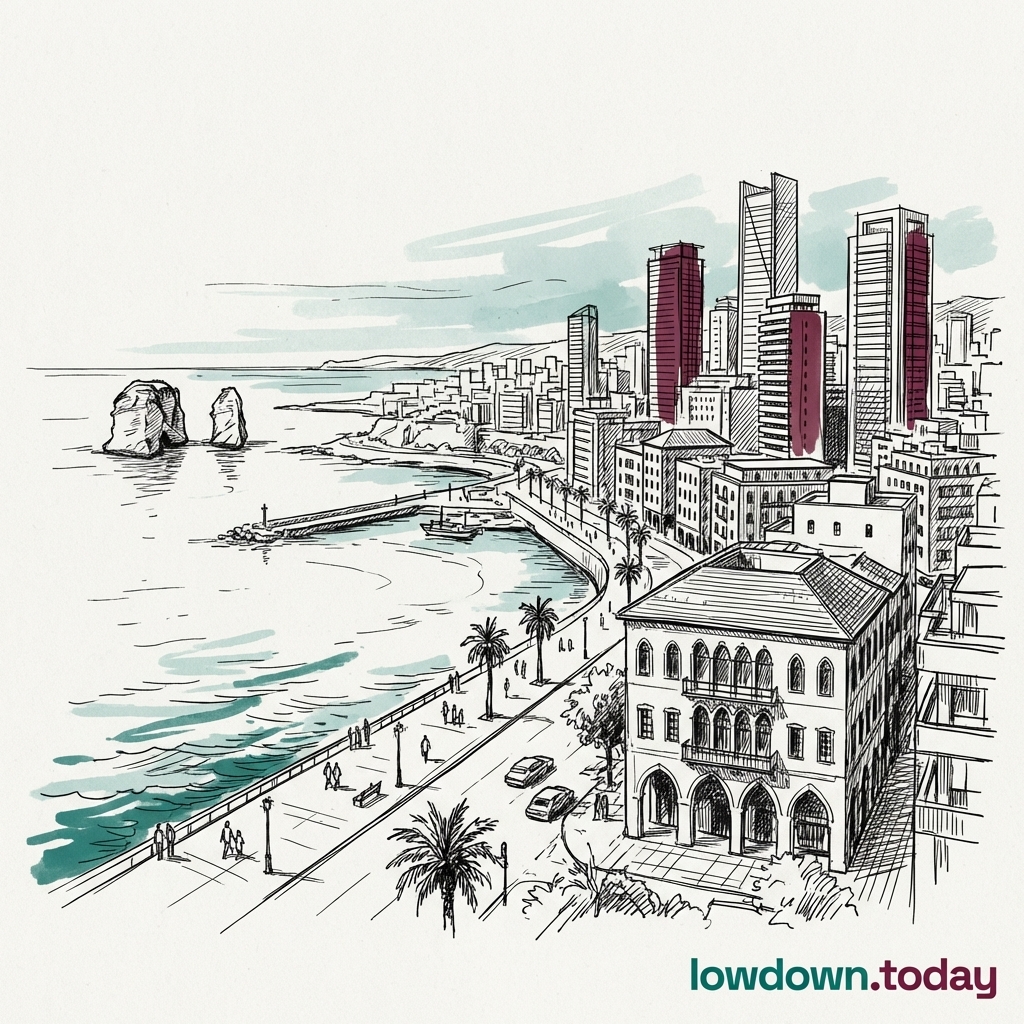
Beirut
Lebanon's capital and principal port city; the city Trump's 1 June phone call to Netanyahu spared from planned Israeli strikes.
Trump's 1 June call to Netanyahu spared Beirut the strikes Israel had planned, five weeks after the city's first central strike since the truce killed a Hezbollah commander in Dahiyeh on 7 May.
Last refreshed: 19 July 2026 · Appears in 1 active topic
Trump's call stopped the strikes on 1 June; what did Israel plan to hit in Beirut?
Timeline for Beirut
Mentioned in: Baghdad cancels Riyadh visit over strike
Iran Conflict 2026Mentioned in: Riyadh's drones now come from Iraq
Iran Conflict 2026Mentioned in: Tehran prices its exit in Lebanon
Iran Conflict 2026Mentioned in: Two Americans killed at Jordan air base
Iran Conflict 2026Mentioned in: Israeli drone kills four in Nabatieh
Iran Conflict 2026Background
Founded by Phoenicians and shaped by Ottoman rule, the French mandate and a fifteen-year civil war, Beirut has 2.4 million people in its metropolitan area. The 2020 port explosion killed over 200 people and destroyed much of the commercial waterfront, with the World Bank estimating damage at $3.8-4.6 billion; Lebanon's financial collapse, which began in 2019, wiped out middle-class savings and drove emigration at a scale not seen since the civil war era.
For decades the rest of the city functioned on an informal understanding that conflict was contained to Dahiyeh, Hezbollah's Southern Suburb; the 2026 war ended that understanding, with Israeli strikes reaching the Ramada hotel, the Aisha Bakkar neighbourhood and the Ramlet al-Baida seafront from March 2026 Onward.
Beirut is the seat of the Lebanese Republic under Prime Minister Nawaf Salam, whose government cannot control the armed actors on Lebanese soil but has sought to reassert state sovereignty through diplomatic and legal channels rather than force.
Trump's call spares Beirut from strikes
On 1 June, a direct call from Trump to Netanyahu spared Beirut the strikes Israel had been planning; within days a partial truce took hold under which Hezbollah agreed to halt attacks from Lebanese soil, the first pause the capital had seen since the war reached its streets.
The call came five weeks after Israel had already struck central Beirut for the first time since the truce, on 7 May, killing Radwan Force commander Ahmed Ali Balout in Dahiyeh. PM Nawaf Salam's government, unable to prevent IDF strikes on its own, has used the halt as diplomatic leverage, expelling Iran's ambassador-designate and banning Hezbollah's military operations on Lebanese soil.
Reference
What happened to Beirut in the 2020 explosion?
What is Dahiyeh in Beirut?
What is Beirut?
Who was killed in the Beirut IDF strike on 7 May 2026?
Is there a ceasefire in Lebanon?
What happened to Beirut after Trump stopped the Israeli strikes in June 2026?
Has Beirut been bombed in 2026?
Why did Lebanon expel Iran's ambassador in 2026?
Why did Trump stop Israel bombing Beirut in June 2026?
Has Israel bombed central Beirut?



