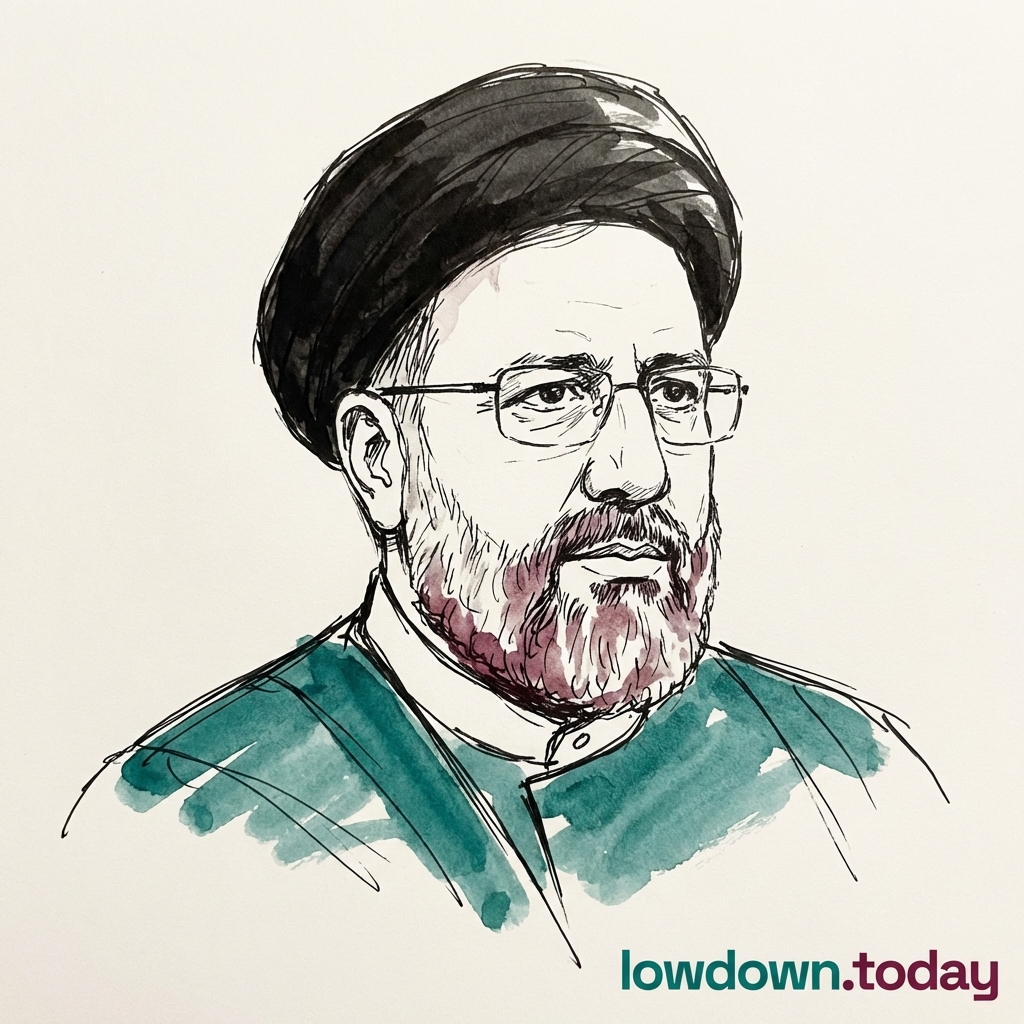
Mojtaba Khamenei
Supreme Leader of Iran from March 2026; IRGC-installed; endorses nuclear MoU with red lines on IAEA access.
On 10 August, Supreme Leader Mojtaba Khamenei signed six military decrees, placing Iran's wartime command hierarchy on a formal footing after succeeding his father in March.
Last refreshed: 22 September 2026 · Appears in 1 active topic
Can a Supreme Leader who rules by sealed courier enforce a nuclear deal?
Timeline for Mojtaba Khamenei
Mentioned in: An IRGC adviser claims enemy-soil orders
Iran Conflict 2026Issued six military appointment decrees
Iran Conflict 2026: Khamenei signs six decrees in a single dayPezeshkian says Khamenei is in full health
Iran Conflict 2026Made Rezaei his council representative
Iran Conflict 2026: Rezaei takes over Iran's security councilMentioned in: Artesh claims Kuwait and Bahrain strikes
Iran Conflict 2026Background
Mojtaba Khamenei is Iran's Supreme Leader, the office at the apex of the Islamic Republic's political and security order. He became the first son to succeed his father in that office after Ali Khamenei was killed in an Israeli airstrike on 28 February 2026.
The Supreme Leader's authority reaches senior security appointments and the state's broad strategic direction. Mojtaba Khamenei's succession placed a family transfer at the centre of a system whose highest office had not previously passed from father to son.
His position therefore links personal legitimacy, clerical authority and command over institutions such as the Islamic Revolutionary Guard Corps. Those powers make the office central to how Iran records and directs its military hierarchy.
Khamenei formalises military command
Mojtaba Khamenei signed six decrees on 10 August covering the armed forces chief of staff, the Revolutionary Guard's commander and deputy, its naval commander, and the Basij head. The documents made The Supreme Leader the recorded source of a broad command reshuffle.
For Khamenei, the naval decree recorded an existing reality rather than a new appointment: Ali Azmaei had led the Guard's navy from early July. The difference matters because formal decrees attach named military offices to Khamenei's authority while wartime command had already been exercised through less visible arrangements.
Reference
Who is really running Iran with Khamenei out of public view?
What is Iran's Hormuz doctrine under Mojtaba Khamenei?
What was the AI video of Mojtaba Khamenei?
Has the US sanctioned Mojtaba Khamenei directly?
Why didn't Mojtaba Khamenei attend his father's funeral?
Does Mojtaba Khamenei support the Iran-US nuclear MOU?
Is Mojtaba Khamenei the Supreme Leader of Iran?
Does Mojtaba Khamenei have the theological credentials to be Supreme Leader?
Is Mojtaba Khamenei still alive in 2026?
Is Mojtaba Khamenei injured and how does he communicate?
What did Mojtaba Khamenei say about Iran's nuclear programme?
Is Mojtaba Khamenei injured?
How does Mojtaba Khamenei communicate with the Iranian government?
What did Iran's government say about Hormuz as a nuclear bomb equivalent?
What did Khamenei say about the Strait of Hormuz on 30 April 2026?
Why has Iran's Supreme Leader not appeared in public?
Who is Mojtaba Khamenei?
When did Mojtaba Khamenei become Supreme Leader?
Why is Mojtaba Khamenei's succession significant?
What decrees has Mojtaba Khamenei issued?


