Why did six tankers turn back from Bab al-Mandeb without a shot fired?
Timeline for Bab al-Mandeb
China, Djibouti: war must not reach Horn
Iran Conflict 2026Yemeni troops push on Houthi-held Dhubab
Iran Conflict 2026Houthis take all of Yemen's Red Sea coast
Iran Conflict 2026Mentioned in: Drones hit the pipeline built to dodge Hormuz
Iran Conflict 2026Mentioned in: Six men board a tanker off Mukalla
Iran Conflict 2026Background
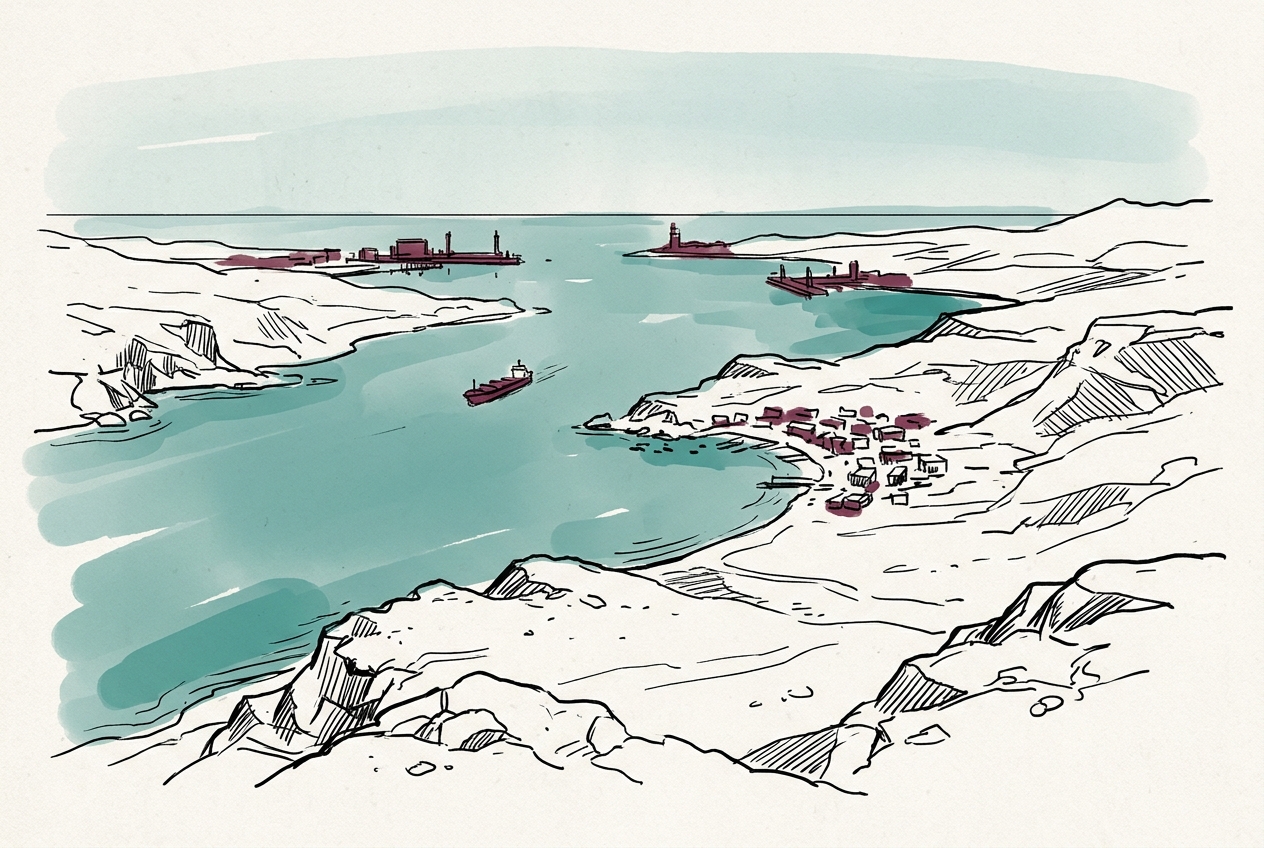
Bab al-Mandeb is the strait between Yemen and Djibouti that links the Red Sea to The Gulf of Aden. It forms the southern maritime entrance to the Red Sea route, connecting traffic from the Indian Ocean with the Suez Canal and Mediterranean.
Its narrow geography gives the passage lasting strategic weight. Ships using it depend on security along the Yemeni and Djiboutian shores, while vessels avoiding it must take a much longer route around Africa. Disruption can therefore affect voyage times, freight costs and the movement of oil and goods between Europe and Asia. These features make the strait a strategic chokepoint whose security affects several regions at once.
The strait becomes a maritime front
On 20 July, Houthi forces declared Bab al-Mandeb closed to Saudi shipping through open radio warnings. Six vessels, including a Chinese tanker, changed course within 48 hours without a boarding, missile strike or shot being fired. For the strait, the warning made passage itself the commercial risk rather than danger to a named ship.
The risk then became physical. Houthi missiles and drones struck the Saudi tanker Encelia on 22 July. Saudi authorities confirmed a fire aboard and said the crew survived. That attack showed how control of Yemen's western shore could turn Bab al-Mandeb from a shipping route into an active battle line.
The strait becomes a maritime front
Why did the Houthis blockade Saudi shipping in July 2026?
Which ships were turned back from Bab al-Mandeb in July 2026?
Reference
How much global trade passes through Bab al-Mandeb?
Did the Houthis close Bab al-Mandeb in 2023 or 2024?
Where is the Bab al-Mandeb strait?
What is the alternate route if Bab al-Mandeb closes?
What happens to oil prices if Bab al-Mandeb is blocked?
Has Iran blocked Bab al-Mandeb?



Written with AI from Lowdown's published reporting. Not individually reviewed by an editor. Updated 22 October 2026. Editorial standards.