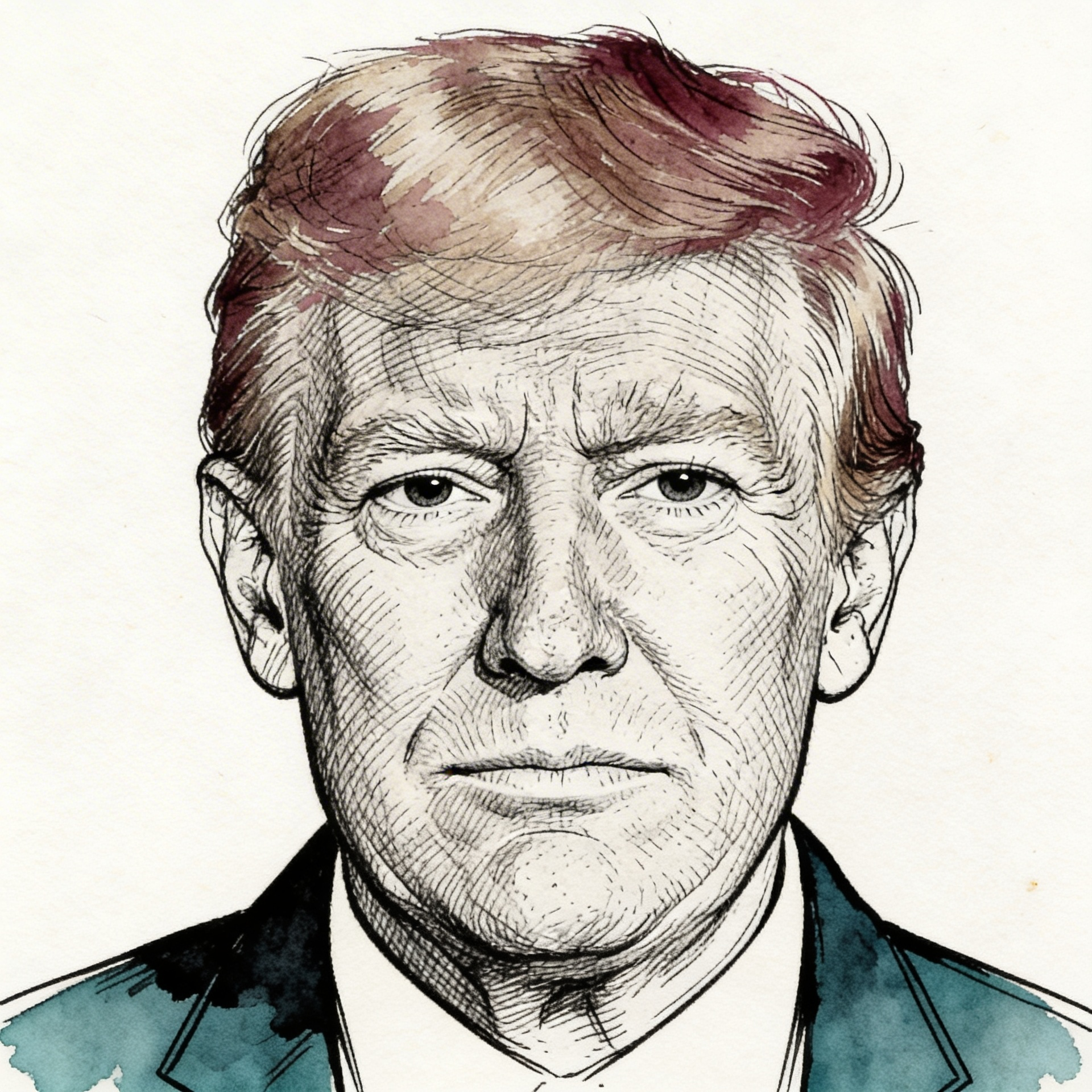
Donald Trump
47th President of the United States.
On 15 September, The House passed its third Iran war-powers resolution, 220-204, yet Donald Trump remained free to direct the campaign because the Senate passed no matching text.
Last refreshed: 22 September 2026 · Appears in 12 active topics
Why has Trump posted daily on Iran for 99 days without signing a single Iran instrument?
Timeline for Donald Trump
Told reporters Ukraine should get a new leader
Russia-Ukraine War 2026: Zelenskyy ties elections to a ceasefireMentioned in: Russian strikes cut Ukraine's grid links
Russia-Ukraine War 2026Mentioned in: Novak lifts Russian diesel export curbs
Russia-Ukraine War 2026Mentioned in: Witkoff's Miami talks end a day early
Russia-Ukraine War 2026OFAC opens US market to Russian diesel
Russia-Ukraine War 2026Background
Donald Trump is The 47th President of the United States. As president, he directs the executive branch and serves as commander in chief, roles that place him at the centre of US military, sanctions and trade policy. His 13 August Proclamation 11055 imposed tariffs on drone components and aircraft under Section 232.
Trump's current relevance rests on the reach of that office across security and economic policy. On 24 July, he ordered a Section 301 investigation into European Union digital rules and threatened tariffs. The public record also distinguishes presidential decisions from actions taken by agencies under delegated authority, a distinction that matters when assessing his direct responsibility for US policy.
His Iran policy has made that distinction especially visible. On 16 June, Trump electronically signed the Islamabad memorandum, but US Central Command continued blockade enforcement pending a formal military order. The presidency gives him exceptional influence, but policy outcomes still depend on Congress, agencies, military command and foreign governments.
War Powers votes do not constrain Trump
On 15 September, The House passed its third Iran war-powers resolution of 2026 by 220 votes to 204, with seven Republicans joining the majority. The wider margin did not create a binding restraint on Donald Trump because the Senate passed no matching text.
Trump's position therefore remains defined by an institutional gap. On 23 July, The House passed an earlier withdrawal demand, while the Senate rejected the binding measure by 47 votes to 49. Each vote records congressional resistance to his Iran policy, but none has compelled a withdrawal of US forces or aircraft.
Trump cancelled a planned Iran strike
On 2 August, Trump cancelled a planned strike on Iran after Saudi Crown Prince Mohammed bin Salman warned that Gulf states would bear retaliation. Qatar and the United Arab Emirates supported the appeal, making the decision a rare case where named foreign leaders were credited with stopping a planned US action.
The reversal showed the limits on Trump's discretion even when he retained command authority. On 3 August, US Central Command reported its first boardings linked to the Hormuz blockade, while Trump said the strait would reopen soon and threatened Iran with further strikes if it did not. His public threats and military posture did not settle the decision to strike.
Trump rules out ground troops in Iran
By 21 July, Trump had kept one stated limit on the Iran campaign: no deployment of US ground troops. That position held while Defence Secretary Pete Hegseth put the campaign's cost at $37.5bn, without separating obligated, appropriated or incremental spending.
The constraint matters because Trump has otherwise retained room to alter the air and maritime campaign. On 24 July, Central Command announced no new military action after nearly two weeks of nightly strikes, while Trump said he was considering a larger operation. Ruling out ground troops narrows his military options without ending his control over escalation.
Recently resolved
Did Trump help Folarin Balogun avoid a World Cup suspension?
Why are Iran fans banned from attending World Cup matches in the United States?
How many people watched the 2026 World Cup final?
Was Trump booed at the World Cup final?
What has Trump actually signed on Iran since Operation Epic Fury began?
Did Iran agree to nuclear inspections after Trump's Fox News claim?
What did the United States sell to Kuwait on 6 June 2026?
What is Trump's War Powers Resolution deadline for the Iran war?
What happened at the Bandar Abbas strike on 25 May 2026?
What is the 'certified and signed' condition Trump set for lifting the Hormuz blockade?
What is Trump's Cuba policy in 2026?
What did Trump post about Iran on 17 May 2026?
Why did Trump reject Iran's MOU reply so quickly?
What did Trump say about the Iran strikes on 8 May?
Is Trump still negotiating with Iran in May 2026?
Is the Iran blockade working?
How many aircraft carriers does the US have near Iran?
Why has Trump not signed any Iran executive orders?
Did Trump announce the Iran blockade on social media?
Is the Iran war hurting Trump politically?
What is the FairSquare ethics complaint against Trump and FIFA?
What is Trump's relationship with FIFA?
Did Trump start the Iran war?
Why is Trump presenting the World Cup trophy?
Has the US Congress authorised the Iran war?
What did Trump agree with Xi Jinping about Iran at the Beijing summit?
How much has the Iran war cost the United States?


