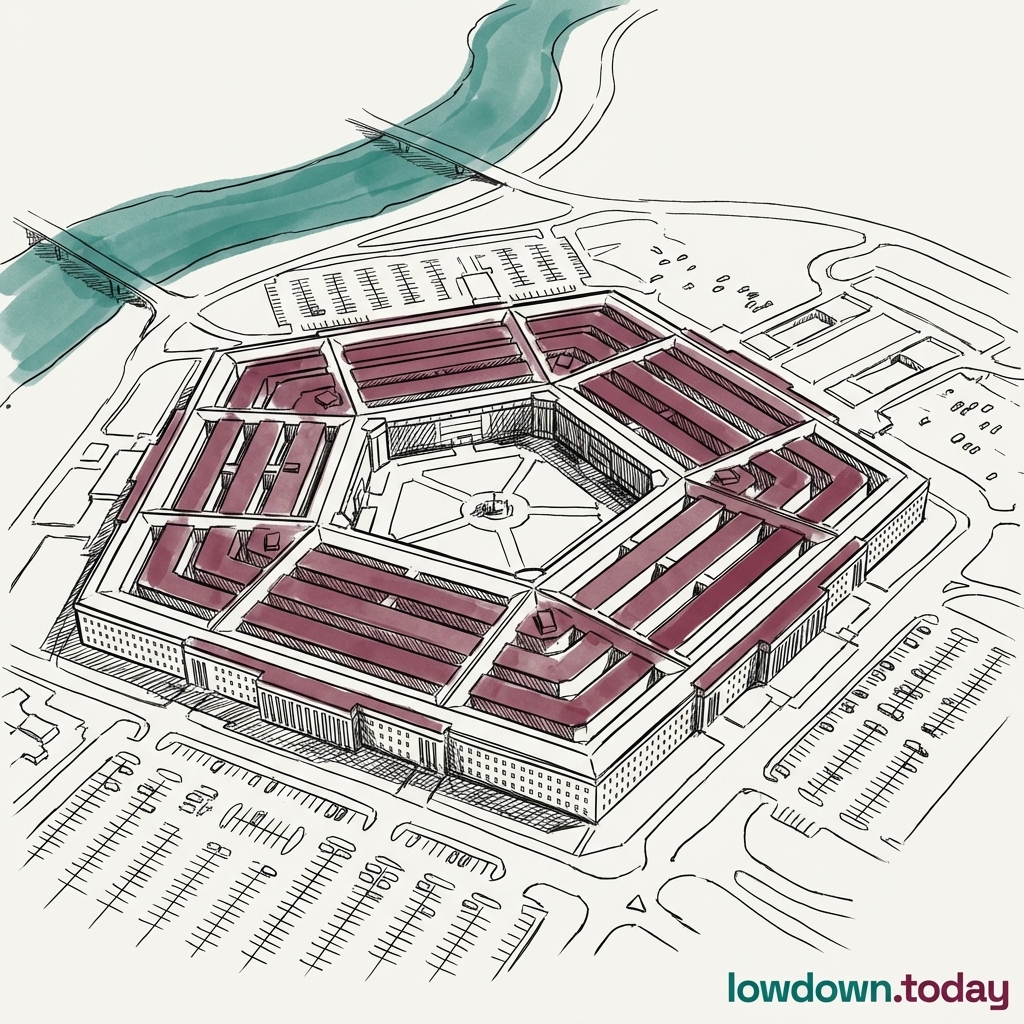
Pentagon
US Department of Defense; commands America's Iran campaign, Ukraine aid, and drone procurement.
On 30 September, the Pentagon announced plans for a four-star Autonomous Warfare Command to run US military drones and robots from 1 October 2027, if Congress agrees.
Last refreshed: 1 October 2026 · Appears in 7 active topics
Can the Pentagon close the drone shortfall before the August Chinese component deadline?
Timeline for Pentagon
Pentagon cuts a box from overseas forms
US Midterms 2026Released memos setting the command's target date
Drones: Industry & Defence: Hegseth plans a four-star drone commandMentioned in: US Navy buys 30 robot boats from 3 yards
Autonomous Systems: Land & SeaMentioned in: JIATF-401 adds ten Domestic Shield firms
Drones: Industry & DefenceAdded Captain Bianca Wilkerson to its published death toll on 23 September
Iran Conflict 2026: Pentagon adds a 19th name to its tollBackground
The Pentagon is the common name for the United States Department of Defense, the federal department responsible for the US armed forces. Its civilian leadership turns presidential direction and congressional funding into military policy, force planning, procurement and official reporting. Operational commands carry out missions within that chain of command.
Procurement gives the department influence beyond current operations. It sets requirements, selects suppliers and tests whether manufacturers can produce equipment at the needed scale. Its Drone Dominance competition barred motors and batteries from China, Russia, Iran and North Korea on 20 June, showing how technical rules can reshape supplier choices.
That mix of operational authority, purchasing power and public reporting makes the department a central institution in US security policy. Congress can fund, investigate and constrain it, while commanders depend on its orders and industrial suppliers depend on its requirements. The 4 August request for casualty records illustrates the scrutiny attached to those duties.
Pentagon plans a drone command
On 30 September, Defence Secretary Pete Hegseth announced that the Pentagon plans a four-star Autonomous Warfare Command for drones and robots. Pentagon memoranda set 1 October 2027 as its intended start date, subject to congressional approval. The proposed command would hold its own budget and buying powers.
The Pentagon is testing the supply base beneath that command. On 2 July, 19 firms had five weeks to deliver 120 armed drones for a Fort Carson test. On 18 September, the Defense Innovation Unit selected ten Gauntlet II winners for expected orders of about 60,000 drones. The 120-drone requirement tested delivery by finalists; the 60,000 figure described possible follow-on orders, not the same delivery count.
Pentagon faces casualty scrutiny
On 24 July, the Pentagon cut its official Iran-war death toll from 18 to 14 and reduced the wounded count from 482 to 420, citing temporary data disruptions. On 26 July, it restored the death toll to 18 and reported 624 wounded. The changes made the department's own reporting process part of the story of US losses.
On 4 August, House Oversight members demanded the Pentagon's full casualty change log and set an 18 August response Deadline. The request put the department's reporting records under formal congressional scrutiny, rather than treating the revisions as a routine correction.
Pentagon plans a drone command
What is the Ghost-X drone?
Reference
What is the difference between the Pentagon and CENTCOM in the Iran war coverage?
Who is Pete Hegseth and what does he do?
What is the Pentagon?
Where is the Pentagon located?
Recently resolved
Did the Pentagon divert Ukraine funding to the Iran war?
What is the Pentagon's role in the Iran conflict?
Is the Pentagon planning military action against Cuba?
What is the Chinese Cliff deadline in the Pentagon drone programme?
Why did the Pentagon fall short of its drone target in Phase 1?
What is the Pentagon's legal basis for the Iran war?
How long would it take to clear mines from the Strait of Hormuz?
How much has the Iran war cost the US so far?
Why was the Pentagon excluded from Northwood Hormuz planning?
Why did the Pentagon file a secret brief against DJI?
What is the Pentagon's role in the US drone industry?


