Skip to content
You can now search across every topic, entity and event.What's new
Drones: Industry & Defence
20AUG

Trump taxes drone parts at 100 per cent

3 min read
16:38UTC

Presidential Proclamation 11055, signed on 13 August and published on 19 August, taxes imported drone components at 100 per cent from 3 September while offering a duty-free lane to firms that commit to building in America.

TechnologyDeveloping
Key takeaway

The tariff hits imported drone components four times harder than the completed aircraft.

President Donald Trump signed Presidential Proclamation 11055 on 13 August under Section 232, the US national-security tariff statute, and the Federal Register published the text on 19 August 1. From 3 September a 100 per cent duty falls on the uncrewed aircraft systems, docking stations and critical components listed in Annex I. Annex II, which covers finished aircraft, is taxed at 25 per cent. A third tranche of components, in Annex III, joins them at 25 per cent from 9 February 2027, and the Commerce Secretary may move items onto either list by notice.

The rate structure inverts the usual order of protection. Charging four times as much on the part as on the whole aircraft penalises the importer who assembles in America and spares the one who ships a complete airframe in. A Chinese-made docking station cleared on 3 September costs twice what the same unit cost in August.

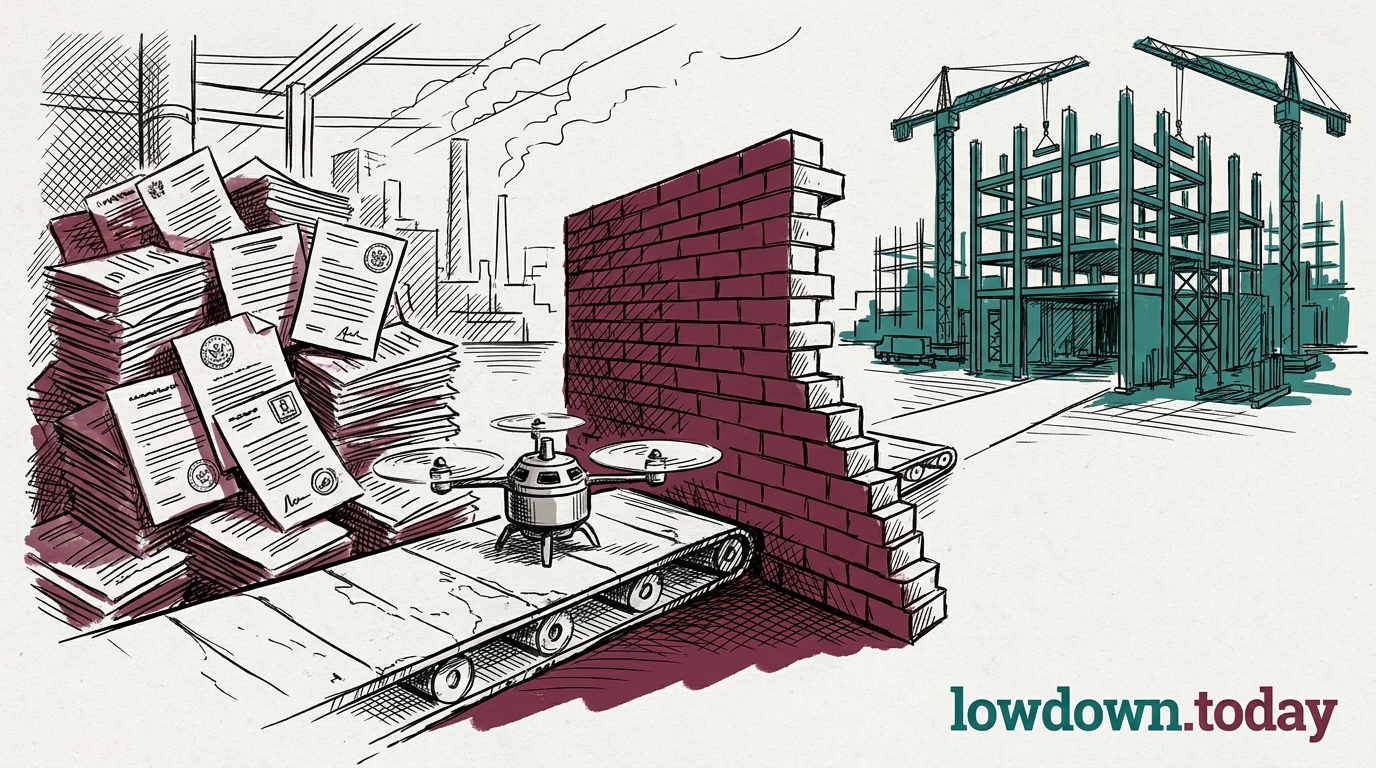
One clause reopens the door. A company with an approved US onshoring plan, with construction committed before 20 January 2029, may bring those components in duty-free while its factory goes up. Annex I therefore runs as two instruments at once: a penalty on the imported part and a tariff holiday for anyone laying foundations. The sorting is done by balance sheet, because only a firm that can commit construction capital reaches the exempt lane.

Readers of this topic were told in June that the Section 232 investigation had passed its statutory deadline with nothing published . The outcome is heavier than the trade press had priced, and it lands on parts and ground equipment rather than on finished aircraft alone.

Deep Analysis

In plain English

Section 232 is a US trade law that lets the president raise tariffs (import taxes) on goods judged a threat to national security, without needing a new act of Congress. President Trump used it here to tax imported drone parts at 100 per cent and finished drones at 25 per cent, starting 3 September. There is an escape route: a company that commits, before January 2029, to a plan for building the parts in the US instead of importing them can avoid the tariff entirely. The tariff is therefore less a wall than a deadline, pushing manufacturers to either pay more or build US factories.

Deep Analysis
Root Causes

The tariff sits on top of a drone component supply chain that remains heavily dependent on Chinese-origin motors, batteries and flight controllers even after two years of Pentagon pressure to remove them , so the duty-free carve-out for pre-2029 onshoring plans is effectively an admission that the domestic base cannot yet supply the volume the tariff would otherwise tax.

Layering the measure atop China's own licensing restriction five days earlier means US assemblers are now squeezed from both directions: slower Chinese shipments and, from 3 September, a 100 per cent duty on whatever does arrive.

What could happen next?
  • Consequence

    US drone assemblers face a 100 per cent duty on imported components from 3 September unless they have a qualifying onshoring plan in place, pushing costs onto buyers in the short term.

  • Precedent

    The duty-free carve-out for pre-2029 onshoring commitments sets a template other administrations could reuse: tariff as industrial-policy deadline rather than permanent trade barrier.

First Reported In

Update #17 · Two walls close on the drone supply chain

Federal Register· 20 Aug 2026
Read original
Different Perspectives
South Korea's Defense Acquisition Program Administration
DAPA folded drone and roadside-bomb jammers into an 18-year, KRW 3.448 trillion K2 tank upgrade approved 11 August, rather than fund counter-drone kit as its own programme. Seoul is treating the threat as permanent enough to write into a platform's lifecycle, not urgent enough to buy ahead of it.
NATO Support and Procurement Agency
NSPA named five pre-qualified counter-drone suppliers under new framework contracts on 27 July, giving allies a purchasing route with no published budget attached. A framework without committed money is an instrument waiting for a spending decision, not a guarantee one is coming.
Ukraine's Ministry of Defence
Ukraine's forces strike with more than 70 AI and computer-vision systems drawn from over 200 domestic producers, the ministry said on 18 August, a supplier base neither Washington's tariff fight nor Beijing's export licence touches. Kyiv is scaling capability faster than either government is writing rules for it.
A European drone-component manufacturer
A European manufacturer selling components into the United States faces the same 100 per cent tariff and 3 September deadline as any other foreign supplier, with the duty-free onshoring carve-out available only to firms building on American soil. That leaves it to absorb the cost, relocate assembly, or cede the US market rather than shop around a rival supply chain.
Chinese drone component exporters
Exporters now need a case-by-case licence for each US-bound dual-use shipment after MOFCOM's 5 August order, with no published review clock. The same week Shenzhen logged nearly 200,000 domestic logistics-drone sorties and Hunan reported record spraying coverage, a home market large enough to absorb what the licence regime slows from leaving the country.
US drone manufacturers
The onshoring carve-out protects Performance Drone Works' $820 million War Department loan, but the same 3 September deadline hits Red Cat Holdings and Unusual Machines, both filing over 500 per cent revenue growth on 6 August, on Chinese-sourced components with no qualified domestic substitute yet.
