Skip to content
Welcome, thoughtbot's Giant Robots listeners!Start here
Iran Conflict 2026
19AUG

Trump maps Hormuz as US territory

2 min read
18:42UTC

Axios reported on 19 August that Donald Trump posted a map labelling the Strait of Hormuz as American territory, and that he had threatened to bomb Oman if it obstructed US objectives.

ConflictDeveloping
Key takeaway

Trump's Hormuz map produced no order, deployment or designation this week.

Axios reported on 19 August that Donald Trump posted a map labelling the Strait of Hormuz as United States territory, and separately that he had threatened to bomb Oman if it obstructed American objectives⁠1. AP (the Associated Press wire) carried the same threat to Oman, a country currently negotiating Hormuz maritime management with Tehran⁠2.

Our desk could not open the Axios report on any route, so both claims travel here attributed to Axios rather than corroborated by us.

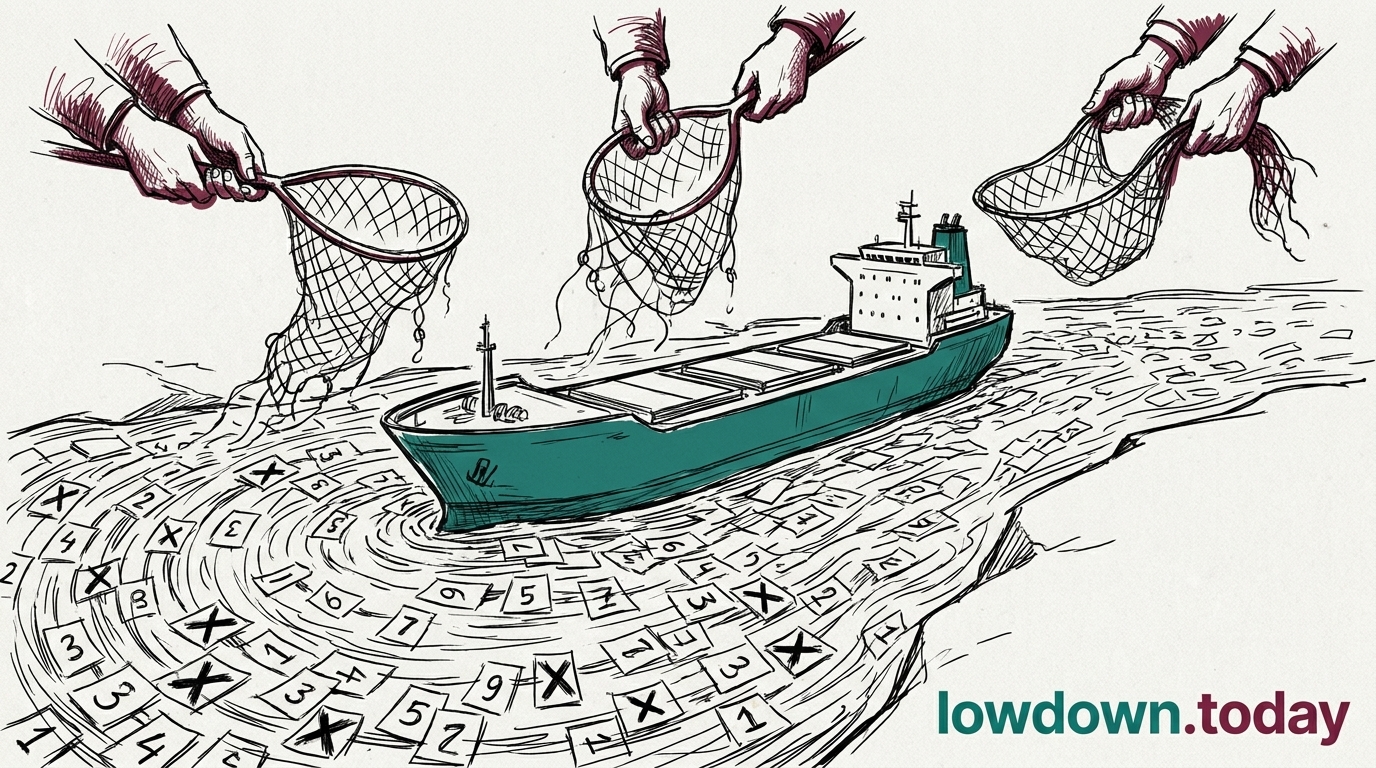
Weigh the statements against what the week put on the water. A crew member died on an anonymous hull. A Gulf partner shut Iran's settlement channel. Providers could not agree on how many ships crossed, and the war-risk layer covering the voyage was withdrawn and repurchased. No American order, deployment, licence or designation followed the map. Tehran's six published conditions for reopening the strait answer to none of it, and Oman carried on mediating.

Deep Analysis

In plain English

According to the news outlet Axios, President Trump posted a map online labelling the strait of Hormuz as United States territory, and separately threatened to bomb Oman if it got in the way of American goals. Oman is currently trying to help negotiate how ships move through the strait between Iran and the US side. Neither claim has been checked directly against a primary Trump statement by this desk; both come from Axios's reporting, with AP separately reporting the Oman threat. Past Trump statements about Hormuz have often not been followed by any official document or order, so it is not yet clear whether either claim will lead to a real policy change.

Deep Analysis
Root Causes

Oman is simultaneously the party the US relies on to mediate Hormuz shipping-map talks with Iran and, per Axios, the target of Trump's bombing threat if it 'obstructed American objectives'; that contradiction, threatening the mediator Washington itself depends on, has precedent in the 28 May episode, where a similar threat produced a rapid Omani denial rather than any change in Oman's mediating role.

Trump's public statements on Hormuz have repeatedly run ahead of any executive order, sanctions designation or other documented US government action, a gap the record shows going back to at least his 21 June and 14 June 2026 statements, so a Trump Social media post alone does not establish a change in formal US Hormuz policy.

What could happen next?
  • Risk

    A bombing threat against Oman, the state actively mediating Hormuz shipping-map talks with Iran, risks undermining the one channel currently reducing tension in the strait.

  • Precedent

    Trump's Hormuz statements have repeatedly outpaced any signed executive order or Federal Register entry in this conflict, a pattern this claim continues unless a formal instrument follows.

First Reported In

Update #172 · The strait nobody can count, insure or pay

Axios· 19 Aug 2026
Read original →
Different Perspectives
Russia
Russia
Russia vetoed the same renewal on 17 September, arguing that Britain, France and Germany never validly triggered the snapback that reimposed the pre-2015 UN resolutions. No panel was ever seated under that mandate, so the UN list decays fastest for states that screen against it rather than against the American one.
China
China
China vetoed renewal of the UN sanctions monitoring mandate on 17 September, arguing that Resolution 2231 terminated on 18 October 2025 and that the Security Council should drop Iran's nuclear file altogether. On that reading there is nothing to monitor, so the sanctions survive and their enforcement does not.
Iraq
Iraq
Baghdad saw the last American counter-Islamic State troops leave its territory on 30 September, completing a timetable it agreed with Washington in September 2024. Iraqi airspace deconfliction passes to Baghdad, which still has an open inquiry into the Maysan drone launches that has named nobody.
Pakistan
Pakistan
Treasury names Waseem Pasha Tajammal of Rawalpindi as the Cavalier group's chairman and places one of the designated incorporations in Islamabad. QatarEnergy separately told Pakistan that liquefied natural gas cargo cancellations would run through November, so Islamabad carries an enforcement question and a supply gap at once.
Turkey
Turkey
Treasury named a Cavalier Dynamics company incorporated in Istanbul among the ten nodes it designated on 29 September, and Ankara has published no response. Turkey imported a record 120,000 barrels a day of Indian diesel in August, cutting Russia's share of its diesel imports to 20 per cent.
India
India
Suraj Yadav, a wiper from Uttar Pradesh, was killed aboard the Cape Dao on 23 September, and 19 of the ship's 20 Indian crew were taken off alive. India's September imports ran at 575,000 barrels a day from Iraq and 566,000 from Saudi Arabia, back to pre-conflict rates.