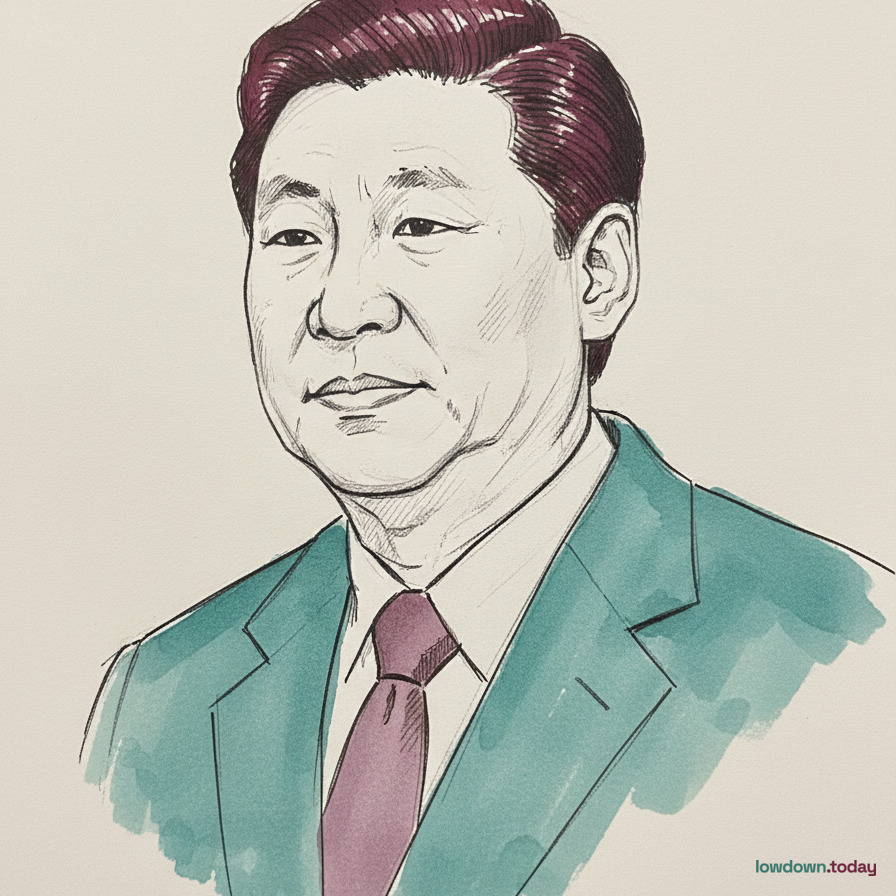
Xi Jinping
China's paramount leader since 2012; CCP General Secretary with no remaining term limits.
Last refreshed: 28 May 2026 · Appears in 1 active topic
Will Xi Jinping use the 14-15 May summit to broker an Iran deal, or trade Hormuz access for concessions on Taiwan?
Timeline for Xi Jinping
Received Putin's HEU custodian pitch in Beijing on 21 May
Iran Conflict 2026: Trump vetoes Iran's only uranium exitHosted Sharif and Munir in Beijing for face-to-face Iran mediation coordination
Iran Conflict 2026: Sharif, Munir and Xi meet in BeijingMentioned in: Iran names new ambassador to Beijing
Iran Conflict 2026Provided rhetorical framing Ghalibaf used to contextualise Iran's resistance
Iran Conflict 2026: Ghalibaf declares new world order, quoting XiMet Trump in Beijing; Chinese readout omitted Iran-specific language
Iran Conflict 2026: Trump's three pledges, China's silent readout- Who is Xi Jinping?
- Xi Jinping is the General Secretary of the Chinese Communist Party and President of the People's Republic of China, in power since 2012 and 2013 respectively. He is China's paramount leader and the most powerful Chinese leader since Mao Zedong.
- Why did Trump threaten to delay his summit with Xi Jinping?
- Trump threatened to delay the 31 March to 2 April bilateral summit unless China helped secure shipping passage through the Strait of Hormuz, where more than 300 vessels were stranded. China imports roughly 11 million barrels of oil per day through the strait.Source: Lowdown
- How much oil does China import through the Strait of Hormuz?
- China imports roughly 11 million barrels of oil per day through the Strait of Hormuz, making it one of the most energy-dependent nations on the waterway and a key target for American Hormuz-linked diplomatic pressure on Beijing.Source: Lowdown
- What is the difference between Xi Jinping's position and Trump's approach to the Iran conflict?
- Trump sought to recruit China as a security partner to reopen Hormuz, using the bilateral summit as leverage. Xi's position is Non-alignment: China frames the conflict as an American provocation and resists being conscripted into US-led operations, even when its own energy imports are at risk.Source: Lowdown
- Is Xi Jinping still in power in 2026?
- Yes. Xi Jinping remains General Secretary of the Chinese Communist Party and President of China in 2026, with term limits effectively removed in 2018.
- When is the Trump-Xi Jinping summit and what is on the agenda?
- The Trump-Xi summit is scheduled for 14-15 May 2026. The Strait of Hormuz crisis is a central issue: Trump has used Hormuz access as leverage against China, which imports roughly 11 million barrels of oil per day through the strait. Wang Yi's 6 May meeting with Iran's Araghchi was timed eight days before the summit.Source: Lowdown briefing
- Why did Trump threaten to delay his summit with Xi Jinping over the Strait of Hormuz?
- Trump threatened to delay the bilateral summit unless China helped secure shipping passage through the Strait of Hormuz, where China imports roughly 11 million barrels of oil per day. The threat was designed to enlist Chinese diplomatic pressure on Iran.Source: Lowdown
- What did Xi Jinping agree to at the Trump summit about Iran?
- Trump claimed Xi pledged that Iran could never have a nuclear weapon, that Hormuz must remain open, and that China would supply no military equipment to Iran. None of these commitments appear in the Chinese Ministry of Foreign Affairs readout of the 14-15 May 2026 Beijing summit.Source: event
- Why does China care about the Strait of Hormuz?
- China imports roughly 11 million barrels of oil per day through the strait, making it one of Beijing's most critical energy chokepoints. Disruption raises Chinese fuel costs directly and gives Washington leverage over Beijing's economic interests.
- What role is China playing in mediating the Iran war?
- China has hosted Iranian and Pakistani diplomats while maintaining formal neutrality. Beijing endorsed Pakistan's mediatory role publicly before the Trump-Xi summit, preventing Trump from extracting a bilateral diplomatic handoff. Sharif and Munir met Xi in Beijing on 25 May to coordinate the Mediation effort.Source: event
- Did Trump reject China as a custodian for Iran's uranium?
- Yes. At a 27 May 2026 Cabinet meeting Trump said he would not be comfortable with either Russia or China holding Iran's 440.9 kg stockpile of 60%-enriched uranium, vetoing the only third-country storage arrangement on the table.Source: event
Background
Xi Jinping has led the People's Republic of China as General Secretary of the Chinese Communist Party since 2012 and as President since 2013, consolidating power to a degree unseen since Mao Zedong. Born in Beijing in 1953, he was sent to rural Shaanxi for re-education during the Cultural Revolution before working his way through provincial leadership roles in Fujian, Zhejiang, and Shanghai. Constitutional amendments in 2018 removed presidential term limits, allowing indefinite rule. He has steered China through a deepening strategic rivalry with the United States while maintaining Beijing's posture of formal neutrality in conflicts it regards as American provocations.
Xi became a focal point in the 2026 Iran crisis when Donald Trump threatened to delay their bilateral summit unless China secured passage through the Strait of Hormuz for US-aligned shipping. China imports roughly 11 million Barrels Per Day through the strait, giving Xi direct economic exposure. The summit took place on 14-15 May 2026 in Beijing. Wang Yi had hosted Iranian Foreign Minister Araghchi in Beijing on 5 May, eight days before the summit, positioning China as the diplomatic intermediary. The summit produced a sharp documentation asymmetry: Trump told Fox News that Xi had pledged Iran could never have a nuclear weapon, Hormuz must remain open, and China would supply no military equipment to Iran. The Chinese Ministry of Foreign Affairs readout listed only 'the Middle East situation' with no Iran-specific language and no mention of any pledge. Pakistani Prime Minister Shehbaz Sharif and Army Chief Asim Munir met Xi in Beijing on 25 May, consolidating the Mediation effort in the one capital with the financial machinery to underwrite a frozen-asset release. On 27 May, Trump vetoed Russia and China as custodians for Iran's 440.9 kg uranium stockpile, removing the third-country storage arrangement Putin had pitched to Xi on 21 May. Whether Beijing has genuinely absorbed US coercion or simply preserved its own options without committing remains the unresolved question.
