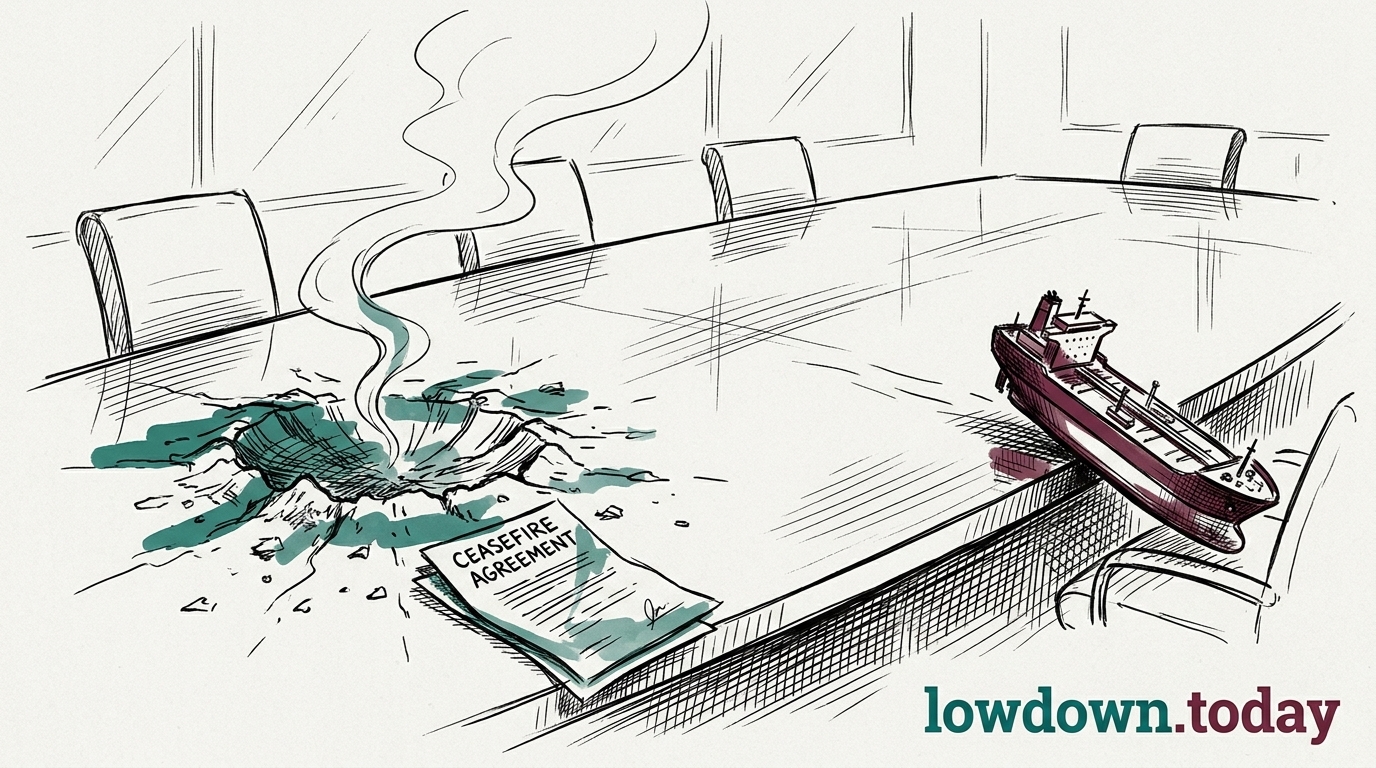
US Central Command (CENTCOM), the US military command for the Middle East, said its forces struck Iran's largest naval base at Bandar Abbas on Monday 25 May, eliminating two Islamic Revolutionary Guard Corps (IRGC) boats caught laying mines in the Strait of Hormuz and destroying a surface-to-air missile (SAM) site that had locked onto US warplanes1. CENTCOM called the action self-defence, "defensive in nature, not offensive and not an effort to break the ceasefire", and a US official put the scope at "very small"2.
Bandar Abbas sits at the narrowest navigable point of the strait and serves as the IRGC Navy's operational hub. The base is familiar ground in this war: an Israeli strike there in March killed IRGC Navy Commander Alireza Tangsiri. Mines in a shipping lane are a recognised casus belli, and striking the boats laying them falls under a commander's standing rules of engagement, not a presidential decision. That distinction matters, because it explains how ordnance can land on the IRGC's headquarters while Washington's diplomats wait on a counter-text.
Two days earlier Donald Trump had declared the accord "largely negotiated", and the 18 May stand-down he posted at Gulf leaders' request had established the pattern of a diplomatic track and a military track answering to different authorities. The redirections that reached 70 vessels by 19 May escalated here to a direct kinetic strike. The IRGC's devolved mosaic defence pushes launch and emplacement authority down to provincial units, so Iran's civilian negotiators cannot credibly promise the boats will stop, even when they want the deal.
Iranian state outlet Fars News Agency dismissed Trump's "largely negotiated" line as "inconsistent with reality" the same day Tehran's own envoys kept the Doha channel open3. Neither government can deliver at the table what its operators do in the field, the same dual-track method the West has long pinned on Washington, now running visibly on both sides.


