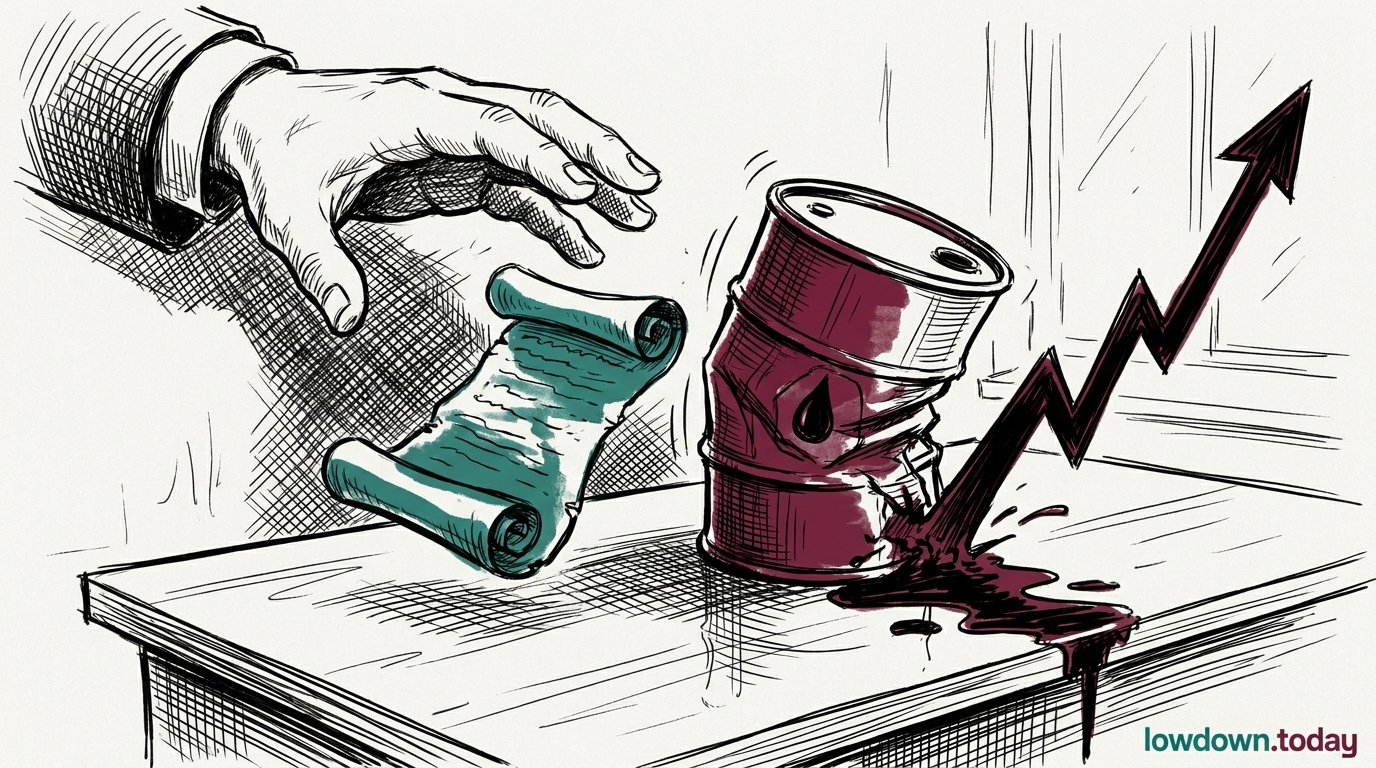
Iran transmitted a written 10-point reply to the US 14-point memorandum of understanding (MoU) through Islamabad on Sunday 10 May 2026. IRNA, Iran's state news agency, confirmed the transmission inside the same news cycle 1. Hours later, Donald Trump posted on Truth Social that the response was "TOTALLY UNACCEPTABLE" 2. Trump's 10 May anticipation of a reply thus collapsed into rejection on the same day, closing a window Tehran had already missed once when it let the 9 May deadline pass .
the MOU is a one-page document drafted in Washington. It packages a Hormuz reopening, an Iranian nuclear-enrichment moratorium, and partial sanctions lifting into a 30-day detailed-negotiation window once both sides accept the frame. Fararu, an Iranian conservative outlet, reports Tehran's counter runs to ten points, not fourteen. The two governments are working from different documents, not different positions on the same document, and English-language wire copy has yet to flag the discrepancy. For Ishaq Dar, Pakistan's foreign minister and the conduit of choice since the back-channel opened, that means there is no shared instrument in the room to caucus around. CNN reports a second Islamabad round is scheduled for the week beginning 11 May.
The shape of the rejection matters as much as its content. Trump's first peace document went to Tehran on 7 May ; that one travelled by diplomatic transmission, with Baqaei confirming receipt. Sunday's reply ran the same route in reverse, yet the rejection broke the format: a public post, not a written counter-text, not a fresh executive order, not a new OFAC designation. The White House presidential-actions index records zero signed Iran instruments on the 73rd consecutive day; the most recent executive order, dated 1 May, targets Cuba. OFAC moved on standing authority when it added Chang Guang Satellite Technology Co., China's largest commercial synthetic-aperture-radar operator, to its arms-transfer sanctions on 8 May, not on a fresh presidential signature.
The 1994 Agreed Framework with North Korea ran on a single agreed text. The JCPOA ran on a single agreed text. A negotiation where Tehran holds ten points and Washington holds fourteen has no shared instrument to amend, and the rejection-by-tweet of a transmitted-by-Pakistan document raises the diplomatic cost for the mediator faster than for either principal. Pakistan's back-channel is the only surviving bilateral conduit between Tehran and Washington, and Dar's ministry must now rebuild a process Truth Social has just broken.





