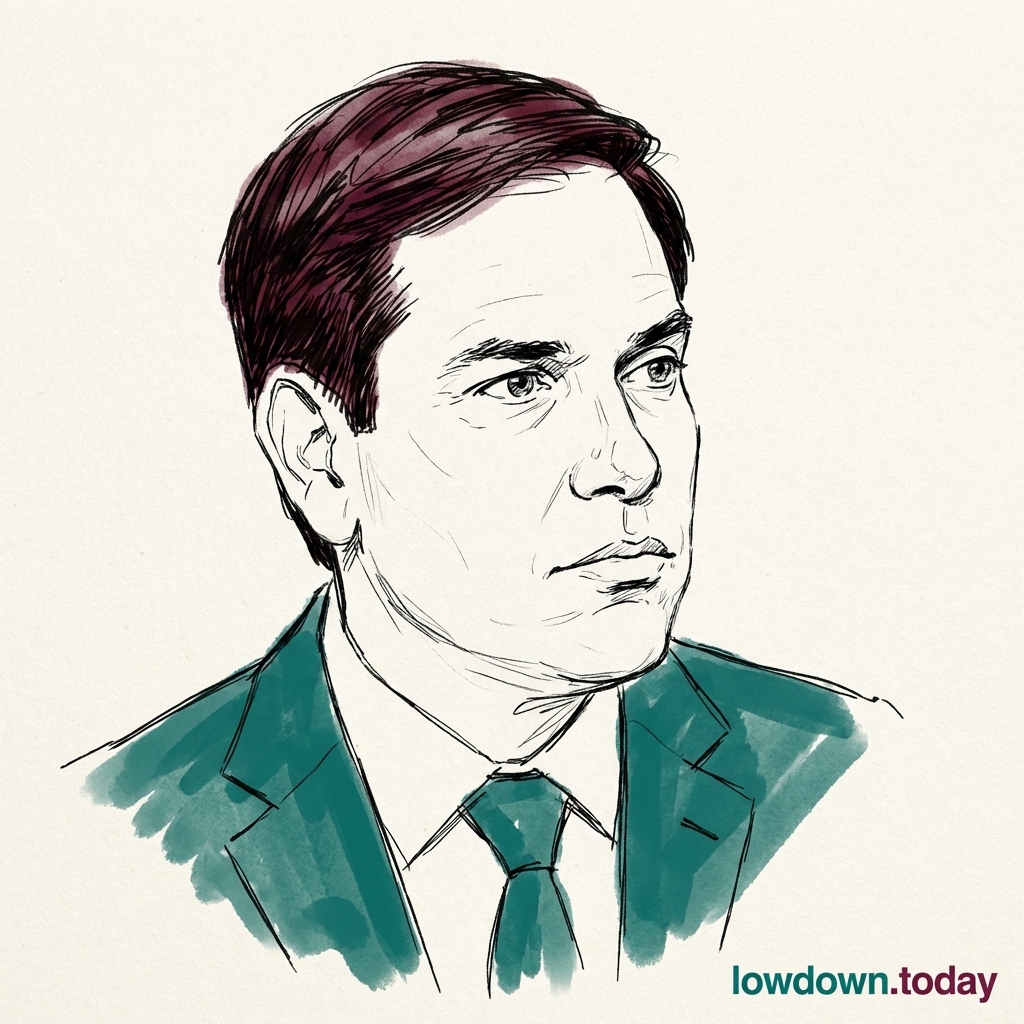
Marco Rubio
US Secretary of State under President Trump, whose disclosure that America pre-emptively joined Israel's Iran strikes became the central legal controversy of the 2026 conflict.
After Marco Rubio spoke to Volodymyr Zelenskyy on 20 October, Ukraine said US missile warning had resumed; Kyiv did not say related Starlink speed restrictions were fixed.
Last refreshed: 22 October 2026 · Appears in 5 active topics
With US mediation stalled, can Istanbul produce a real ceasefire without Washington?
Timeline for Marco Rubio
Visited Mumbai and warned buyers of Russian oil
Russia-Ukraine War 2026: Rubio heads to Ambani's Indian refineryZelenskyy says US early warning is back
Russia-Ukraine War 2026Burnham blames IRGC for suspected plot
Iran Conflict 2026Mentioned in: Treasury defaults Iran licences to no
Iran Conflict 2026NIAC asks Treasury to restore licences
Iran Conflict 2026Background
Marco Rubio is the United States Secretary of State. He represents the government in foreign relations, helps direct diplomatic negotiations and communicates sanctions policy. The Secretary of State is the Cabinet's principal foreign-affairs officer.
Before joining the Cabinet, Rubio served three terms as a Republican senator for Florida and sought his party's presidential nomination. He is Cuban-American, and his earlier foreign-policy record focused heavily on Cuba, Venezuela and Iran. His Cabinet remit covers crisis contacts, allied relations, sanctions and negotiations across regions.
Rubio restores a warning channel
On 20 October, Zelenskyy spoke to Rubio after saying Ukraine received no allied warning before Russia's first ballistic missiles flew on the night of 18 October. Zelenskyy reported that the early-warning flow resumed after the call. Washington gave no public reason for the interruption.
Zelenskyy also said the call covered Starlink, missile defence and intelligence. He did not say that reported satellite-communications speed restrictions had been resolved. Rubio's direct part in the episode was therefore the call followed by restored warning, not a wider settlement of every communications issue.
Rubio takes sanctions to Jamnagar
On 21 October, Rubio changed his India schedule to include an overnight stay at Reliance's Jamnagar Refinery in Gujarat. He was due to meet Reliance chairman Mukesh Ambani there and warned that US sanctions reach anyone trading with Russia.
For the planned 21 October stop, the refinery was Reliance's Jamnagar complex, not Nayara Energy's separate site at Vadinar. Reliance listed Jamnagar's capacity at 1.4m barrels a day. The announcement described a planned visit and meeting, not completed attendance, a contract or an agreement by Reliance to change its crude purchases.
Rubio sets Washington's Iran sequence
On 2 June, Rubio told the Senate that Iran must reopen the strait of Hormuz before nuclear talks could proceed. He said reopening alone would not bring sanctions relief. His testimony made the Secretary of State the public voice for Washington's negotiating order.
On 8 June, Rubio said resolving the enrichment dispute could take months. That was longer than President Trump's suggestion that a deal might arrive over the weekend, and nothing had been signed. Rubio's second statement replaced an imminent public timetable with a longer, unresolved process.
What did Rubio say at the GCC ministerial in Manama about Hormuz tolls?
What is the Istanbul channel in the Ukraine peace talks?
Has the US given up on mediating in Ukraine?
Why did Lavrov call Rubio about Kyiv?
Has Rubio signed any Iran deal or agreement?
What did Rubio say about Iran's Hormuz tolls?
What is Rubio's position on reopening the Strait of Hormuz?
What happened at the Israel-Lebanon talks in April 2026?
Why does Iran refuse to negotiate with Marco Rubio?
Is Marco Rubio hawkish on Iran?
Did Rubio bypass Congress on Iran war spending?
What did Rubio disclose about the US joining Israel's war?


Written with AI from Lowdown's published reporting. Not individually reviewed by an editor. Updated 22 October 2026. Editorial standards.