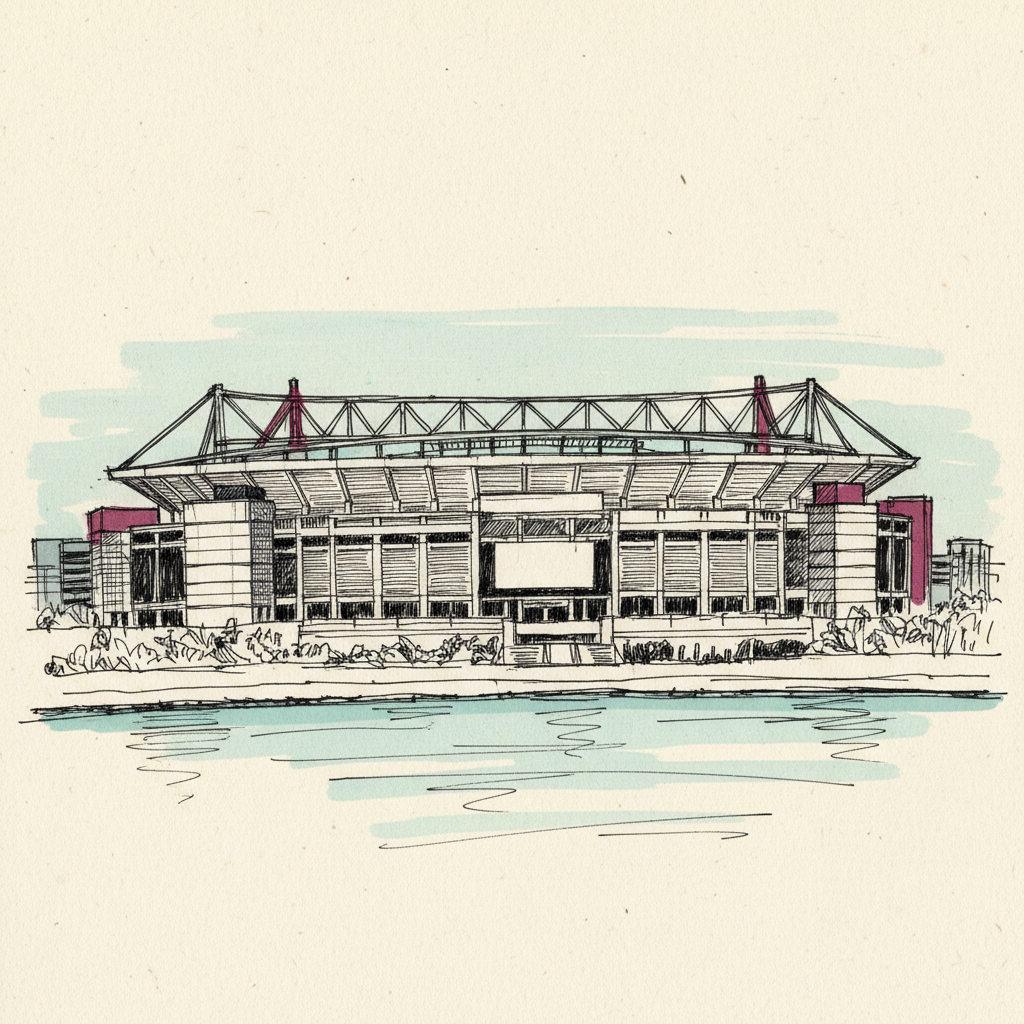
MetLife Stadium
New Jersey NFL stadium; hosted the 2026 World Cup final on 19 July.
MetLife Stadium in New Jersey hosted the 2026 World Cup final on 19 July, won 1-0 in extra time by Spain over Argentina. NJ Transit later reported more than 370,000 fans travelled to the venue's eight matches, prompting a new passenger ceiling for future events.
Last refreshed: 28 July 2026 · Appears in 1 active topic
How did MetLife Stadium handle 80,663 fans with no parking and Penn Station shut for four hours?
Timeline for MetLife Stadium
Mentioned in: Morocco and Spain clash over 2030 final
2026 FIFA World CupNew Jersey sets a passenger ceiling
2026 FIFA World CupMentioned in: Fox claims a US soccer ratings record
2026 FIFA World CupMentioned in: FIFA opens prosecutor file on brawl
2026 FIFA World CupSpain meet Argentina at MetLife with Golden Boot live
2026 FIFA World CupBackground
MetLife Stadium opened in 2010 as the shared home of the NFL's New York Giants and New York Jets, seating 82,500 in its NFL configuration. It sits in New Jersey's Meadowlands, built for CAR access with roughly 28,000 on-site lots in normal use, yet served by only a single rail spur via Secaucus Junction and no walkable surrounding neighbourhood.
That mismatch between a CAR-oriented design and a mass-transit event became the stadium's defining operational challenge when it hosted eight matches at the 2026 World Cup, including the 19 July final, won 1-0 in extra time by Spain over Argentina. The venue also carried symbolic weight beyond its NFL tenancy: Neymar ended his Brazil career there on 5 July, on the same ground where his international career began in 2010.
Final tickets reached six figures
FIFA's first use of Dynamic pricing in World Cup history set MetLife's cheapest final ticket at $4,185 and its most expensive at $8,680, yet one listing on FIFA's own resale marketplace reached $230,000, with FIFA collecting a 30% commission on every resale.
New York and New Jersey's attorneys general subpoenaed FIFA on 28 May for pricing documents covering all eight MetLife matches, alleging premium seat tiers were added after sales closed, driving roughly 25% price rises across more than 90 fixtures tournament-wide.
MetLife raced a grass deadline
MetLife's World Cup pitch relied on borrowed turf: around 600 rolls of Tahoma 31 bermudagrass were trucked in from North Carolina after the venue's own New Jersey supplier failed over winter, with laying beginning on 6 May on a raised rig two feet above the stadium floor.
The gamble held: the pitch reached its target playable date of 13 June, when Brazil and Morocco drew 1-1 before 80,663 fans. The same surface went on to stage seven more matches, including the 19 July final.
MetLife exposed its rail bottleneck
MetLife Stadium was built for CAR access, but its eight World Cup matches, including the final, carried no general parking and no tailgating: only around 5,000 spaces at the adjacent American Dream mall, at $225 each. Roughly 80,000 fans per match instead relied on a single rail spur through Secaucus Junction.
A 21 July report from NJ Transit and its partner agencies tallied more than 370,000 fans across the eight matches and set a working ceiling of 20,000 passengers per two-hour window for future events, a safety limit rather than a promise of new capacity.
Spain wins the final at MetLife
Who is refereeing the 2026 World Cup final?
Why did Neymar retire at MetLife Stadium?
Who beat Brazil at the 2026 World Cup?
When is the first World Cup match at MetLife Stadium?
What type of grass is being installed at MetLife Stadium for the World Cup?
Will Penn Station close for the 2026 World Cup?
Reference
How many fans attended the 2026 World Cup final?
Who won the 2026 World Cup final at MetLife Stadium?
Did Trump present the World Cup trophy?
Is MetLife Stadium getting real grass for the World Cup?
How will fans get to MetLife Stadium for the World Cup?
Is there parking at MetLife Stadium for the World Cup?
Which NFL teams play at MetLife Stadium?
How much do MetLife Stadium World Cup Final tickets cost?
Who is performing at the World Cup closing ceremony?
