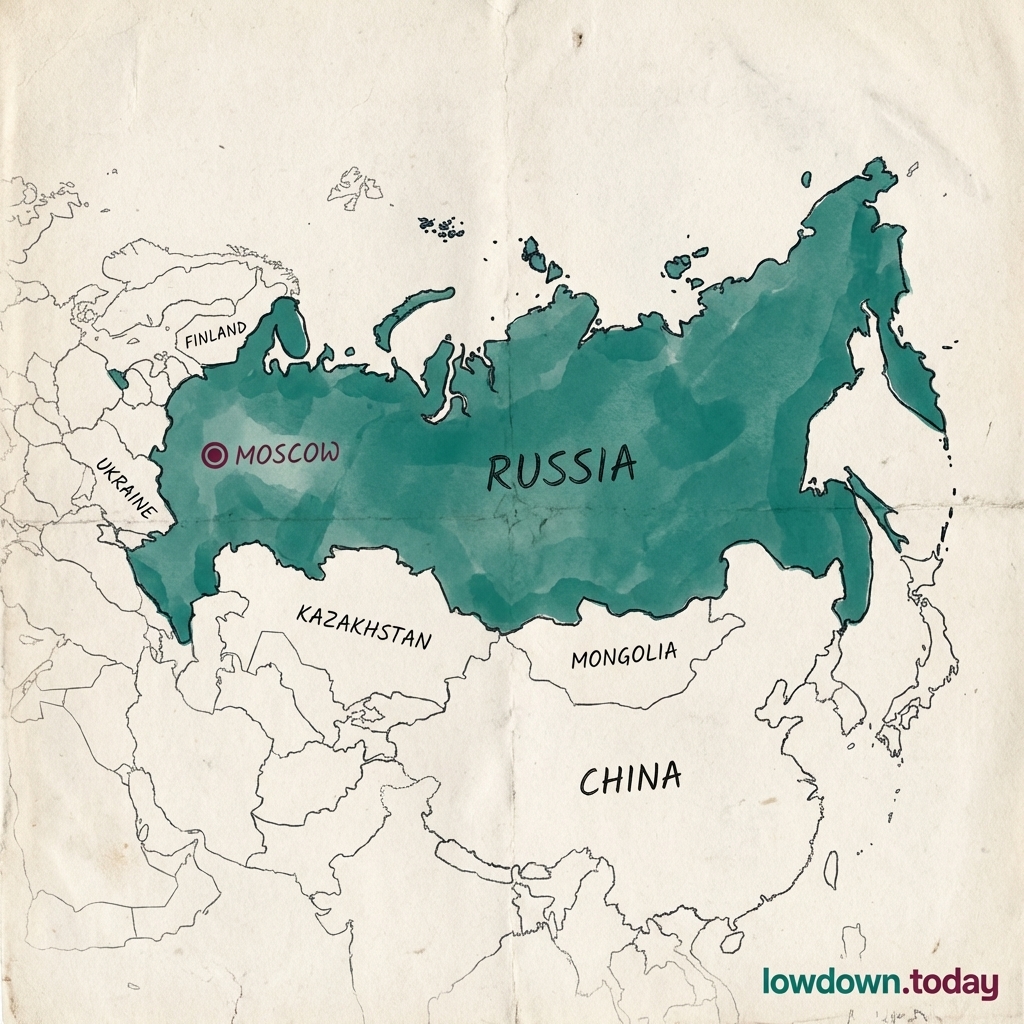
Russia
Nuclear-armed state waging full-scale war on Ukraine; permanent UN Security Council member with energy leverage.
As of 20 August 2026, Russia remains nuclear-armed state waging full-scale war on ukraine; permanent un security council member with energy leverage.
Last refreshed: 20 August 2026 · Appears in 11 active topics
How has Russia turned the Iran war into a fiscal windfall while the Ukraine front grinds on?
Timeline for Russia
Mentioned in: Strasbourg hears the case of ten Ukrainian children
Russia-Ukraine War 2026Shadow tankers carried half of Russia's seaborne oil
Russia-Ukraine War 2026imported the fuel and ran the deficit
Russia-Ukraine War 2026: Budget revenue rises as oil and gas receipts fallMentioned in: Russian strike hits a locomotive near the Polish border
Russia-Ukraine War 2026Mentioned in: ISW assesses Ukraine eliminated the Lyman salient
Russia-Ukraine War 2026Background
Russia is a nuclear-armed state and permanent UN Security Council member that has waged full-scale war on Ukraine since February 2022, giving it leverage over European energy and grain markets that outlasts any single battlefield outcome.
It backs Iran diplomatically and economically without formally joining Tehran's war. Envoy Dmitry Medvedev, attending funeral rites in Tehran on 4 July, reaffirmed Russia's treaty with Iran and likened Tehran's power to shut the Strait of Hormuz to holding a nuclear weapon, while Putin himself skipped the funeral. Moscow has repeatedly offered to take custody of Iran's stockpile of 60%-enriched uranium, an offer Tehran has not acted on.
At the IAEA, Russia has joined China in blocking board resolutions that would restore inspectors' access to Iranian nuclear sites, leaving hundreds of kilograms of enriched uranium unaccounted for by the watchdog's own count. The two states are also linking their domestic bank-card networks, Iran's Shetab system and Russia's Mir, to build payment channels that route around Western sanctions infrastructure, an alignment that now stretches from nuclear diplomacy into everyday banking.
Can Russian banks still buy the government's bonds in 2026?
How much territory did Russia gain in Ukraine in July 2026?
Why did Trump reject Russia as an Iran uranium custodian?
What is Russia offering to do with Iran's enriched uranium?
Is Russia sharing intelligence with Iran against the US?
How long has the US crude oil waiver for Russia been lapsed?
How much has NATO pledged to Ukraine at the 2026 Ankara summit?
Why did Russia ban its own diesel exports in July 2026?
What is Russia's role in the Ukraine war in 2026?
How is Russia profiting from the Iran conflict?




