Skip to content
Welcome, thoughtbot's Giant Robots listeners!Start here
Iran Conflict 2026
25JUN

Grossi, Gharibabadi and Trump differ on access

3 min read
14:30UTC

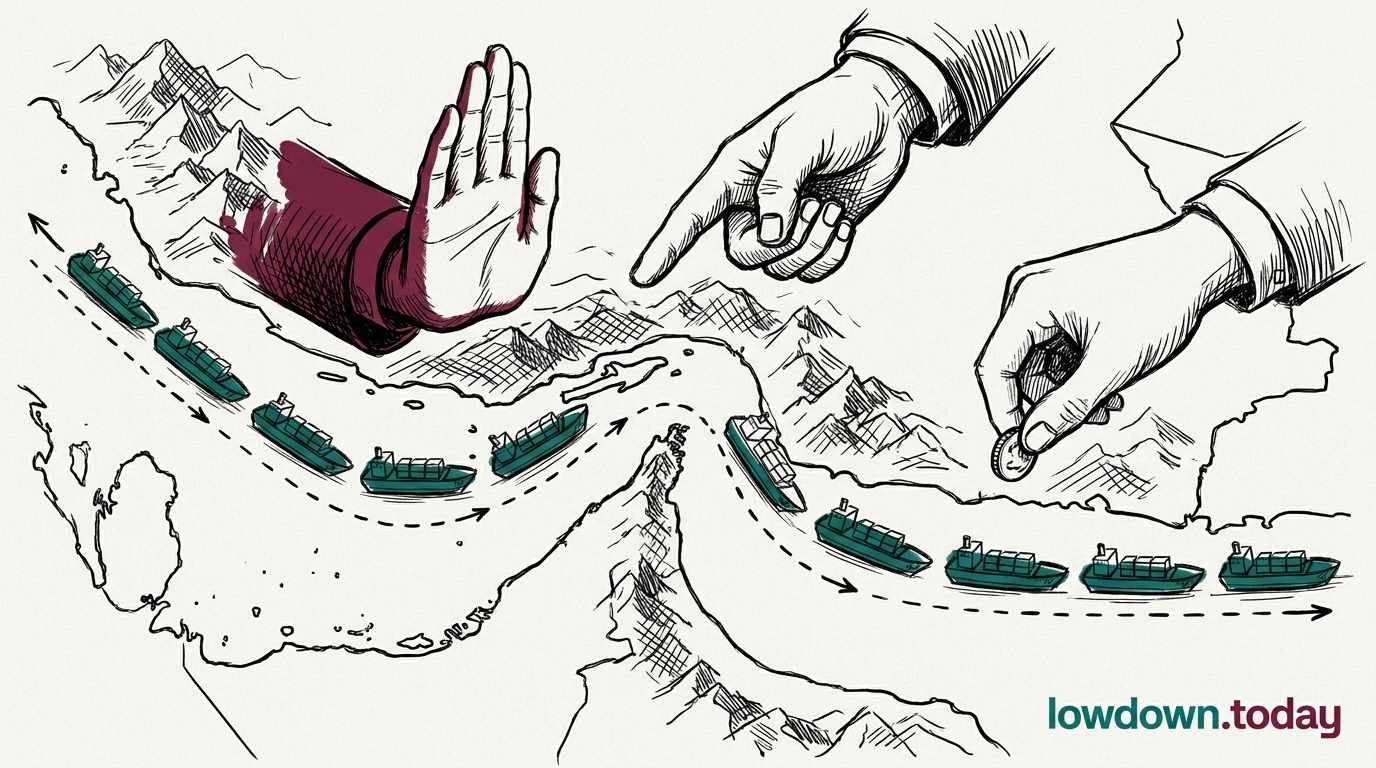
Grossi said IAEA inspections of Iran 'going to happen' on 24 June; Gharibabadi tied access to sanctions relief first; Trump claimed Iran 'completely agreed', and Tehran denied it within hours.

ConflictDeveloping
Key takeaway

Grossi, Gharibabadi and Trump describe three inspection regimes, with no signed instrument behind any of them.

Rafael Grossi, director-general of the International Atomic Energy Agency (IAEA), said in Japan on Wednesday 24 June that inspections of Iran's enrichment sites are "going to happen" and that the agency would work on "the modalities, dates, procedures, places, very soon"⁠1. The IAEA is the UN nuclear watchdog that verifies what states hold; it has been locked out of Iran for more than 100 days, with 440.9 kilograms of 60 per cent enriched uranium unverified since February. Grossi moved from whether to how, his firmest language since the Islamabad memorandum, though he named no date.

Iran answered in the opposite direction the same day. Deputy Foreign Minister Kazem Gharibabadi said access would follow only a final deal and practical sanctions relief, not precede them⁠2. That contradicts the recitals of OFAC's General License X, which assumed IAEA access, and follows spokesman Esmail Baghaei's flat refusal on 23 June. The civilian government cannot concede the point, because the inspection block is an IRGC deterrent posture, not a negotiating chip the foreign ministry controls.

Then the claims widened. Donald Trump, the US President, told Fox News on Thursday that US inspectors would join the IAEA mission and that Iran had "completely agreed" to inspections⁠3. Iran's foreign ministry denied any such agreement within hours, the identical sequence to his 23 June claim and Baghaei's denial. No instrument backs the assertion. OFAC's only 24 June action was Russia-related removals⁠4, and The White House logged a single Senate nomination⁠5; no Iran instrument has followed General License X. The strongest signal in the file is the absence of any signed paper to settle which of the three accounts is true.

Deep Analysis

In plain English

International inspectors from the atomic energy watchdog, the IAEA, have not been allowed into Iran's nuclear sites for over 100 days. They need to check what Iran holds, specifically 440.9 kilograms of uranium enriched to 60% purity, material that is close to weapons-grade. On Wednesday, the IAEA's chief said inspections will happen and the agency is working out the details. On the same day, Iran's deputy foreign minister said no, access only comes after a final deal and after sanctions relief, not before. Then on Thursday, President Trump said on Fox News that Iran had 'completely agreed' to inspections and US inspectors would even join. Iran's government denied that within hours. None of the three actors contradicted each other accidentally. The IAEA chief wants to preserve the agency's role. Iran's deputy FM is relaying the IRGC position. Trump's claim has no paperwork behind it; the official US government record shows zero Iran instruments signed since 22 June.

What could happen next?
  • Risk

    GL X's recitals assumed IAEA access that Iran has now refused three times; if the 21 August expiry arrives with the IAEA still locked out, the sanctions relief mechanism loses its stated legal justification, creating grounds for Congress to challenge the licence.

  • Consequence

    The 440.9 kg of 60%-enriched uranium remains unverified beyond 100 days; without a baseline restart, any future IAEA inspection begins without a confirmed starting stockpile, meaning any diversion between February and inspection-day is permanently unaccountable.

First Reported In

Update #138 · Three flags over Hormuz, none enforced

Euronews· 25 Jun 2026
Read original →
Different Perspectives
Office for Budget Responsibility
The OBR's 28 October forecast assumed $82 oil for 2026 and 2027, from market prices for the ten working days to 19 August, and blamed dearer wholesale energy on the war without naming Iran. It expects CPI inflation close to 4% in early 2027 even at that price.
Hengaw, Kurdish rights group
Hengaw reported the 3 November hangings of Amirhossein Maleki and Amirhossein Ebrahimi in Isfahan, saying Ebrahimi was tortured into confessing and that nine of 12 people sentenced to death in the case have now been hanged. Iran's judiciary holds that the defendants killed members of the security forces.
FINTRAC, Canada's financial intelligence unit
FINTRAC worked with the US Treasury on the 6 November designation of eight money services businesses in British Columbia, Ontario and Quebec. Treasury says the businesses still operate, some under new names, so closing them falls to Ottawa.
Abdul Qadir al-Dakhil, Governor of Nineveh
Al-Dakhil cancelled three Mosul International Airport contracts on 7 November over alleged links to armed groups, after meeting Prime Minister Ali al-Zaidi in Baghdad. He named no group or company, and said the contracts will go to international companies.
Kuwait
Kuwait
Kuwait condemned the Houthi missile fired towards the Madinah region on 5 November and restated its support for Saudi Arabia, the Qatar News Agency reported. Its state tanker company, Kuwait Oil Tankers Company, is among the Gulf state fleets on Iran's expanded Hormuz list.
Scott Bessent, US Treasury Secretary
Treasury designated an alleged Chandigarh false-flag network on 4 November and eight Canadian exchangers on 6 November, while State sanctioned alleged MANPADS intermediaries. None of the actions touches an oil buyer; they target the paper, cash and procurement around Iran's trade.

AI-assisted, human-edited under the editorial responsibility of Bannermedia Ltd. Reviewed by Ed Woodcock on 25 June 2026. Editorial standards.
