Emmanuel Macron and Keir Starmer will chair a leaders' video conference on Friday of nations willing to contribute to 'a purely defensive multilateral mission' to restore freedom of navigation in the Strait of Hormuz once security conditions permit. The Elysée announcement, published on Tuesday, confirmed senior diplomats would hold a preparatory call on Thursday and that over forty nations were expected to participate. The conference is the operational successor to the earlier UK-convened Hormuz coordination meeting.
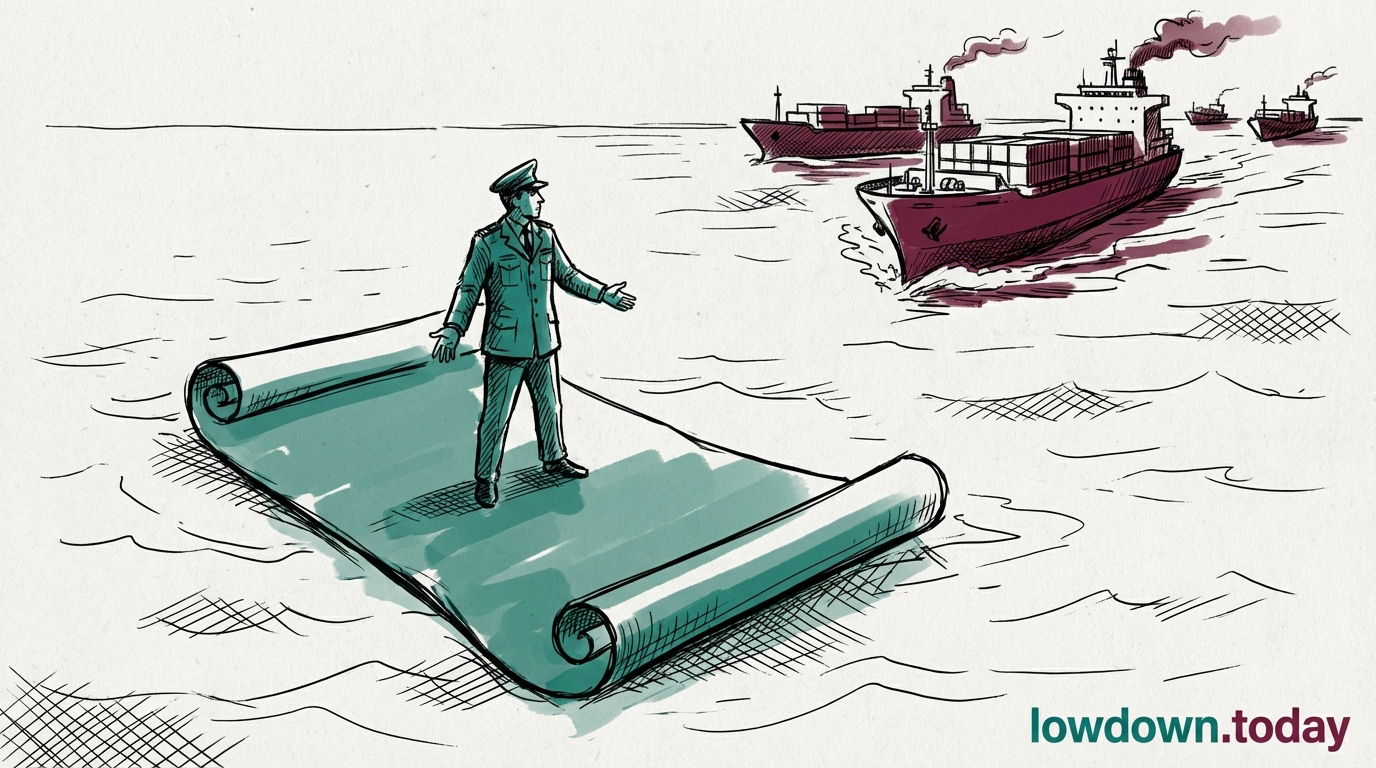
The difference is what is being drafted. At the earlier meeting the coalition agreed to coordinate. On Friday it plans to design a physical mission, command structure, and rules of engagement for a post-war passage framework. In international maritime law, the first credible multilateral framework tends to hold. Subsequent proposals negotiate against it rather than replacing it. Europe's advantage is written documents where the United States has only posts.
The US blockade has been running for several days on a social-media post and a self-generated CENTCOM operational order. The instrument-free record The White House's own presidential-actions page confirmed this week is what gives Paris and London space to hold the pen. With no American presidential text on record, any framework published on Friday becomes the document any post-war passage arrangement must reference. The Anglo-French summit is not framed as a challenge to Washington; it does not need to be. Roughly eighty per cent of the named nations host US bases, which complicates formal opposition to the blockade, but does not prevent them signing a post-war framework the United States has not written.


