Skip to content
Iran Conflict 2026
15APR

Riyadh asks Washington to end blockade

4 min read
09:40UTC

Lowdown Newsroom

ConflictDeveloping
Key takeaway

Saudi Arabia's Hormuz bypass works only while the Red Sea stays quiet, and Riyadh cannot secure it.

Saudi Arabia is formally pressing the United States through Arab officials to end the Hormuz blockade and return to negotiations with Iran. Wall Street Journal reporting, relayed via the Jerusalem Post, says Riyadh is 'especially concerned that the Islamic Republic could use the Houthis in Yemen to threaten the Bab el-Mandeb Strait.' Gulf states want Washington as 'guarantor of maritime security, not as a disruptor.' Mona Yacoubian at CSIS (Center for Strategic and International Studies) warns the Houthis 'could engage on Red Sea shipping' if the blockade tightens; Elisabeth Kendall, the Girton College Yemen scholar, characterises current Houthi restraint as 'strategic patience, not avoidance.'

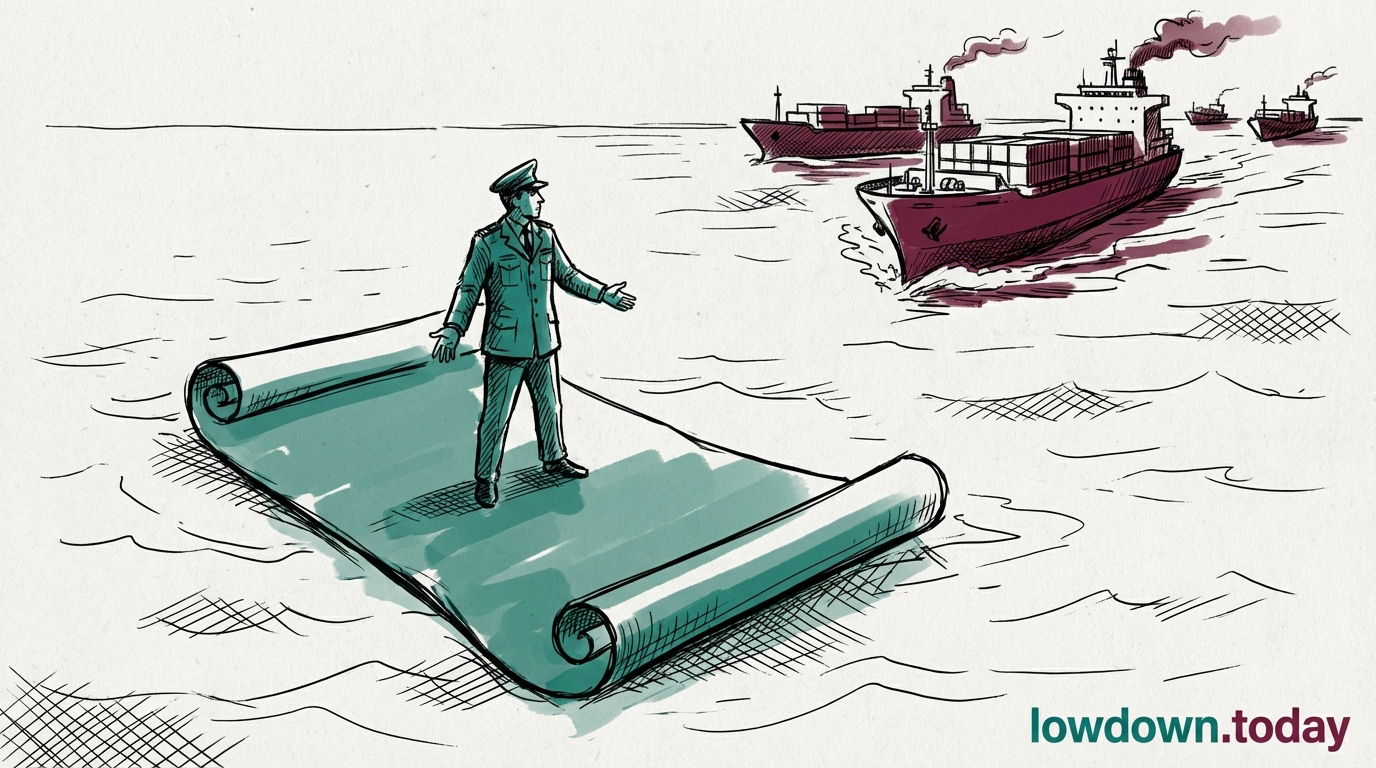
The geometry is the argument. Saudi Arabia restored the Petroline pipeline to seven million barrels per day earlier this week as its published contingency against a Hormuz closure . A fifth of global seaborne oil still transits Hormuz daily, and Petroline cannot carry it. In practice, that bypass ends at Yanbu on the Red Sea. A Houthi kinetic action in Bab el-Mandeb, the strait at the southern end of the Red Sea, eliminates the bypass in a single decision. Riyadh's formal pressure on Washington is the first public acknowledgement that its own backup plan requires US restraint on the blockade to keep functioning.

The International Crisis Group warning relayed earlier this week has now been echoed by the host government of the largest American base in the region. Redirected Saudi crude is only useful if the Red Sea stays clear, and the Red Sea is not in Riyadh's gift. For European households dependent on Gulf energy, that warning translates into a dual-chokepoint risk not yet priced at the current oil benchmark: one closure would remove roughly a quarter of seaborne energy supply, a scenario the market has quietly declined to imagine. The coalition is wobbling from its Gulf end first.


Deep Analysis

In plain English

Saudi Arabia is quietly asking the United States to stop the blockade of Iran's ports. The public reason given is fear of the Houthis; the armed group in Yemen that controls the south end of the Red Sea. Saudi Arabia built a pipeline to send its oil around the Strait of Hormuz if that route gets blocked. But that pipeline ends at the Red Sea, which the Houthis could also close. In other words: Riyadh's backup plan for a Hormuz problem only works if the Red Sea stays open. Saudi Arabia cannot keep the Red Sea open; that depends on the Houthis, who answer to Iran. So Riyadh is in the position of asking Washington to ease pressure on Iran, because if the blockade squeezes Iran too hard, Iran may tell the Houthis to close the second chokepoint, and Saudi Arabia's entire energy bypass collapses.

Deep Analysis
Root Causes

The structural condition driving Saudi pressure is the Petroline bypass paradox: Riyadh publicly presented the 7 million bpd Petroline restoration as its structural answer to a Hormuz closure (ID:2288), but Petroline terminates at Yanbu on the Red Sea; meaning a Houthi Bab el-Mandeb action negates the bypass entirely. Saudi Arabia cannot credibly protect its own contingency plan from the force its own ally (the US) is provoking.

The deeper structural driver is NEOM and Vision 2030: Saudi Arabia's economic transformation is predicated on Red Sea stability for tourism, logistics, and the NEOM smart-city corridor. A Houthi Bab el-Mandeb closure is not merely an oil revenue risk; it is an existential threat to the infrastructure investments Riyadh is using to diversify away from oil. Washington treating Hormuz as a lever while leaving Bab el-Mandeb as a Houthi option is strategically incoherent from Riyadh's perspective.

What could happen next?
  • Risk

    Saudi Arabia's Petroline bypass; publicly presented as the structural solution to Hormuz; is negated by a single Houthi Bab el-Mandeb decision, exposing Riyadh's contingency plan as dependent on the same US restraint it is requesting

    Short term · 0.85
  • Consequence

    Coalition host-base architecture narrows: Bahrain and Kuwait remain committed but Saudi pressure signals the Gulf coalition cannot be assumed stable beyond the current operational window

    Immediate · 0.75
  • Risk

    Dual-chokepoint scenario; Houthis activating Bab el-Mandeb simultaneously with Hormuz partial closure; remains unpriced in Brent at $94.79, implying a repricing risk of $35-55 per barrel if Saudi pressure fails and Houthi restraint breaks

    Medium term · 0.6
First Reported In

Update #69 · Cooper joins the instrument gap

Jerusalem Post (citing Wall Street Journal)· 15 Apr 2026
Read original
Different Perspectives
South Korean financial markets
South Korea, which imports virtually all its crude oil, is absorbing the war's economic transmission most acutely among non-belligerents. The second KOSPI circuit breaker in four sessions — with Samsung down over 10% and SK Hynix down 12.3% — reflects an industrial economy unable to reprice energy costs that have risen 72% in ten days. The market response indicates Korean industry cannot sustain oil above $100 per barrel without margin compression across manufacturing, semiconductors, and shipping.
Migrant worker communities in the Gulf
The first confirmed civilian deaths in Saudi Arabia — one Indian and one Bangladeshi killed, twelve Bangladeshis wounded — fell on communities with no voice in the military decisions that placed them in harm's way. Migrant workers live near military installations because that housing is affordable, not by choice. Bangladesh and India face the dilemma of needing to protect nationals who cannot easily leave a war zone while depending on Gulf remittances that fund a substantial share of their domestic economies.
Azerbaijan — President Ilham Aliyev
Aliyev treats the Nakhchivan strikes as a direct act of war against Azerbaijani sovereignty, placing armed forces on full combat readiness and demanding an Iranian explanation. The response is calibrated to maximise international sympathy while stopping short of military retaliation — Baku cannot fight Iran alone and needs either Turkish or NATO backing to credibly deter further strikes.
Oil-importing nations (Japan, South Korea, India)
The Hormuz closure is an existential threat. Japan, South Korea, and India receive the majority of their crude through the strait — they will bear the heaviest economic cost of a war they had no part in.
Global South governments (Indonesia, Brazil, South Africa)
Neutrality was possible when the targets were military. 148 dead schoolgirls made it impossible — no government can explain that away to its own citizens.
Turkey
Turkey
Has absorbed three Iranian ballistic missile interceptions since 4 March without invoking NATO Article 5 consultation. Each incident narrows Ankara's political room to continue absorbing without Alliance-level response.



