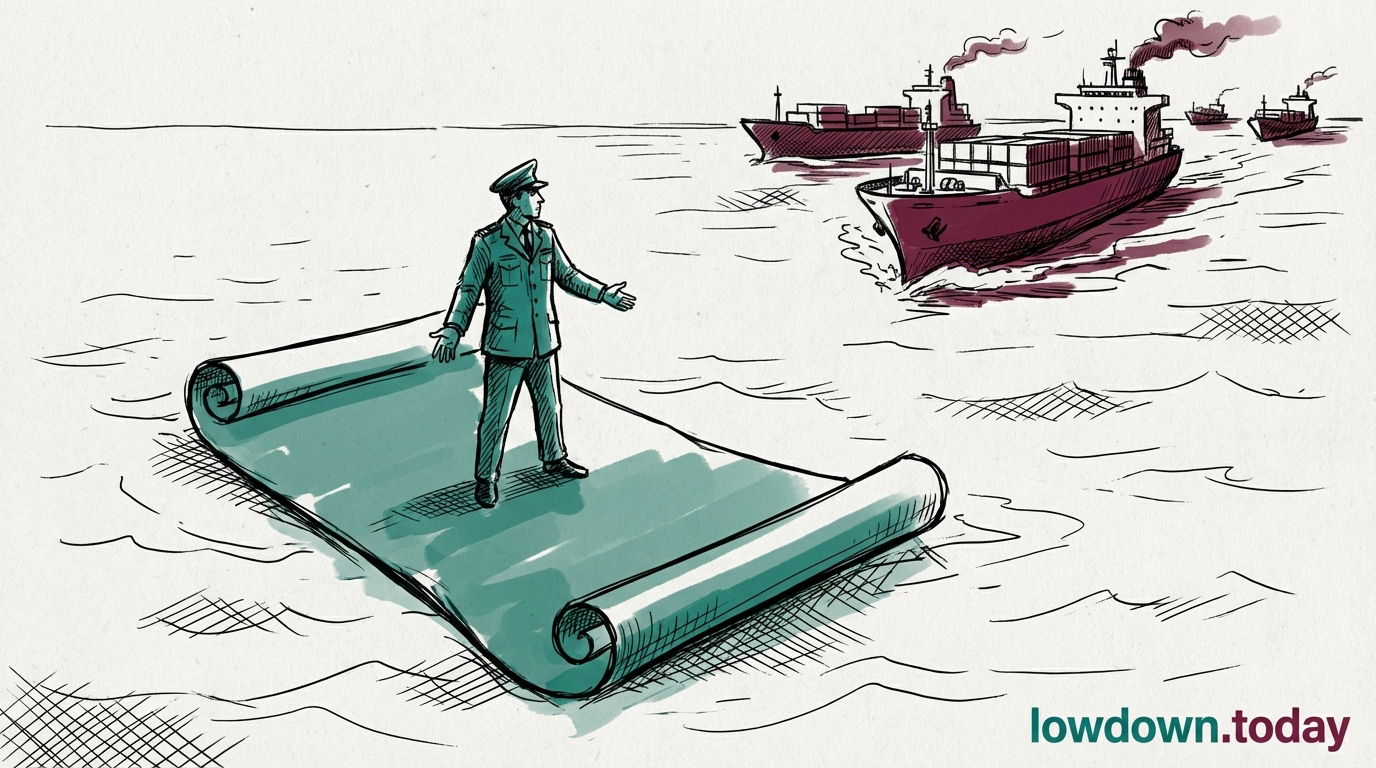
Guo Jiakun, spokesman for the Chinese Foreign Ministry, called the US blockade 'dangerous and irresponsible' on Monday and said it 'will only exacerbate tensions and undermine the already fragile ceasefire agreement.' A second statement the following day repeated the language. Beijing, Guo said, would 'make efforts to help restore peace and stability.' Between the two statements, the Chinese-owned, US-sanctioned tankers Rich Starry and Elpis transited the strait of Hormuz under CENTCOM's non-Iranian-port carve-out without incident. China has filed no formal sanctions challenge.
Beijing's annual oil imports from Iran are roughly a sixth of total crude purchases, the volume that would have given a formal legal challenge both motive and standing. The diplomatic protest and the commercial transit are the same event from different angles. Beijing is arguing against the blockade in public while its tankers use the operational order's gaps in private. The rhetorical register is escalating; the operational register is not. China's leverage sits in what moves, not what is said.
The dual posture is stable only while the carve-out holds. If CENTCOM widens its operational order to include non-Iranian-port traffic, Beijing's quiet mode ends. A formal Chinese challenge at that point would move from press briefing to UN procedural filing and would test the blockade's legality in a way the unsigned presidential posture cannot defend. The same ambiguity that currently lets Chinese crude cross freely is the ambiguity that keeps Beijing's response below the threshold that would force a reckoning over the Pacific. Both sides benefit from the fog, for now.





