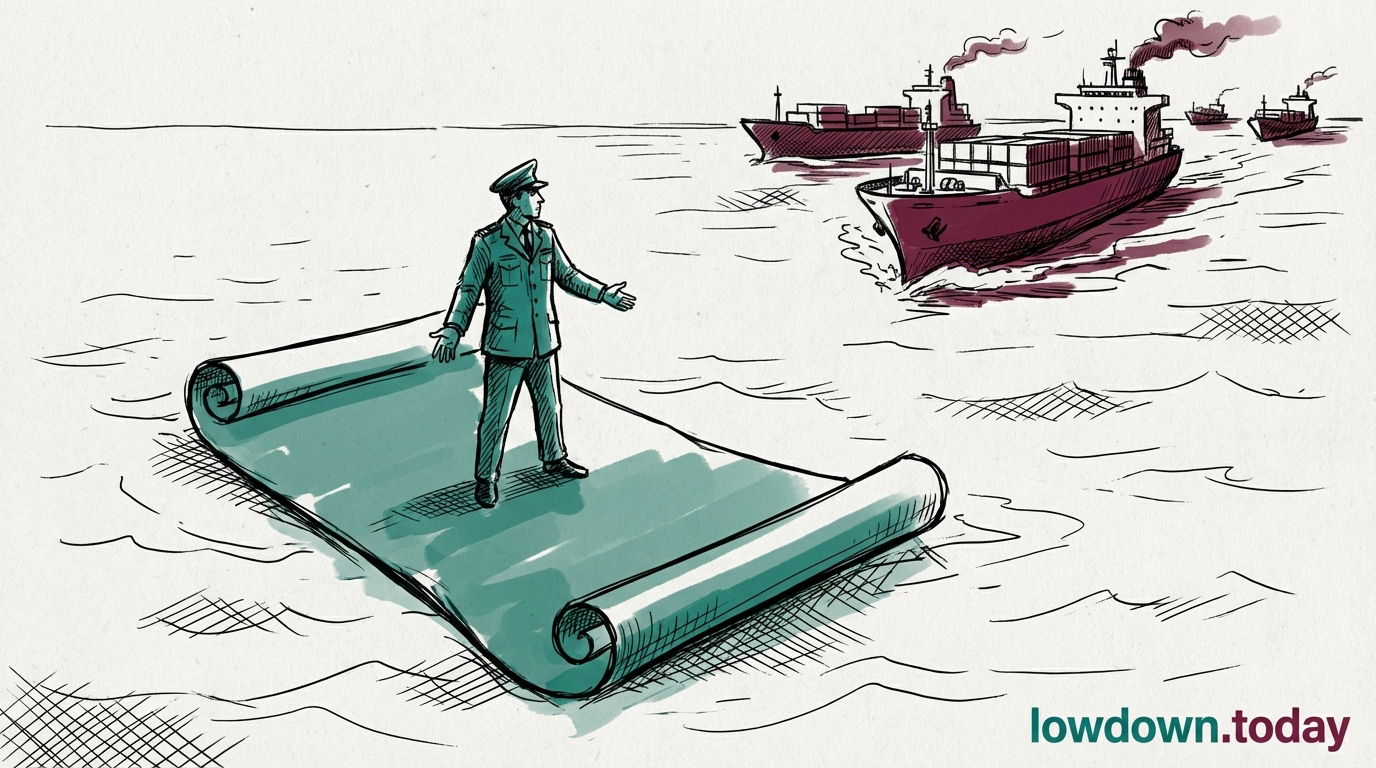
Six senators filed onto the War Powers Resolution (WPR) this week, bringing the total to thirteen co-sponsors: Jeff Merkley, Kirsten Gillibrand, Chris Van Hollen, Mark Kelly, Raphael Warnock and Andy Kim, joining the seven who filed the following day. Under WPR procedure, the earliest privileged-resolution floor vote is around next Thursday. The House killed its version 219 to 212, with only Rand Paul's Republican equivalent crossing in the previous three Senate attempts. Thirteen is roughly a quarter of the Senate Democratic caucus, still well short of the fifty-one votes needed.
Lisa Murkowski and Susan Collins, both on record criticising Trump's 'annihilation' rhetoric, have not signalled a floor-vote crossing. The forty-seven to fifty-three failure pattern from prior Senate attempts remains the base case. The procedural question is whether the four-deadline overlap changes Republican calculations. The vote lands in the same seven days as the OFAC (Office of Foreign Assets Control) GL-U licence expiring, the two-week ceasefire window closing, and the Macron-Starmer summit outcome.
If Treasury lets GL-U lapse without a successor, three hundred and twenty-five tankers loaded under its terms lose legal cover for cargoes entirely lawful eight weeks ago. Shippers and their P&I (Protection and Indemnity) insurers face enforcement exposure on a licence Treasury has gone silent on for almost a month. The intersection matters because a Republican senator reading a trade-press headline about stranded tankers is processing a different political signal from one reading about a coordinated European framework out of Paris that same week. The procedural vote is unchanged; the context arriving in the same week is not. Four deadlines, one week, and no signed presidential instrument behind any of them.


