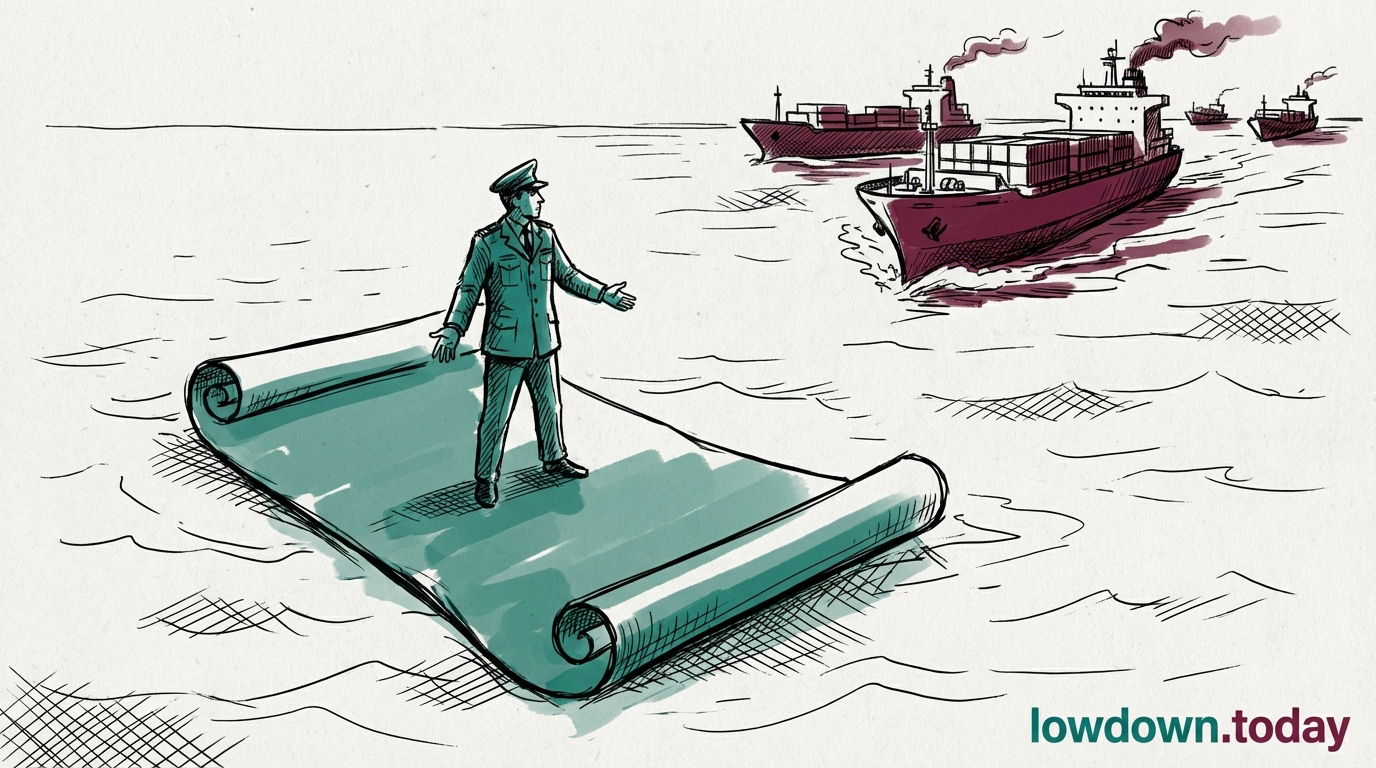
Brent Crude closed at $94.79 on Tuesday, down from the blockade-day peak in the previous session, still roughly two-fifths above the pre-war baseline. The move is consistent with traders watching the operational order rather than the admiral's lectern. Interdiction of Iranian-port traffic is priced in; the continuing carve-out for sanctioned non-Iranian-port tankers, documented when Windward tracked sanctioned dark-fleet vessels using scrapped ship identities, caps the upside by keeping partial supply flowing.
For drivers and consumers, that premium is what a partial blockade feels like at the pump. Brent has held in a narrow band this week because neither a full-closure path nor a resolution path is the base case. Two catalysts inside the coming week could shift the balance. The sanctions licence expiring mid-week, covered in the Senate vote cluster above, would tip enforcement risk sharply higher if Treasury lets it lapse without a successor; a spike back through Monday's peak is the likely response. A credible multilateral Hormuz framework published out of the Paris summit on Friday would tip the other way; a pullback towards the eighties becomes plausible.
Both catalysts arrive before the weekend. The dual-chokepoint scenario, a Houthi closure of Bab el-Mandeb on top of a continued Hormuz operation, is not priced at all. If it becomes a planning variable rather than a rhetorical threat, the repricing towards the deep triple-digit range would not be gradual.


