Secretary of State Marco Rubio met Israeli Ambassador Yechiel Leiter and Lebanese Ambassador Nada Hamadeh Moawad at the State Department on Tuesday, alongside State Counsellor Michael Needham and the US Ambassador to Lebanon. The department's readout called it 'the first major high-level engagement between the governments of Israel and Lebanon since 1993.' The talks proceeded over the public veto Naim Qassem had issued two days earlier, when the Hezbollah secretary-general called them 'futile' and paired the demand with a salvo of more than ten drones intercepted by the IDF (Israeli Defence Forces).
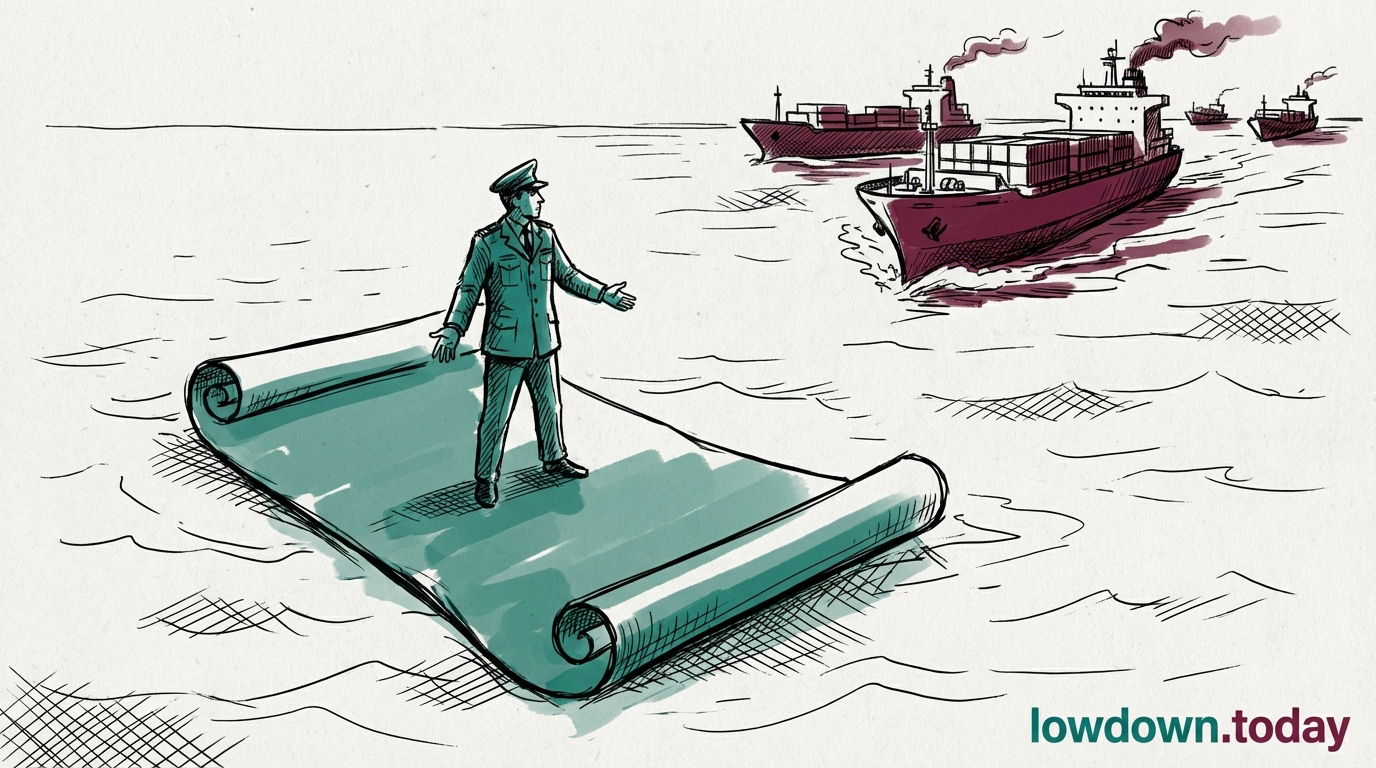
The readout's operative language is harder than the ceasefire text it sits behind. The United States 'expressed its support for the Government of Lebanon's plans to restore the monopoly of force and to end Iran's overbearing influence.' Any agreement, the readout insists, 'must be reached between the two governments, brokered by the United States, and not through any separate track.' That last clause is direct language aimed at European and Gulf mediators. It asserts a US monopoly on the Lebanon channel at the same hour Paris and London are asserting a multilateral monopoly on the Hormuz channel.
Washington now holds the Lebanon pen; Europe is two days from holding the Hormuz pen. Hezbollah's domestic calculation narrows: collapsing the cabinet to punish a government that has entered direct US-brokered talks is politically costly, but so is acquiescing to a framework that names Iran as the problem. The group's drone salvo was the escalation it could afford this week. The next step, continued rocket fire from Lebanese territory or a wider cross-border incident, would test how much of the cabinet's mandate to 'restore the monopoly of force' survives first contact with the group it is aimed at.


