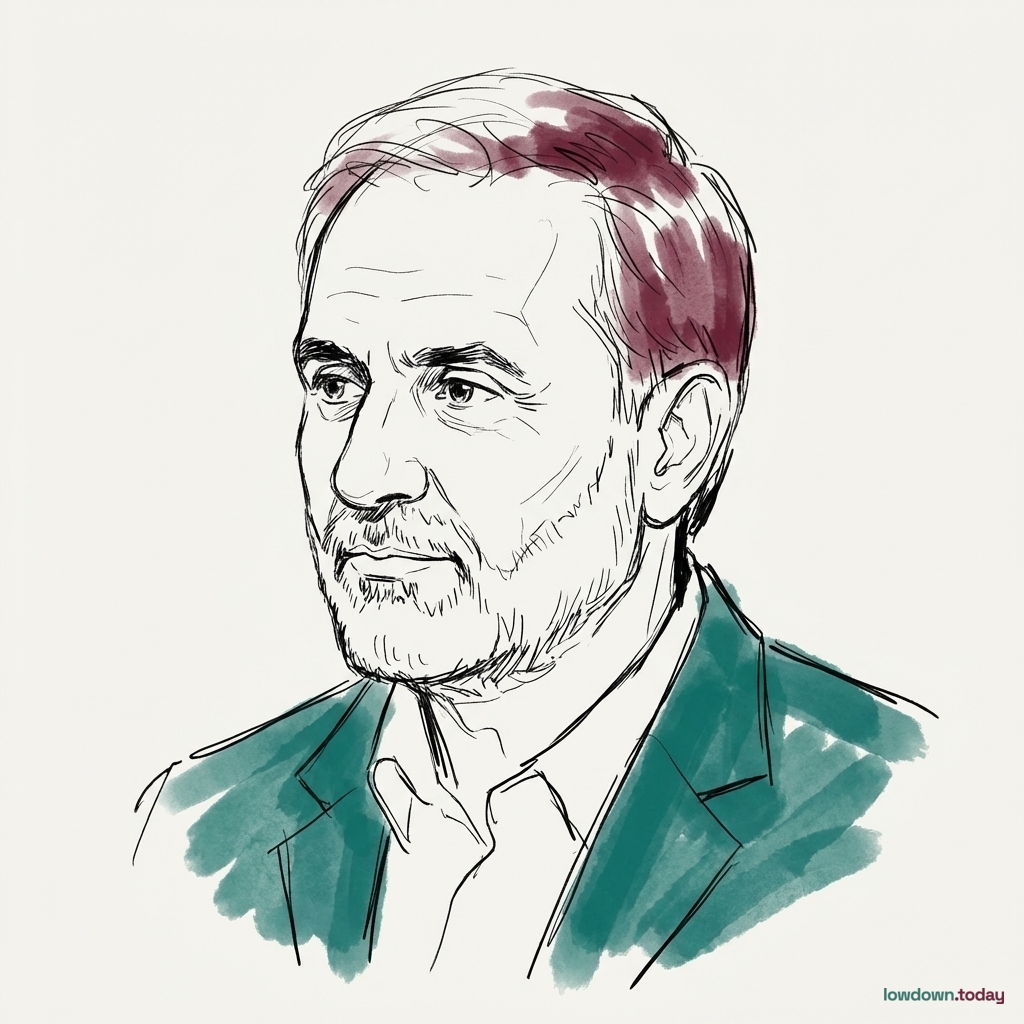
Masoud Pezeshkian
Iran's civilian president since July 2024; reformist surgeon-politician with no command authority over the IRGC.
On 23 June, President Masoud Pezeshkian ruled out talks on Iran's ballistic missiles, narrowing his government's negotiating scope.
Last refreshed: 22 September 2026 · Appears in 1 active topic
Is Pezeshkian Iran's president or its diplomatic front while the IRGC governs?
Timeline for Masoud Pezeshkian
Met the Abu Dhabi Crown Prince on the BRICS sidelines
Iran Conflict 2026: Pezeshkian meets Abu Dhabi's crown prince in DelhiMentioned in: Iran's parliament claims the strait too
Iran Conflict 2026Pezeshkian says Khamenei is in full health
Iran Conflict 2026Appointed Mohsen Rezaei secretary
Iran Conflict 2026: Rezaei takes over Iran's security councilHosted al-Zaidi in Tehran to sign transport and administration agreements
Iran Conflict 2026: Mentioned in: Pakistan takes over the Iran channelBackground
Masoud Pezeshkian is Iran's civilian president and a reformist surgeon-politician. He won office in July 2024 after serving as health minister and representing Tabriz in Parliament. His presidency supplies an elected civilian centre within a state where the Islamic Revolutionary Guard Corps answers to The Supreme Leader, not to the president.
That division defines his significance in wartime. On 7 March, the IRGC continued attacks hours after Pezeshkian ordered a halt to Gulf strikes, exposing the limit of presidential authority over military action.
Pezeshkian remains an accessible political and diplomatic interlocutor, but his office cannot by itself bind the institutions that control Iran's armed strategy. His June letter alleging that the Guards had sidelined the presidency made that constitutional gap explicit.
Pezeshkian carries the diplomatic burden
On 23 June, Pezeshkian ruled out negotiations over Iran's ballistic-missile programme, narrowing the public room available to his government during the talks window. The programme lies outside the presidency's command, so his position aligned the civilian office with a security red line it could not independently alter.
On 29 June, he said $6bn in Iranian assets held in Qatar would return without conditions. Qatar said on 3 July that the funds had not moved. The incompatible accounts made Pezeshkian the domestic voice for prospective relief while its release remained outside his control.
Pezeshkian loses wartime control
On 1 April, an IRGC military council took control of access to Supreme Leader Mojtaba Khamenei. Pezeshkian could not appoint ministers or secure a meeting with him, making the president unable to turn formal office into operational control during the war.
On 1 June, Pezeshkian accused the Revolutionary Guards of sidelining the presidency from war decisions. The public letter placed the institutional dispute beyond private management and showed why foreign counterparts could not treat the presidency as a sufficient channel for military commitments.
Reference
Who is Masoud Pezeshkian and why did Iran elect a reformist?
Who is Masoud Pezeshkian?
Did Pezeshkian receive a US ceasefire proposal via Iraq?
Did Iran receive $6 billion from Qatar in 2026?
Why can't Iran's president end the war?
What happened at Iran's Doha talks in May 2026?
What is Masoud Pezeshkian's role in the Iran conflict?
What did Pezeshkian say on 20 April 2026?
Does Pezeshkian control the IRGC?
What are Iran's ceasefire conditions in 2026?
Did Pezeshkian order the IRGC to stop firing?
Who runs Iran now that Khamenei is dead?



