Skip to content
You can now search across every topic, entity and event.What's new
Iran Conflict 2026
30JUN

Iran reframes $6bn of Qatar assets

3 min read
15:13UTC

Iran's President Masoud Pezeshkian said $6 billion held in Qatar would be returned to Tehran, half the $12 billion Scott Bessent placed in a conditional escrow.

ConflictDeveloping
Key takeaway

Pezeshkian called $6bn in Qatar a return to Iran; Washington has not confirmed the figure or the terms.

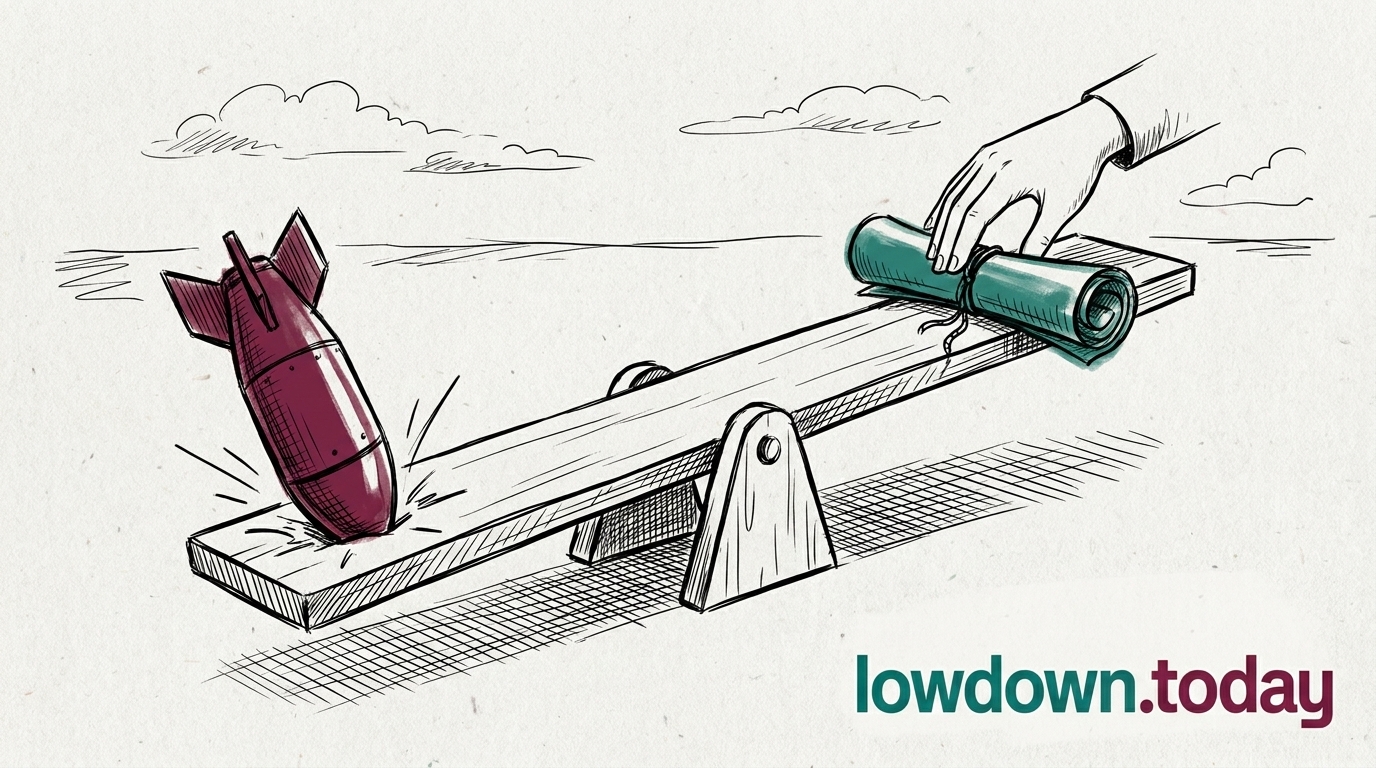
Iran's president Masoud Pezeshkian said on 29 June that $6 billion of Iranian assets held in Qatar would be "returned to Tehran" 1. That is only half the $12 billion that Treasury Secretary Scott Bessent placed in a US-controlled Qatar escrow on 24 June, terms Iran had already rejected .

Bessent's structure was an escrow Iran could draw on only by meeting US conditions; Pezeshkian calls the same money a return, as though the conditions were gone and the funds simply Iran's. Accepting that reframing would let Iran spend the $6 billion on food, fuel and medicine imports without meeting a single term. Washington has not confirmed the figure or the framing 2.

Deep Analysis

In plain English

Iran's president, Masoud Pezeshkian, said on 29 June 2026 that $6 billion of Iranian money held in Qatar would be returned to Iran, with no conditions attached. The money belongs to Iran but has been frozen, meaning Iran cannot access it, because of international sanctions against the country. Washington has not confirmed Pezeshkian's $6 billion figure or his version of the terms. Just days earlier, on 24 June, Treasury Secretary Scott Bessent had announced that $12 billion of those same frozen funds would be placed in a special account in Qatar that Iran could only use to buy specific American goods, such as food and medicine. Iran had already rejected those restrictions. Pezeshkian described $6 billion, half of Bessent's figure, as a straightforward return of money without restrictions. That is a very different arrangement from what the US announced. And the US government has not confirmed Pezeshkian's number or his version of what was agreed.

First Reported In

Update #141 · Iran hits two US bases; Trump pulls back

GlobalSecurity.org· 30 Jun 2026
Read original
Different Perspectives
India
India
New Delhi has a national unaccounted for among GFS Galaxy's eleven-strong Indian crew, turning a standoff over transit rights into a consular emergency for a state with no seat at either table.
Oman
Oman
Muscat's 9 July arrangement to jointly manage Hormuz traffic with Iran, outside the frozen US channel, is overridden within days by Tehran's own unilateral closure and strike on GFS Galaxy.
Qatar
Qatar
Doha keeps mediating from an exposed position: Al Udeid hosts the CENTCOM strikes it is trying to broker a stand-down around, a week after a Qatari carrier was itself hit in the strait.
United States / CENTCOM
CENTCOM flew a third strike wave in a week, roughly 140 targets, killed Lieutenant Dehghani at Jask, and insists the strait remains open. It signed no instrument making that claim enforceable against Iran's closure.
Iran / IRGC
Iran / IRGC
Tehran struck GFS Galaxy and declared Hormuz closed, reasserting IRGC toll authority after its Oman-brokered management track failed to bind Washington to anything. The strike restores unilateral control after days of a negotiated alternative gaining ground.
Russia
Russia
Grossi's non-confirmation came from Kaliningrad, hours after Rosatom, the state agency that built and fuels Bushehr, hosted his talks. A refusal delivered from inside Russia's own nuclear orbit carries weight a Western capital could not manufacture, though Moscow itself made no statement on Iran's strike claim.