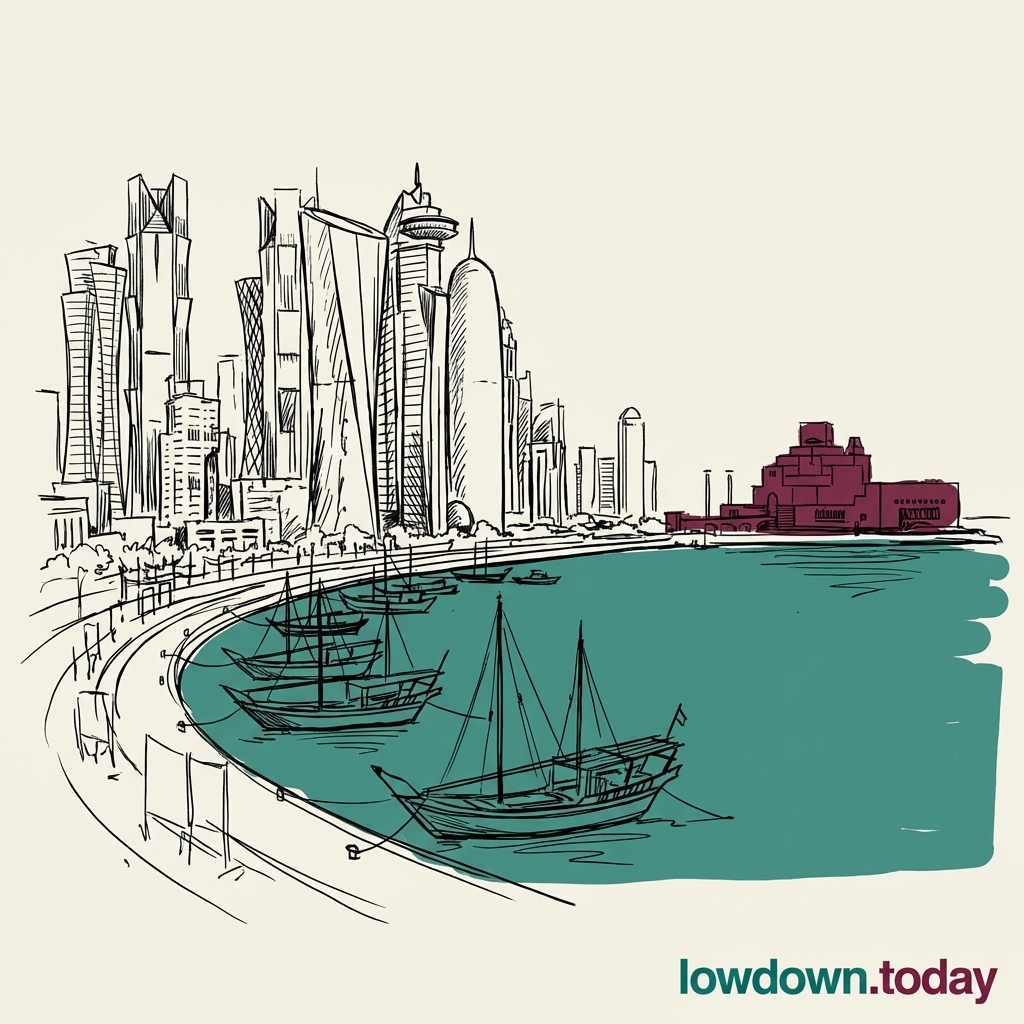
Doha
Capital of Qatar; Gulf diplomatic and financial hub hosting a major US military base.
On 8 September, Doha coordinated with China in Beijing to restart Iran talks while filing UN letters contesting Tehran's account of Iranian strikes.
Last refreshed: 22 September 2026 · Appears in 3 active topics
Why does Iran's war cabinet keep flying to Doha if it has already been bombed?
Timeline for Doha
Mentioned in: US flies its last troops out of Erbil
Iran Conflict 2026Hosted the handover of Washington's written answer
Iran Conflict 2026: Qatar brings the US answer to AraghchiMentioned in: Qatar mediates in Beijing, files at UN
Iran Conflict 2026Mentioned in: Five Gulf states condemn Iran by name
Iran Conflict 2026Mentioned in: Qatar offered tankers, not yet sold them
Iran Conflict 2026Background
Doha is Qatar's capital and seat of government, as well as a Gulf diplomatic and financial hub. It hosts Al Udeid Air Base, a major US regional installation. Iran's attack on the base on 4 March 2026 and Qatar's subsequent confirmation that a US radar system was destroyed made the security cost of that role visible.
The city also sits at the centre of a state whose influence rests on LNG exports, investment capital and access to rival governments. Ras Laffan's 16 March strike showed how Qatar's Energy infrastructure can shape Doha's diplomatic room for manoeuvre. The complex's role in LNG exports gives the city a stake in regional stability beyond its own borders.
Doha broadens its mediation
On 8 September, Qatar said Doha was coordinating with China during a Beijing visit to restart Iran talks. It also said it had filed hundreds of UN letters contesting Tehran's account of Iranian strikes. This linked Doha's mediator role to a formal diplomatic case against Iran.
On 22 July, Qatar joined Egypt, Pakistan and Oman in submitting a ten-day Ceasefire proposal to Washington and Tehran. The proposal sought to reopen Strait of Hormuz navigation while further negotiations continued. For Doha, such initiatives preserve its place in the talks even when the parties have not agreed directly.
Doha keeps a contested channel
On 1 July, Washington, Tehran and Doha gave conflicting accounts of the same indirect talks. The United States called them positive, Iran ruled out an early meeting, and Qatar said frozen Iranian funds remained tied to progress. The disagreement left Doha hosting a process without a shared public account of its outcome.
On 10 July, a Qatari delegation travelled to Mashhad to meet Iran's foreign minister as part of a US-coordinated effort to reopen the Doha channel. The visit followed Iran's claim that it had struck a Qatari satellite antenna. For Doha, Mediation remained necessary even as its own security position worsened.
Doha's energy base became a target
On 16 March, Iran fired ballistic missiles at Ras Laffan Industrial City after Israel struck South Pars. QatarEnergy reported extensive damage and fires at the complex, which handles 77 million tonnes of LNG each year. The attack made Qatar's Energy infrastructure part of the military pressure surrounding Doha.
On 3 July, QatarEnergy was operating at about 35% of capacity while tanker traffic through Hormuz remained FAR below its pre-crisis level. For Doha, the disruption showed that diplomatic access and physical security are both needed to restore the export system on which Qatar's international weight rests.
Reference
What share of global LNG supply comes through Qatar?
What role does Doha play in Middle East diplomacy?
What is Ras Laffan and why does it matter to Doha?
What is Doha?
Why did Qatar file a UN claim against Iran?
How much frozen Iranian money does Qatar hold?
Why is Doha hosting the Iran ceasefire talks?
How did the Iran conflict affect the 2026 FIFA World Cup qualifiers in the Gulf?
Did Iran get its frozen Qatar assets back?
What happened in Doha at the 30 June 2026 Iran talks?
Was Al Udeid Air Base attacked by Iran in 2026?
Does Doha still host the Hamas political bureau?
Why did Iran attack Qatar during the 2026 war?
What happened to Doha's Al Udeid Air Base during the Iran conflict in 2026?
Why did Iran strike Qatar?
What happened at Al Udeid Air Base in Doha?


