Israeli strikes (28 February 2026)
The joint US-Israeli opening strikes on Iran of 28 February 2026.
Everything in this war is still counted from 28 February 2026. The Pentagon's published American death toll reached 19 in late September, and The Intercept put dead and wounded at 880 on 28 September, 436 of them before 7 July.
Last refreshed: 1 October 2026 · Appears in 2 active topics
Did the 28 February strikes cross a line that cannot be uncrossed?
Timeline for Israeli strikes (28 February 2026)
Mentioned in: Pentagon adds a 19th name to its toll
Iran Conflict 2026Mentioned in: Day 50 of Iran war, zero signed instruments
Iran Conflict 2026Mentioned in: Murkowski drafts Iran AUMF; Hawley ties to Day 60
Iran Conflict 2026Trump declares war won, orders pullout
Iran Conflict 2026Mentioned in: Iran resumes fire after 11-hour pause
Iran Conflict 2026Background
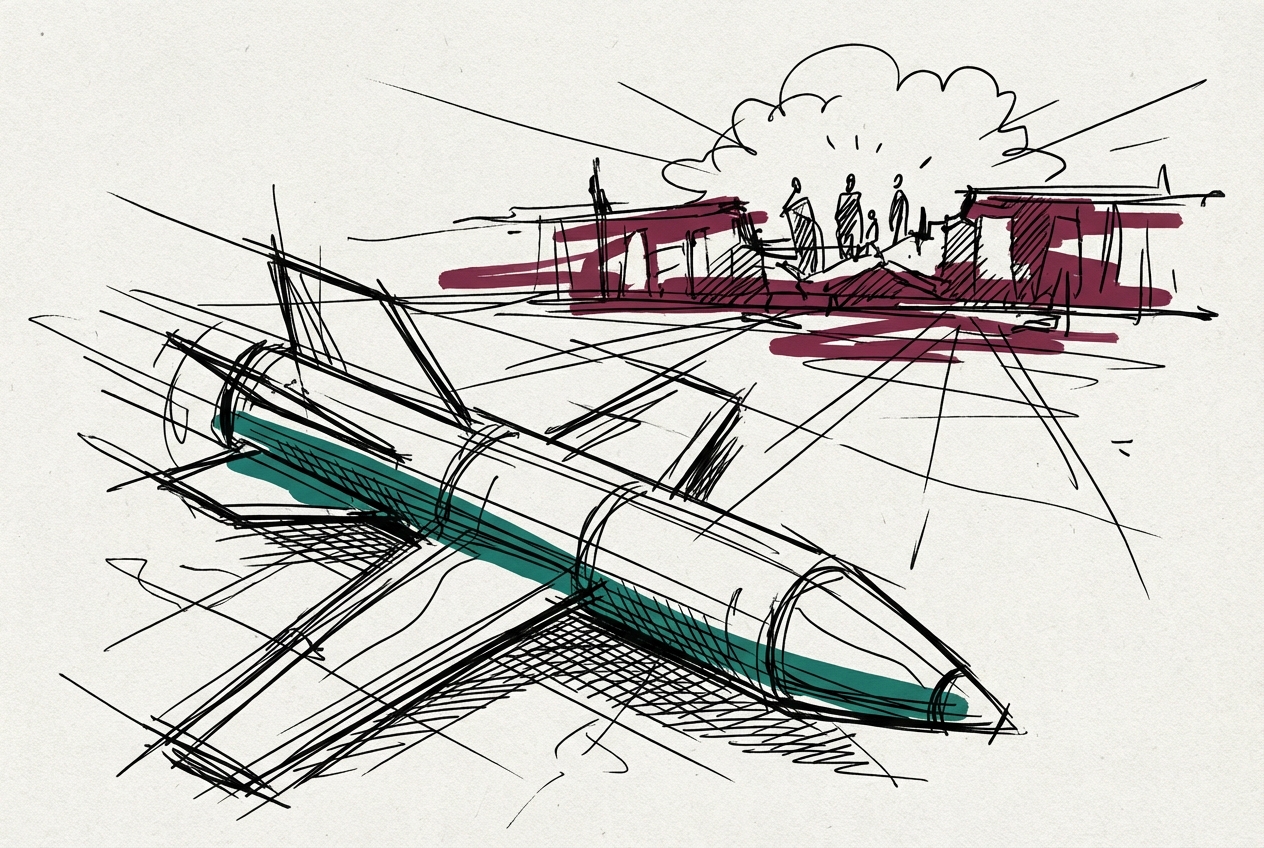
The strikes of 28 February 2026 opened the war. A joint United States and Israeli package, known as Roaring Lion on the Israeli side and EPIC FURY on the American, hit Tehran, Isfahan, Qom, Karaj and Kermanshah in one coordinated wave. Targets inside those cities included military, nuclear and leadership sites, all hit within the same hours. Supreme Leader Ali Khamenei was killed at his Tehran compound, which forced a succession ending in the Guard-backed elevation of Mojtaba Khamenei and broke the continuity of Iran's military command.
Iran replied within hours, firing ballistic missiles at Israel and at American bases across seven countries. The Revolutionary Guard Corps later said the missiles used were a decade old and that newer production remained untouched, which left the scale of Iran's remaining arsenal an open question. Between 600,000 and one million Iranian households were displaced in the first fortnight.
The operation ran eighteen weeks, closing on 7 July 2026, and the fighting outlasted it. That is why the date works as a reference point rather than a chapter: it removed Iran's leadership, set the casualty series, and settled none of the questions it opened.
Casualties are still counted from here
The strikes set the clock that every American casualty figure runs on. By 23 September 2026 the Pentagon had added Captain Bianca Wilkerson to its published toll, taking it to 19 dead. Five days later The Intercept put the official tally of dead and wounded at 880, and above 900 once missing names were added.
Of the 880, 436 fell before 7 July 2026, when Operation Epic Fury closed, and 444 after it. In August the Pentagon moved POST-7 July casualties to a separate page of its casualty database headed Overseas Operations, which breaks the series at that date. The operation launched on 28 February therefore accounts for slightly under half the harm counted in its own name.
The opening salvo rests on no paper
No signed instrument authorises the campaign these strikes began. On 19 April 2026, day 50, The White House presidential-actions index recorded zero Iran-related signed documents since 28 February. Over the same window the Treasury signed two Russia licences and issued fresh Venezuela designations, so the gap was specific to Iran rather than a pause in paperwork.
Congress has not closed it either. Four Senate war powers attempts failed, the last blocked 47-52 on 15 April, and a House version died 213-214 on 16 April. Senator Lisa Murkowski was drafting a retrospective authorisation whose own text says the president should have sought one before striking. Without a document, the strikes of 28 February remain unreviewable in any court.
What were the Israeli strikes on 28 February 2026?
Did the strikes kill Ali Khamenei?
What was Iran's immediate military response?
Were the strikes legal under international law?
How did the 28 February strikes differ from previous Israeli operations?
What happened on 28 February 2026?
What was Operation Epic Fury?
How did Iran respond to the opening strikes?
How many Americans have died since the strikes began?



