
Skip to content
You can now search across every topic, entity and event.What's new
Iran Conflict 2026
26JUL

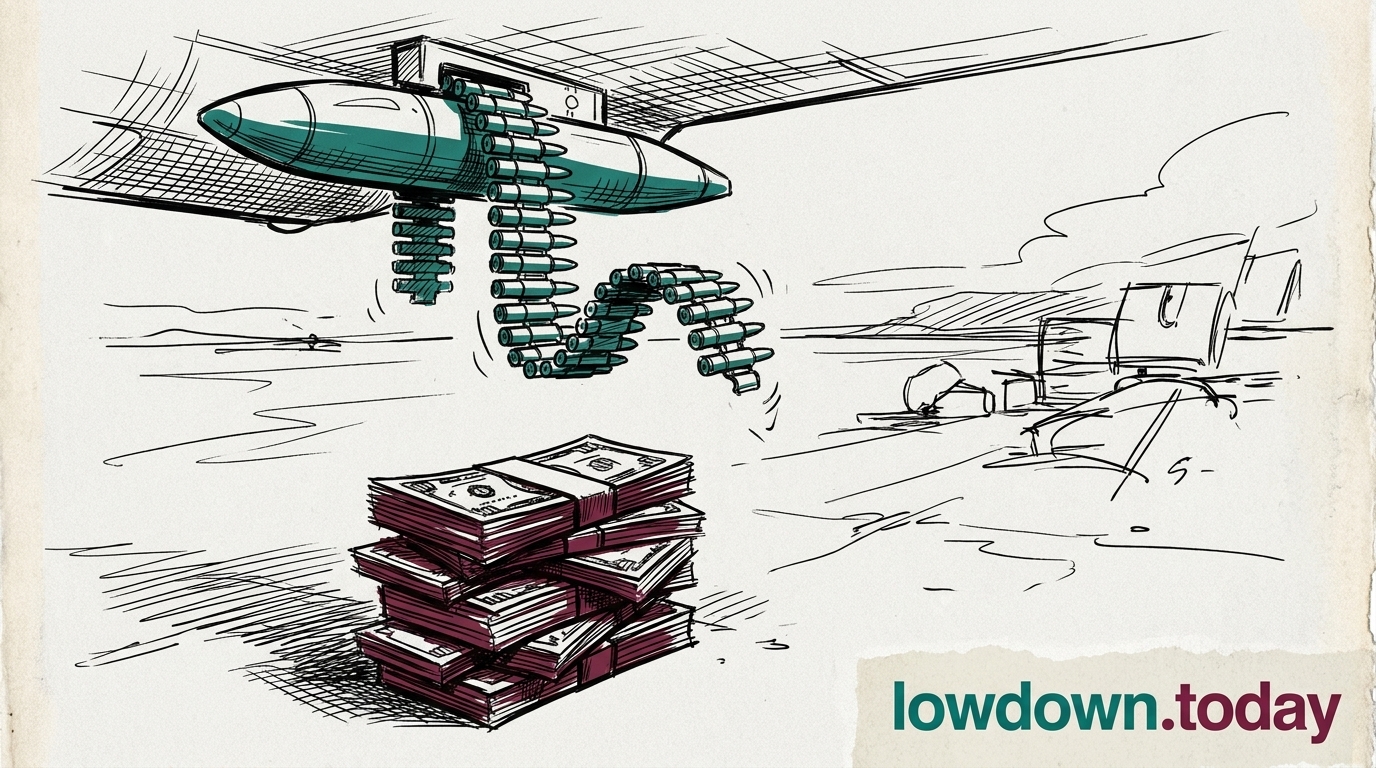
Day 149: Munitions, not Iran, halted US bombing

3 min read
12:01UTC

The Pentagon has paused strikes on Iran after its top general warned Trump about depleting munitions stockpiles, but Iran has not reciprocated: its security chief vows strikes continue until "total surrender". Congress quietly voted against the war last week, Iran disclosed its earlier wartime oil earnings, and three independent trackers agree Hormuz shipping has collapsed to a handful of vessels a day.

Key takeaway

America's pause reflects munitions arithmetic, not Iranian concession, and Iran has offered nothing to reciprocate it.

This briefing mapped
Military
Humanitarian
Domestic
Economic
Diplomatic
Regulatory

General Dan Caine raised America's munitions stockpile with Trump at a Friday meeting; the bombing campaign went on hold the next night.

Sources profile:This story draws on left-leaning sources from United States
United States
LeftRight

The Pentagon has paused its bombing campaign against Iran from Saturday 25 July, after General Dan Caine warned Trump on Friday about munitions stockpiles and escalation risk.

The Pentagon says it still holds "a deep arsenal of capabilities", a denial nobody offers unasked. Iran has not paused in return. 

Sources:CNN
1 CNN2 CNN3 CNN4 CNN

Iran's security chief said strikes continue until the enemy's "total surrender", and no Iranian state outlet carries any stand-down language at all.

Sources profile:This story draws on centre-right-leaning sources from United Kingdom
United Kingdom

Iran has not matched the US bombing pause that began on 25 July. No report from IRNA (Iran's state news agency), Tasnim or Fars carries any stand-down language.

A same-day Press TV piece frames continued "retaliatory deterrence" instead. Iran's security chief said strikes continue until the enemy's "total surrender". 

The department's published wounded count fell from 482 to 420 overnight, with no names, no incident and one phrase of explanation: "temporary data disruptions".

Sources profile:This story draws on mixed-leaning sources from United States
United States

The Pentagon's casualty count changed again. Its wounded total fell from 482 to 420 overnight, the same night the killed toll was revised, with only "temporary data disruptions" offered as explanation.

Four fewer dead does not account for 62 fewer wounded. An unnamed US official said the real figure could exceed 500. 

The House ordered Trump to withdraw from hostilities with Iran by 214-208 on 23 July. The Senate killed the binding version of the same demand hours later.

Sources profile:This story draws on neutral-leaning sources

The House passed H.Con.Res.89 214-208 on 23 July, directing Trump to withdraw US forces from the Iran conflict under the War Powers Resolution. The Senate killed the binding S.J.Res.180 47-49 the same day.

Four Republicans crossed over in The House; only Susan Collins did in the Senate. The Senate discharge motion needed 51 votes and got 47. 

Kpler counted exactly three transits on each of 22, 23 and 24 July. CENTCOM's formal position is that the Strait of Hormuz remains open for transit.

Sources profile:This story draws on neutral-leaning sources from United Arab Emirates
United Arab Emirates

Three independent trackers confirm Hormuz traffic has collapsed even as US Central Command calls the strait "open for transit". Kpler recorded three vessels a day on 22-24 July, against more than 20 before 15 July.

S&P Global counted about 13 vessels a day, roughly half the previous week's rate. Shipowners are paying war-risk premiums several times higher than before the war to sail at all. 

Aramco-linked sites on Saudi Arabia's Red Sea coast were struck on 25 July, after Reuters recorded IRGC personnel and equipment flying into Yemen on 13 July.

Sources profile:This story draws on neutral-leaning sources from United States
United States
LeftRight

Oil minister Mohsen Paknejad disclosed $18 billion in wartime oil sales, all of it earned before the current blockade closed the sea lane.

Sources profile:This story draws on mixed-leaning sources from United Kingdom
United Kingdom

Iran's oil minister Mohsen Paknejad disclosed $18 billion in oil sales: $11.5bn from 28 February to 7 April, and $6.5bn from 7 April to 10 July.

That is over 60% of the budgeted annual oil revenue, but both periods end before the blockade resumed on 8 July. No figure exists for sales since. 

Trump said the 30-year US-Saudi civil nuclear agreement is "totally subject to" Riyadh joining the Abraham Accords, a condition the signing announcement never mentioned.

Sources profile:This story draws on neutral-leaning sources

Iran's interior minister flew to Pakistan for the second time in ten days to meet the army chief, and the precondition Islamabad set broke the same morning.

Sources profile:This story draws on neutral-leaning sources

American petrol prices now run 36% above their pre-war level, and the Strategic Petroleum Reserve sits at its lowest since 1983.

Sources profile:This story draws on left-leaning sources from United States
United States
LeftRight

US petrol prices have climbed to 36% above pre-war levels, tracking Brent Crude through the Hormuz blockade and Houthi escalation. The Strategic Petroleum Reserve sits at its lowest level since 1983.

That depletion, built up over several years for unrelated reasons, leaves Washington with little room to soften prices through a reserve release this time. 

Sources:CNN
1 CNN

Doha will admit all maritime traffic from Monday 27 July, the first Gulf state to formally reverse a wartime shipping restriction.

Sources profile:This story draws on left-leaning sources from United States
United States
LeftRight

Qatar will reopen its waters to all maritime traffic from Monday 27 July, the first Gulf state to formally reverse a wartime shipping restriction.

The nearby Strait of Hormuz still records some of its lowest transit counts of the war. Doha is judging its own waters safe while the wider blockade holds. 

Sources:CNN
1 CNN

Israel's prime minister convenes his security cabinet on 26 July, a day before flying to brief Trump on a war Washington has just paused.

Sources profile:This story draws on centre-left-leaning sources from Israel
Israel

Benjamin Netanyahu will convene Israel's security cabinet on 26 July. Israeli law requires that step before any major military escalation, ahead of a Monday trip to brief Trump in Washington.

An unnamed Israeli official called a US-Iran deal "virtually nonexistent" and escalation "inevitable", though the claim remains unattributed to any named source. 

Closing comments

Direction: paused, not reversed. The mechanism that reopens it is already sitting in the Gulf: the F-16 and F-35 aircraft flown in on 22 July have not been withdrawn, and Trump's threat against Pickaxe Mountain remains live weeks after Hegseth's own $37.5bn accounting of the campaign to the Senate. Netanyahu convenes his security cabinet on 26 July before briefing Trump in Washington, and an Israeli official has already called the diplomatic alternative to renewed strikes "virtually nonexistent"; that meeting, not any Iranian action, is the likelier trigger for whether the hold becomes a resumption.

Different Perspectives
Washington (Pentagon and White House)
A Defense Department source called the bombing halt "on a hold", Pentagon spokesman Sean Parnell insisted the US "retains a deep arsenal of capabilities", and the White House credited "successful sanctions" and thirteen days of strikes for the same pause. Three explanations from one government suggest none of them is the whole one.
Iran (state security leadership)
Iran's security chief said strikes continue until the enemy's "total surrender", and no IRNA, Tasnim or Fars report carries any stand-down language to match Washington's pause. Tehran reads the halt as "strategic decision-making fatigue", not a restraint it needs to reciprocate.
Saudi Arabia
Saudi Arabia
Saudi Arabia absorbed Houthi strikes on Aramco-linked sites at Jazan and Yanbu on 25 July without confirming them, while holding a 30-year civil nuclear agreement Trump made conditional on joining the Abraham Accords two days after signing it. Riyadh is fighting on one front while being asked to concede on another.
Pakistan (with China)
Iran's interior minister met Pakistan's army chief in Islamabad on 25 July, his second visit in ten days, with China separately pushing the same track; Islamabad's stated precondition, a halt to Gulf attacks, broke within hours when the Houthis struck Yanbu and Jazan. The channel inherits Baghdad's opening without yet fixing what broke it.
Hormuz shipping and insurance market
Kpler, Lloyd's List and S&P Global each independently put Strait of Hormuz transits at a seventh to a sixth of pre-war levels, against CENTCOM's own position that the strait remains open for transit. War-risk premiums rose from 0.25% to 3-10% of hull value in mid-July and have held steady since.
