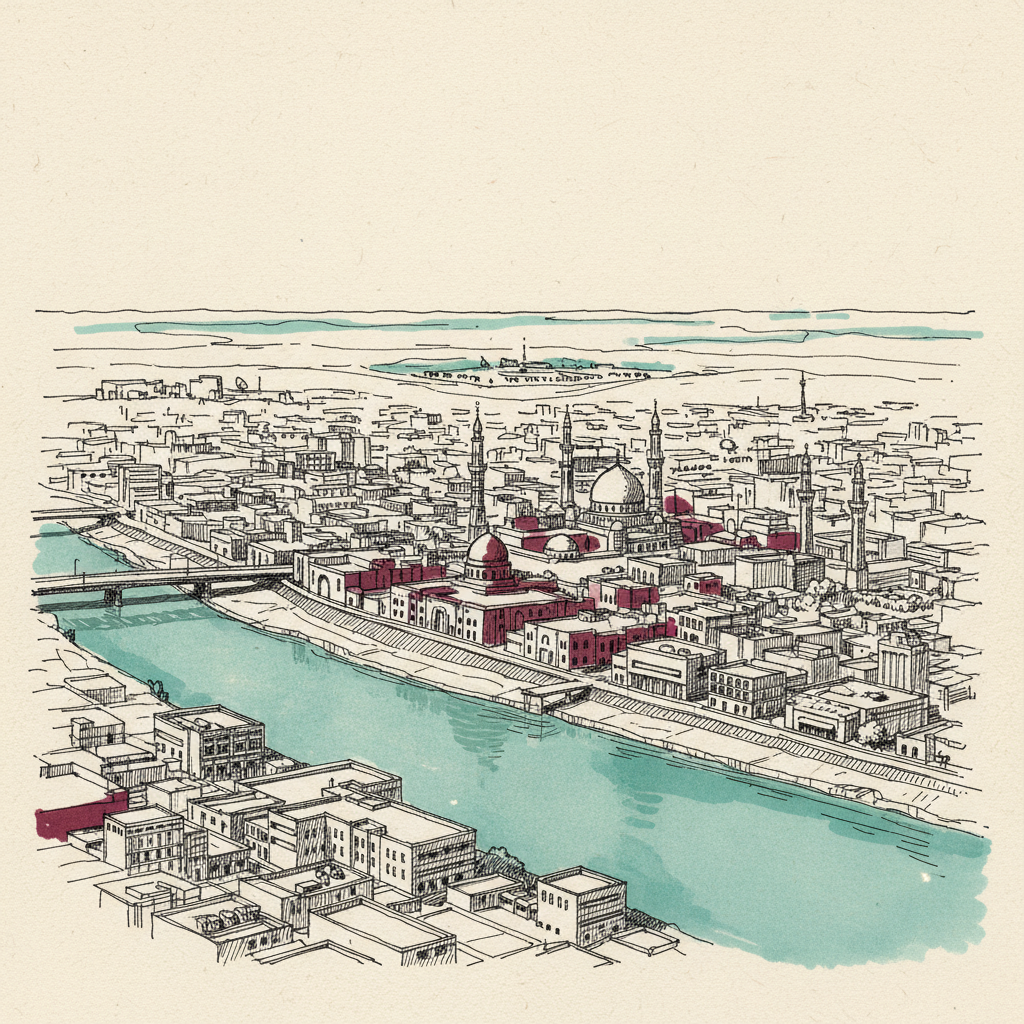
Baghdad
Iraq's capital; hosts US forces, took Iran-fired missiles, and borders the 2026 war zone.
On 29 July, Baghdad cancelled its prime minister's planned Riyadh visit after Saudi strikes on Iraqi militia targets, turning an attack on Iraqi soil into a direct diplomatic rupture.
Last refreshed: 22 September 2026 · Appears in 1 active topic
Can Baghdad stay officially neutral when US troops, Iranian missiles, and Shia militias all occupy the same city?
Timeline for Baghdad
Mentioned in: US flies its last troops out of Erbil
Iran Conflict 2026Mentioned in: Iraq reopens its last Iran crossing
Iran Conflict 2026Mentioned in: Riyadh holds fire at Baghdad's request
Iran Conflict 2026Mentioned in: Iraq shuts three Iranian crossings and the flights
Iran Conflict 2026Mentioned in: Iraq reopens Iranian border crossings in stages
Iran Conflict 2026Background
Baghdad is Iraq's capital and the seat from which federal authorities Conduct national security and Foreign Policy. Its position makes it a political centre for a state whose decisions are shaped by ties to Iran, the Arab Gulf and the United States.
Founded in 762 as the Abbasid caliphate's capital, Baghdad remains Iraq's main administrative and diplomatic centre. The city also sits close to Iraq's security relationship with the United States: an Iranian missile struck the US Embassy helipad in Baghdad on 14 March 2026.
Iraq's oil-export system gives Baghdad a lasting stake in regional transport routes. In June 2026, officials sought to raise flows through the Kirkuk-Ceyhan pipeline, a Mediterranean route that bypasses the Strait of Hormuz.
Baghdad confronts a sovereignty rupture
On 27 July, drones launched from Iraqi territory were aimed at Saudi oil facilities and Riyadh, placing Baghdad's territory at the centre of an attack on a neighbour. For Baghdad, the episode exposed the gap between formal neutrality and its ability to stop armed actors using Iraqi soil.
Saudi jets struck militia targets before dawn on 29 July, citing self-defence. Baghdad called the action a violation of Iraqi sovereignty, convened an emergency meeting and cancelled the prime minister's planned 30 July visit to Riyadh. The capital had to manage a bilateral breach while responsibility for the attacks remained contested.
Did Iraq's prime minister carry a ceasefire proposal to Iran?
How many US troops are in Iraq?
Why has the US embassy in Baghdad been attacked?
Is Iraq part of the Iran-Israel war?
How has the war affected Iraq's oil exports?
What did Iran's foreign minister say in Baghdad about the Strait of Hormuz?


