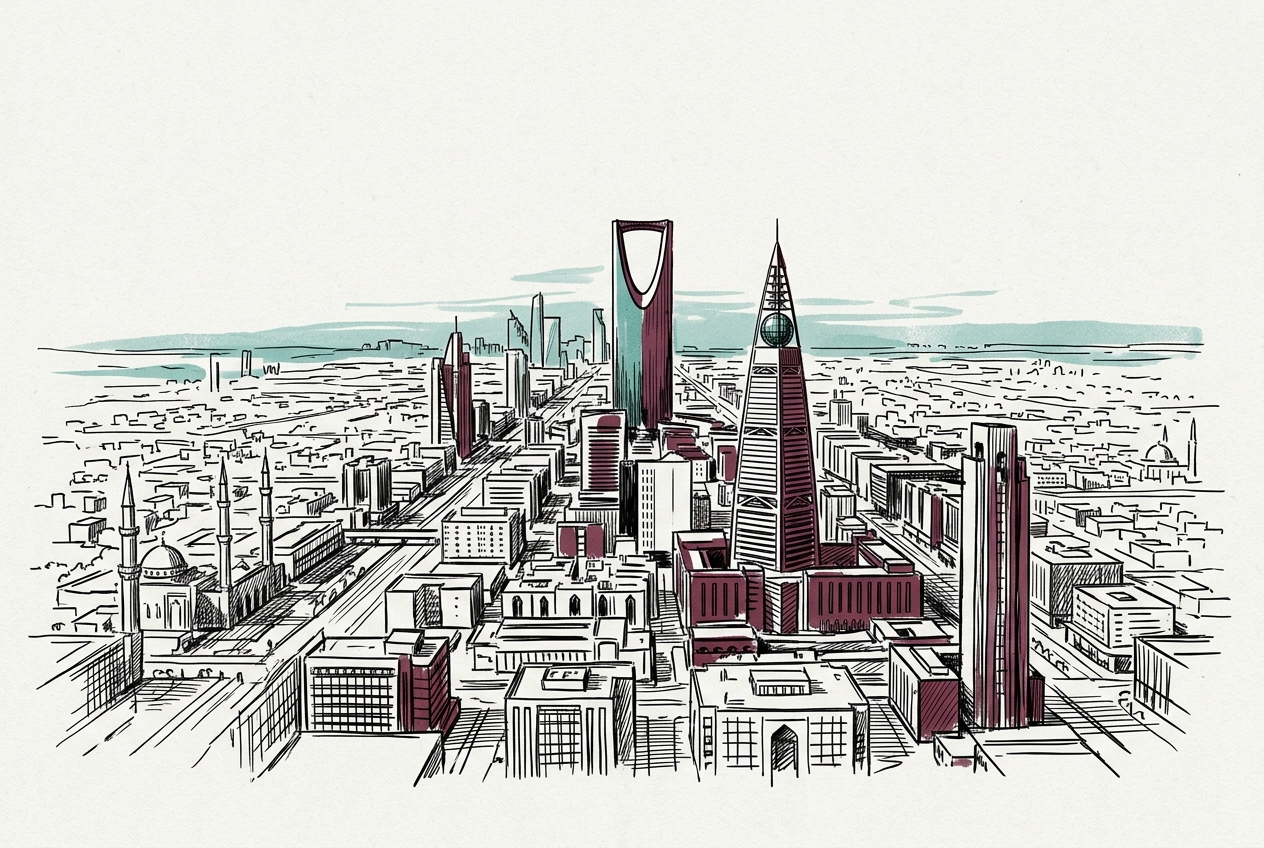
Riyadh
Capital of Saudi Arabia and OPEC+ policy seat; central to Gulf oil pricing and wartime fiscal strategy.
Saudi Crown Prince Mohammed bin Salman, based in Riyadh, warned Washington on 2 August that Gulf states would absorb any retaliation, and Trump called off a planned strike on Iran within hours.
Last refreshed: 20 August 2026 · Appears in 1 active topic
Can Riyadh hold OPEC+ together while absorbing Iranian missile strikes?
Timeline for Riyadh
Mentioned in: Five Gulf states condemn Iran by name
Iran Conflict 2026Mentioned in: Gulf ports plan for a shut strait
Iran Conflict 2026Mentioned in: Three tankers hit, one statement twice
Iran Conflict 2026Mentioned in: Gargash warns: neither war nor peace
Iran Conflict 2026Mentioned in: Le Monde reports a Mecca defence pact
Iran Conflict 2026Background
Riyadh is the capital and largest city of Saudi Arabia, home to roughly 8 million people. It houses the seat of the Saudi royal government and the House of Saud, along with the ministries of finance, energy and foreign affairs. The city sits around 800 km inland from the Gulf coast in the Najd interior, a distance that has not put it beyond the range of Iranian ballistic missiles and drones.
Riyadh also hosts Saudi Aramco's global headquarters and functions as the de facto seat of OPEC+ policy, giving decisions made in the city outsized weight in global energy markets. That role has widened during the war: the capital has also become a convenor of regional security arrangements, most recently founding a multi-nation naval Coalition aimed at protecting Red Sea shipping.
The city's dual exposure, as both a wartime target within missile range and the seat of the cartel managing much of the world's spare oil production capacity, sits at the centre of how governments and markets alike read Riyadh's choices. The event record includes and .
Its crown prince stopped a strike
Saudi Crown Prince Mohammed bin Salman, based in Riyadh, personally warned Washington on 2 August that Gulf States would bear the brunt of any retaliation if a planned strike on Iran went ahead. Trump called the operation off within hours, with Qatar and the UAE adding their own requests.
Ynetnews reported the same day that Gulf capitals split over the intervention, with some officials wanting the strike to proceed while the window was open; Riyadh has not confirmed the split on the record, and had already spent late July building its own maritime security arrangements rather than waiting on American cover.
Riyadh founded a naval coalition
Drones launched from Iraqi territory targeted Riyadh and Eastern Province oil facilities on 27 July, and Saudi air defences intercepted them without loss.
Three days later Riyadh hosted the founding of a 43-nation naval Coalition, making the Saudi capital its diplomatic seat rather than a mere port state, with Oman and the UAE staying out. The Coalition followed Saudi strikes ordered from Riyadh on Houthi positions near Hodeidah on 24 July, after the group widened its own targeting to Aramco-linked sites at Jazan and Yanbu.
Riyadh keeps funding OPEC+ output hikes
OPEC+ approved a fourth consecutive 188,000 barrel-a-day increase for August on 5 July, with no move to accelerate the unwind, even as Riyadh's fiscal breakeven of $108-111 a barrel sits far above Brent's price.
The gap has widened sharply since a $123 peak in April; by 2 July Brent had slid to $70-72, a three-month low. Riyadh keeps choosing collective discipline over a unilateral lift, betting that holding the group together outweighs the revenue it forgoes at every hike vote.
Riyadh founded a 43-nation coalition
Why did Saudi Arabia strike Hodeidah in July 2026?
Reference
How far is Riyadh from Iran?
How far below its fiscal breakeven is Saudi Arabia's oil price in 2026?
Why did Saudi Arabia not pump more oil after the UAE left OPEC?
What is the East-West Pipeline and why does it matter?
Why is Saudi Arabia above its OPEC+ quota in 2026?
Is Riyadh safe to visit in 2026?
Has Iran attacked Riyadh with missiles?
Why was the US Embassy in Riyadh evacuated?
