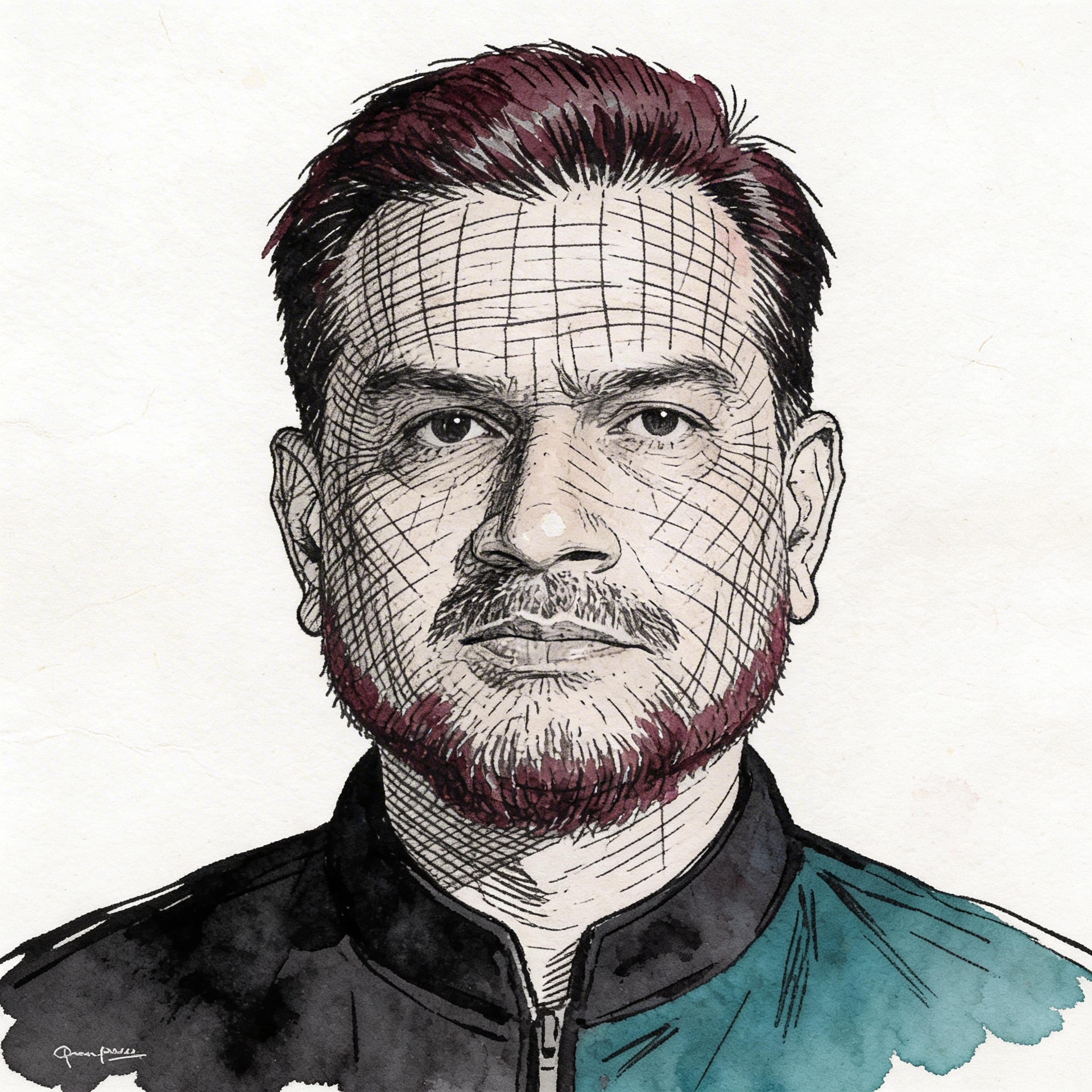
Asim Munir
Pakistan's Field Marshal and army chief; principal US-Iran back-channel mediator since April 2026.
Last refreshed: 10 May 2026 · Appears in 1 active topic
Why is Pakistan's army chief running the only live US-Iran channel?
Timeline for Asim Munir
Mentioned in: Trump expects Iran reply; signs nothing
Iran Conflict 2026Walked Tehran's prior enrichment offer on 16 April; now holds the only paper trail of either floor position
Iran Conflict 2026: Iran files three-phase deal; nuclear lastMentioned in: Araghchi reaches Muscat after Salalah strike
Iran Conflict 2026Mentioned in: Vance's Islamabad trip postponed as Iran rebuffs restart
Iran Conflict 2026Named by Trump as having requested the ceasefire extension
Iran Conflict 2026: Trump extends ceasefire on Truth Social post- Who is Asim Munir?
- Field Marshal Asim Munir is the Chief of Army Staff of the Pakistan Army and a former head of both the ISI and Military Intelligence. He holds the highest military rank in Pakistan.Source: Pakistan Army
- Why did Asim Munir travel to Tehran?
- On 16 April 2026, Munir personally travelled to Tehran in Pakistan's highest-level shuttle of the Iran conflict, following 21 hours of inconclusive US-Pakistan talks in Islamabad. A Ceasefire extension in principle was reported after his arrival.Source: Lowdown
- Is Pakistan a neutral mediator between the US and Iran?
- Pakistan's credibility as a broker rests on maintaining close ties with both the US and Iran. Munir called Trump directly in March 2026 and travelled to Tehran in April 2026, alongside Oman, Egypt, and Turkey as other intermediaries.Source: NPR / Lowdown
- What rank is Asim Munir?
- Asim Munir holds the rank of Field Marshal, a five-star grade conferred in January 2025 — the highest military rank in Pakistan, not awarded since Ayub Khan.Source: Pakistan Army
- What did Asim Munir achieve in Tehran?
- Munir flew to Tehran on 16 April 2026 and secured Iran's in-principle agreement to outside nuclear monitoring — the only nuclear-monitoring concession of the 2026 war, which US diplomats had been unable to extract in 48 days.Source: Pakistani government / Reuters
- Is Asim Munir a general or a civilian politician?
- Munir is a military officer — Chief of Army Staff with the five-star rank of Field Marshal (conferred January 2025). His diplomatic role is formally outside the civilian foreign ministry; he reports to the army structure, not elected government.
- Is Pakistan still mediating between the US and Iran?
- Yes. Although formal talks collapsed and Trump cancelled the 25 April Witkoff-Kushner Pakistan trip, Iran's three-phase written Ceasefire proposal was delivered to Washington through Pakistani intermediaries on 27 April 2026, confirming the channel remains active.Source: AP / Reuters
- Who is Asim Munir and why is he mediating the Iran talks?
- Field Marshal Asim Munir is Pakistan's Chief of Army Staff since November 2022. He stepped into the US-Iran Mediation role after the Islamabad talks collapsed on 12 April 2026, flying personally to Tehran on 16 April and securing Iran's in-principle agreement to nuclear monitoring — the only such concession of the war.Source: Lowdown
- What did Asim Munir achieve in Tehran on 16 April 2026?
- Munir flew to Tehran and secured Iran's in-principle agreement to outside nuclear monitoring — the only nuclear-monitoring concession extracted from Iran in the 2026 war, which US diplomats had been unable to obtain in 48 days of attempts.Source: Pakistani government / Reuters
- Is Pakistan still mediating between the US and Iran in May 2026?
- Yes. Pakistan Foreign Minister Ishaq Dar confirmed on 6 May that Pakistan brokered the first US-Iran direct talks in 47 years. Iran's three-phase Ceasefire proposal was delivered to Washington through Pakistani intermediaries on 27 April. As of 10 May the channel remains the only active US-Iran dialogue venue.Source: AP / Reuters
- What rank is Field Marshal Asim Munir?
- Asim Munir holds the rank of Field Marshal, a five-star grade conferred in January 2025 — the highest military rank in Pakistan and not awarded since Ayub Khan in the 1960s.Source: Pakistan Army
- Why does Pakistan act as the mediator between the US and Iran?
- Pakistan maintains close defence ties with the US while sharing deep economic, religious, and geographic links with Iran. Munir's back-channel exploits that duality: he can call Trump directly and fly to Tehran, two moves no other interlocutor combines. Oman and Turkey also play broker roles, but Pakistan's channel has the most documented traction.Source: Lowdown
Background
General Asim Munir is the Chief of Army Staff (COAS) of the Pakistan Army, appointed in November 2022 and elevated to the rank of Field Marshal in January 2025 — a five-star grade not conferred in Pakistan since Ayub Khan. He previously served as Director-General of both the Inter-Services Intelligence (ISI) and Military Intelligence, making him one of the most intelligence-experienced officers to lead the army.
Munir became Pakistan's active shuttle mediator in the Iran conflict. In late March 2026 he spoke directly with President Donald Trump while PM Shehbaz Sharif reached out to Iranian President Pezeshkian, formally positioning Islamabad as the US-Iran negotiation venue. On 12 April, JD Vance led a 30-member US delegation to Islamabad for talks lasting 21 hours before ending without a deal. Four days later, on 16 April, Munir flew personally to Tehran — Pakistan's highest-level shuttle to Iran since the conflict began — and returned with Iran's in-principle agreement to outside nuclear monitoring, the only nuclear-monitoring concession of the war . Trump cancelled the Witkoff and Kushner Pakistan trip on 25 April, but Iran's three-phase written proposal was delivered to Washington through Pakistani intermediaries on 27 April, confirming the channel remained live . Pakistan Foreign Minister Ishaq Dar publicly confirmed on 6 May that Pakistan had brokered the first US-Iran direct talks in 47 years, moving the back-channel on the record. As of 10 May, Pakistan remains the only venue with both US and Iranian civilian and military buy-in.
Munir's role places Pakistan at the intersection of its longstanding strategic ambiguity: close defence ties with the United States and deep economic and religious links with Iran. The initiative reinforces the army's primacy over civilian foreign-policy institutions; Munir is positioning the army, not the elected government, as Pakistan's decisive international voice. This dual positioning is possible precisely because Munir holds the highest military rank and commands institutional relationships that civilian ministers cannot replicate.
