Yanbu
Saudi Red Sea export terminal now handling most seaborne crude exports amid Bab el-Mandeb blockade.
Since the 23 July Bab el-Mandeb blockade, Yanbu has carried Saudi crude diverted from the southern Red Sea route, making the terminal central to The Kingdom's remaining export corridor.
Last refreshed: 22 September 2026 · Appears in 2 active topics
With Bab el-Mandeb blockaded, can Yanbu alone carry Saudi's crude exports?
Timeline for Yanbu
Supertanker hire passes $1.2m a day
Iran Conflict 2026Received crude again once the line restarted
Iran Conflict 2026: Aramco restarts Petroline but not fullyMentioned in: Aramco cuts Europe off for October
Iran Conflict 2026Houthis take all of Yemen's Red Sea coast
Iran Conflict 2026Red Sea terminal the line feeds
Iran Conflict 2026: Drones hit the pipeline built to dodge HormuzBackground
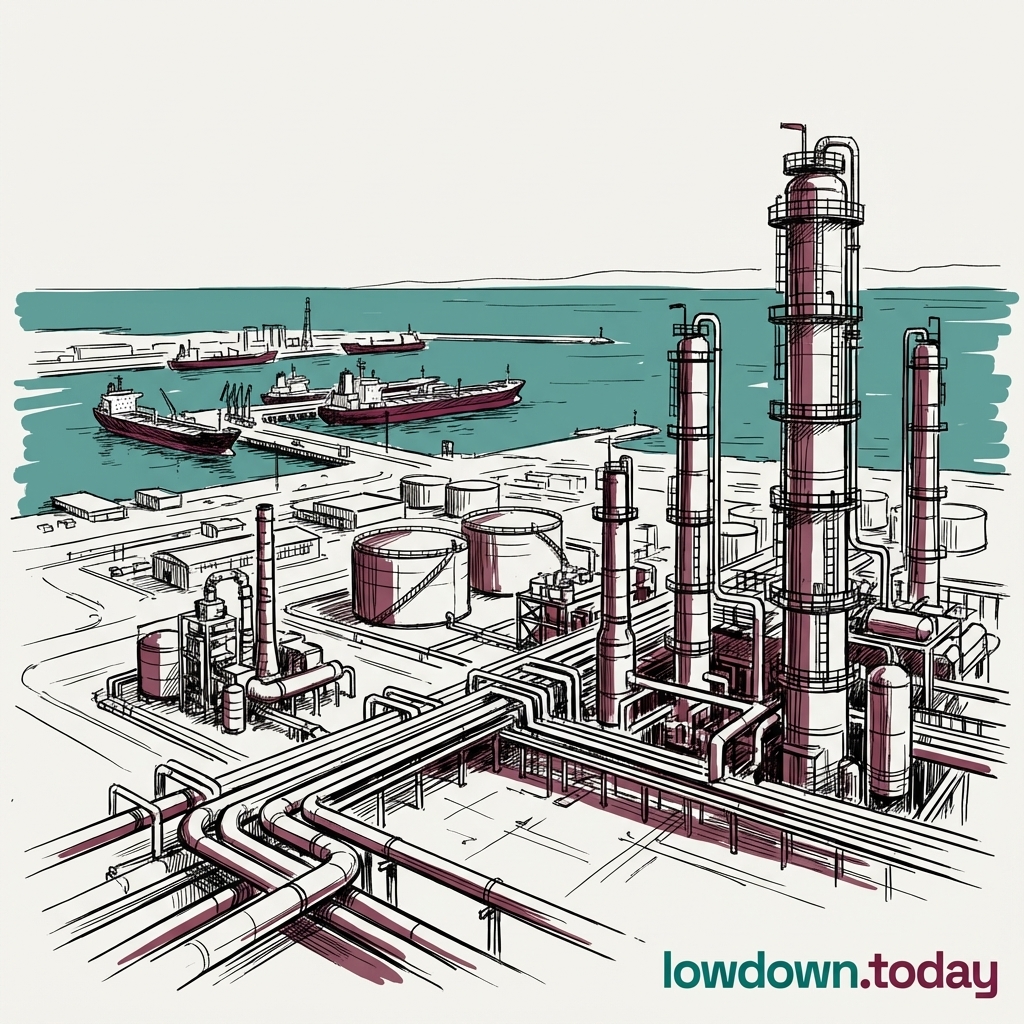
Yanbu is a Saudi Arabian Red Sea industrial city and crude-export terminal in Al Madinah Province. It is the western terminus of the East-West Petroline, which carries crude from the Eastern Province to the Red Sea without crossing the strait of Hormuz. Saudi Arabia restored the line to full capacity on 12 April 2026.
The city combines pipeline access with refineries, petrochemical plants and King Fahd Industrial Port. That infrastructure gives Saudi Arabia an export corridor distinct from The Gulf coast. On 21 April 2026, Saudi Arabia's Red Sea pipeline was cited as a key difference from the United Arab Emirates, which lacks an equivalent bypass.
Yanbu matters because inland transport and Red Sea loading meet in one place. Its role is durable even when maritime routes are open, although the amount of crude moving through it changes with Saudi production, shipping conditions and pipeline availability.
Yanbu carries Saudi export risk
On 23 July, Saudi Arabia stopped loading crude through Bab el-Mandeb after the Houthi embargo, sending Petroline crude arriving at Yanbu north towards the Suez Canal instead. That left Yanbu as the point where Saudi Arabia's inland bypass met its remaining seaborne route.
On 24 July, Yanbu was handling about 3.75 million barrels a day, or 92% of Saudi seaborne crude exports. Some 62% of that volume was bound for India, Japan, China and South Korea. For Yanbu, the diversion turned an established export terminal into the main concentration point for Saudi crude bound for Asian buyers.
Yanbu faces direct Houthi threats
On 25 July, the Houthis widened their Saudi target set to Aramco-linked sites at Yanbu and Jazan. The move put Yanbu's export role inside the conflict rather than merely exposing it to disruption elsewhere in the Red Sea.
On 5 August, a Houthi spokesman said the group had struck the tanker Wafaa off Yanbu. UKMTO recorded one explosion but did not confirm the vessel involved. The uncertainty limits what can be said about the claimed strike, but the report showed that shipping near Yanbu had become part of the blockade's contested threat picture.
What is Yanbu?
Was Yanbu attacked during the Iran conflict?
Why is Yanbu strategically important to Saudi Arabia?
What is the Petroline and how does it connect to Yanbu?
Why is Yanbu handling so much of Saudi Arabia's crude exports now?
How old is Yanbu as a settlement?



Written with AI from Lowdown's published reporting. Not individually reviewed by an editor. Updated 22 September 2026. Editorial standards.